Laura's Selection
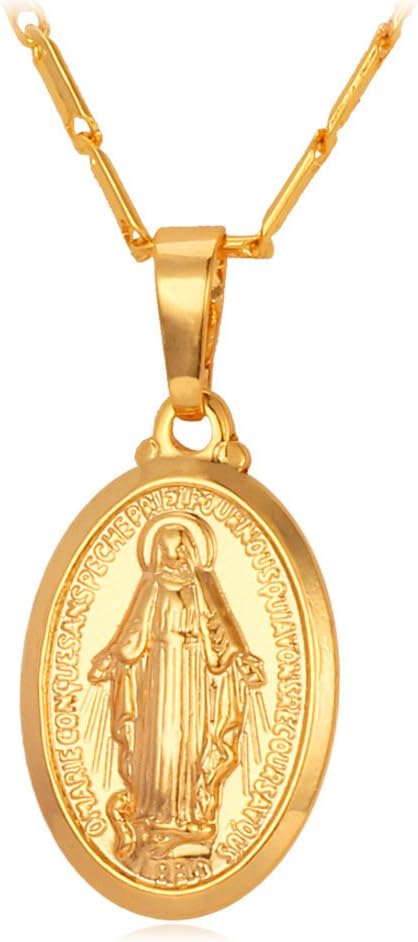
U7 Virgin Mary Necklace for Women,18K Gold Plated/Sterling Silver
18K Gold Plated / Baño de Oro 18K con acabado de orfebrería fina.
Prime Delivery Guaranteed

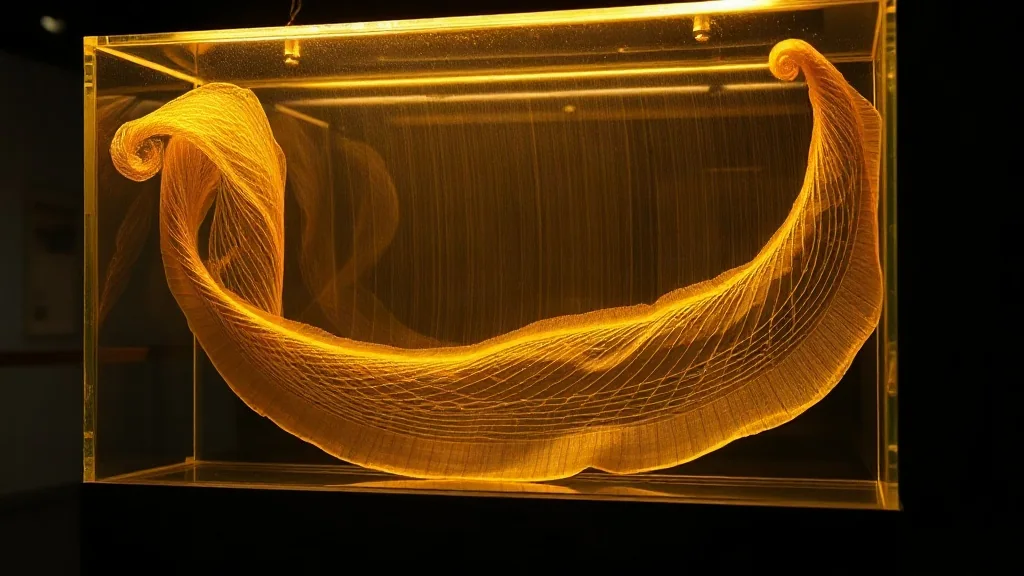
The Tilma of Saint Juan Diego stands not merely as a textile artifact, but as a profound intersection of divine revelation and human history. For the Catholic faith, this coarse garment of agave fiber is a sacramental sign, a tangible bridge between the celestial and the terrestrial. The image of Our Lady of Guadalupe, imprinted upon the *ayate* in 1531, represents more than a miraculous occurrence; it is a theological manifesto of maternal protection and cultural synthesis. In the eyes of the devotee, the Tilma is a "living" icon, a window through which the Virgin Mary communicated her presence to the indigenous peoples of Mexico, offering a message of dignity, hope, and redemption at a moment of profound colonial trauma. Its significance transcends the boundaries of art history, entering the realm of the supernatural, where the material world yields to a higher, spiritual logic. From a curatorial and devotional perspective, the spiritual significance of the Tilma lies in its accessibility. Unlike the opulent gold and jewels of the European cathedrals of the sixteenth century, the image chose a humble support: the *ixtle* fiber of the maguey plant. This choice of medium is intrinsically linked to the theology of the Incarnation—the Divine manifesting in the most modest of forms. The persistence of the image over nearly five centuries, defying the natural laws of organic decay, serves as a visual confirmation of the eternal nature of the promise made to Juan Diego. For millions, the Tilma is the ultimate evidence of a God who does not remain distant but enters into the specific cultural and material reality of His children, transforming a simple cloak into a sanctuary of grace.
The genesis of the Guadalupan tradition is situated in December 1531, upon the hill of Tepeyac, near the nascent Mexico City. According to the sacred narrative, Juan Diego, a humble indigenous convert, encountered the Virgin Mary, who requested that a temple be built in her honor. The historical crux of the event occurs when the Bishop of Mexico, Juan de Zumárraga, demanded a sign to validate the authenticity of these apparitions. In a gesture of profound humility and divine irony, the sign was not a celestial thunderbolt or a golden tablet, but a handful of Castilian roses—blooming in the frozen soil of December—carried within Juan Diego’s tilma. Upon unfolding the garment before the Bishop, the image of the Virgin appeared, imprinted not by human hand, but by a process that remains an enigma to this day.
During the sixteenth and seventeenth centuries, the devotion consolidated rapidly, evolving from a local phenomenon to a central pillar of the New Spanish identity. The Tilma became the focal point of a burgeoning cult, as the image was recognized as a bridge between the Spanish conquerors and the indigenous populations. Early chronicles and religious accounts describe the image as a catalyst for mass conversions, as the iconography spoke a language that the Nahua people understood. The garment was preserved with extreme care, transitioning from a simple cloth to a venerated relic, eventually finding its permanent home in the sanctuary of Tepeyac, where it continues to draw millions of pilgrims annually.
In the modern era, the Tilma has been subjected to various degrees of scientific scrutiny, though these studies often exist in a tension between faith and empirical skepticism. In 1979, researchers such as Philip Callahan and Jody Smith utilized infrared photography and microscopy, suggesting that the image lacked the typical brushstrokes, pigments, or preparatory priming associated with conventional painting. These findings proposed that the image was formed by a process of "molecular deposition" or some unknown phenomenon that does not correspond to known artistic techniques of the 16th century. While some critics argue that these analyses are filtered through a lens of apologetics, the absence of a clear, naturalistic explanation for the image's permanence on a biodegradable fiber remains a point of profound mystery.
The chronology of the Tilma is further enriched by contemporary interpretations, such as those proposed by José Aste Tonsmann in the 1990s, who suggested the existence of microscopic reflections in the eyes of the Virgin. While such claims are debated within the academic community, they reflect the enduring human desire to find scientific confirmation for a spiritual truth. Today, the image remains protected behind bulletproof glass in the Basilica of Guadalupe, serving as a silent witness to centuries of prayer. The historical record of the Tilma is thus a tapestry woven from documented tradition, theological reflection, and an ongoing dialogue with science, all centering on the belief that the "Agave Miracle" is a permanent sign of divine intervention in human history.

The theology of the Tilma is rooted in the concept of *inculturation*—the process by which the Gospel takes root in a specific culture, adopting its symbols to communicate a universal truth. The image of Our Lady of Guadalupe is a masterclass in sacred semiotics. To the Spanish, she was the Mother of God, the *Theotokos*; to the indigenous Nahua, her appearance—with her starry mantle, the crescent moon beneath her feet, and the sun surrounding her—spoke of a cosmic power that surpassed their own deities but remained benevolent. The Tilma, therefore, is not merely a canvas but a theological document that declares the dignity of the indigenous person, placing the "lowly" Juan Diego as the primary messenger of the Divine.
Central to the Marian doctrine associated with the Tilma is the theme of maternal mediation. The Virgin does not present herself as the source of salvation, but as the conduit to her Son. The posture of her hands, joined in prayer, and her gaze, directed downward with tenderness, signify her role as the *Mediatrix* of all graces. The theological message is one of reconciliation: the Tilma appeared at a time of violent clash between two worlds, proposing a path of peace and mutual recognition. By appearing to a humble indigenous man rather than a powerful prelate, the miracle asserts that in the Kingdom of God, the marginalized are the chosen instruments of grace.
Furthermore, the material nature of the Tilma—the *ayate*—carries its own spiritual weight. In Catholic theology, the use of material objects (sacramentals) serves to engage the human senses in the process of faith. The fact that the image persists on a fabric made of maguey fiber, which naturally decomposes within a few decades, is interpreted as a sign of the "supernatural preservation" of the Church. It symbolizes the victory of the eternal over the ephemeral. The Tilma teaches the believer that the sacred can inhabit the mundane, and that the most fragile of human supports can carry the weight of a divine revelation if it is surrendered to the will of God.
Ultimately, the spiritual meaning of the Tilma is found in its capacity to evoke a personal encounter with the Divine. It is not an object of idolatry, but a "visual prayer" that invites the faithful to contemplate the mystery of the Incarnation. The image acts as a mirror of the soul; for the suffering, she is the Comforter; for the lost, she is the Star of the Sea. The theology of Guadalupe is, at its heart, a theology of love and proximity, reminding the world that God is not a distant judge, but a Father who sends His Mother to whisper, "Am I not here, I who am your Mother?"
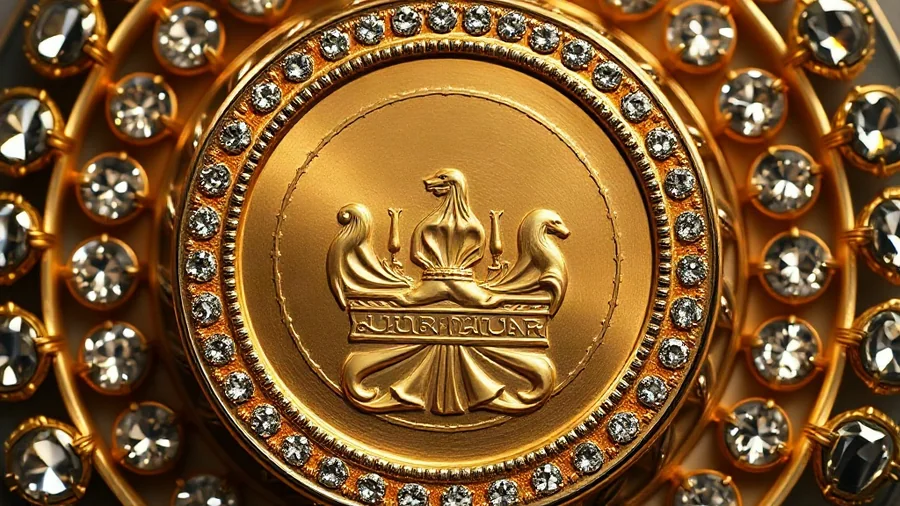
While the Tilma itself is a textile miracle, the devotion it inspires has given rise to a magnificent tradition of sacred jewelry and orfebrería. For centuries, the faithful have sought to carry the image of the Virgin in materials that reflect her celestial royalty. In the realm of high-end devotional art, the selection of metals is paramount. 14K gold is frequently chosen for its balance of purity and durability, providing a warm, eternal glow that symbolizes the divine light. When crafting a Guadalupe medal, the use of 14K gold ensures that the intricate details of the Virgin's mantle and the rays of the sun are preserved for generations, transforming a piece of jewelry into a family heirloom of faith.
Complementing the gold is the use of 925 Sterling Silver, the standard for purity in sacred metalwork. Silver, associated with the lunar qualities of the Virgin's crescent moon, offers a luminous clarity that enhances the delicacy of the engraving. In professional curatorship, we look for the "925" hallmark, which guarantees that the piece is composed of 92.5% pure silver. The contrast between gold and silver in a single piece of jewelry often mirrors the theological duality of Christ's divinity (gold) and His humanity (silver), or the solar and lunar symbols present in the original Tilma. The craftsmanship involved in these pieces—often utilizing *repoussé* and chasing techniques—elevates the metal from a mere commodity to a vehicle of prayer.
The care of these sacred metals is an act of stewardship. To maintain the luster of 14K gold and 925 silver, one must avoid abrasive chemicals and instead use soft, lint-free cloths and mild soap. For pieces that have been passed down through generations, professional cleaning by a jeweler specializing in sacred art is recommended to avoid damaging the fine engravings. The oxidation of silver, while natural, can be seen as a metaphor for the trials of life, yet with proper care, the brilliance of the metal can be restored, just as faith is renewed through prayer.
When selecting devotional jewelry, the discerning believer should prioritize authenticity and artisanal quality over mass-produced alternatives. A hand-carved medal in precious metal carries the "breath" of the artist and the intention of the creator, echoing the sacred nature of the original image. Whether it is a delicate necklace for a child's first communion or a robust rosary for a patriarch, the choice of 14K gold or 925 silver ensures that the physical object is as enduring as the spiritual devotion it represents. These pieces serve as tactile reminders of the "Agave Miracle," allowing the wearer to carry a fragment of the Tepeyac's grace wherever they go.
18K Gold Plated / Baño de Oro 18K con acabado de orfebrería fina.
Prime Delivery Guaranteed
Stainless Steel / Acero Inoxidable con acabado de orfebrería fina.
Prime Delivery Guaranteed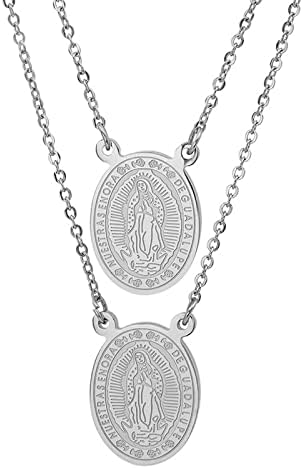
18K Gold Plated / Baño de Oro 18K con acabado de orfebrería fina.
Prime Delivery GuaranteedWhen selecting a Guadalupana piece, always prioritize certified precious metals (solid nickel-free 14K gold or Italian 925 sterling silver). Upon receiving it, take it to your parish priest for a traditional Catholic blessing to consecrate it as an enduring sacramental of protection.

Gold Plated / Chapa de Oro con acabado de orfebrería fina.
Prime Delivery Guaranteed
High-Quality Alloy / Aleación Metálica Duradera con acabado de orfebrería fina.
Prime Delivery Guaranteed
18K Gold Plated / Baño de Oro 18K con acabado de orfebrería fina.
Prime Delivery GuaranteedFrom a strictly empirical standpoint, the Tilma presents several anomalies that challenge conventional explanation. The most striking is the longevity of the support; agave fiber is organic and typically degrades rapidly when exposed to the elements. That the cloth has remained intact for nearly 500 years without the use of chemical preservatives is an extraordinary occurrence. Furthermore, the lack of visible brushstrokes and the absence of a primer (gesso) on a porous fabric suggest a method of image formation that does not align with 16th-century painting techniques. However, it is important to distinguish between a "scientific mystery" and a "proven miracle." While science can document the *absence* of known human techniques, it cannot "prove" a supernatural origin, as the supernatural is, by definition, beyond the scope of empirical measurement. For the believer, these scientific gaps are not voids, but spaces where the hand of God is evident. The Tilma defies science not to mock it, but to remind us that there are dimensions of reality—specifically the divine—that the microscope and the infrared camera cannot fully capture.
To verify the authenticity of precious metals, one should first look for the official hallmarks stamped into the piece. For gold, you will typically see "14K" or "585" (indicating 58.5% purity). For silver, the "925" stamp is the universal indicator of Sterling Silver. These marks are the primary guarantee of the metal's value and purity. If a piece lacks a hallmark, a professional jeweler can perform a non-destructive acid test or use an X-ray fluorescence (XRF) analyzer to determine the exact metallic composition. Beyond the physical stamp, the weight and the "ring" of the metal provide clues. Gold and silver have a specific density that differs significantly from plated alloys or pewter. When purchasing a piece intended for a priestly blessing, ensuring the purity of the metal is not only a matter of financial value but of reverence. Using noble metals for sacred objects is a tradition that symbolizes offering the best of creation to the Creator, ensuring that the object remains a dignified vessel for the blessing it receives.
Selecting devotional jewelry should be an act of prayerful intention. One should consider the purpose of the piece: is it for personal devotion, a gift for a sacrament, or a protective talisman of faith? For daily wear, 14K gold is ideal due to its resistance to tarnish and skin irritation. For those who prefer a more understated elegance or a connection to the lunar symbolism of the Virgin, 925 silver is an exquisite choice. The design should be chosen based on the specific devotion—for instance, the Guadalupan image for those seeking maternal protection and cultural identity. Regarding the wearing of these pieces, they should be treated as sacramentals. While they are beautiful ornaments, their primary purpose is to turn the wearer's heart toward God. It is recommended to wear them with a sense of reverence, avoiding situations where the image might be desecrated. Many devotees find it helpful to bless their jewelry through a priest, which transforms the object from a piece of jewelry into a consecrated reminder of the covenant between the soul and the Divine.
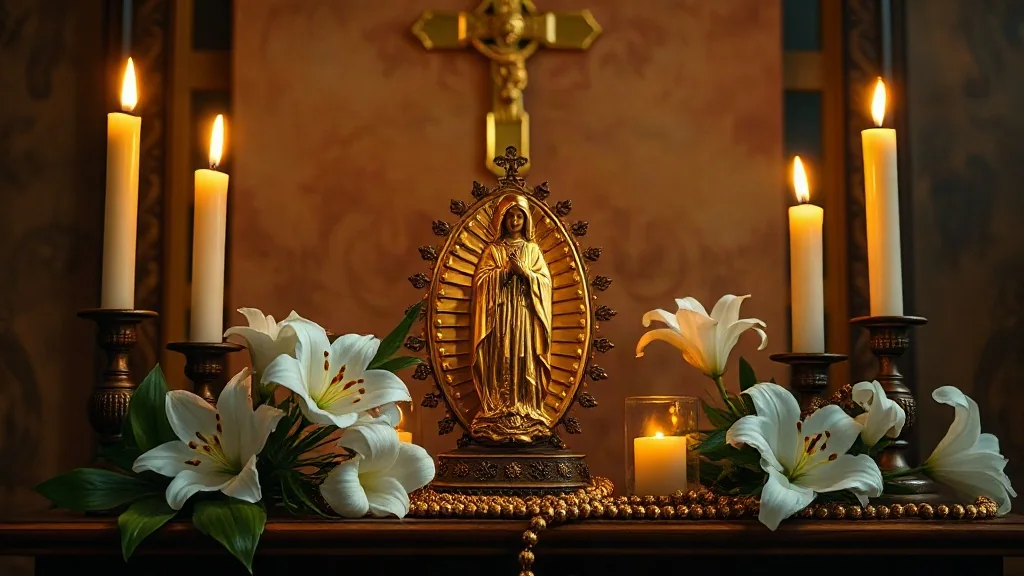
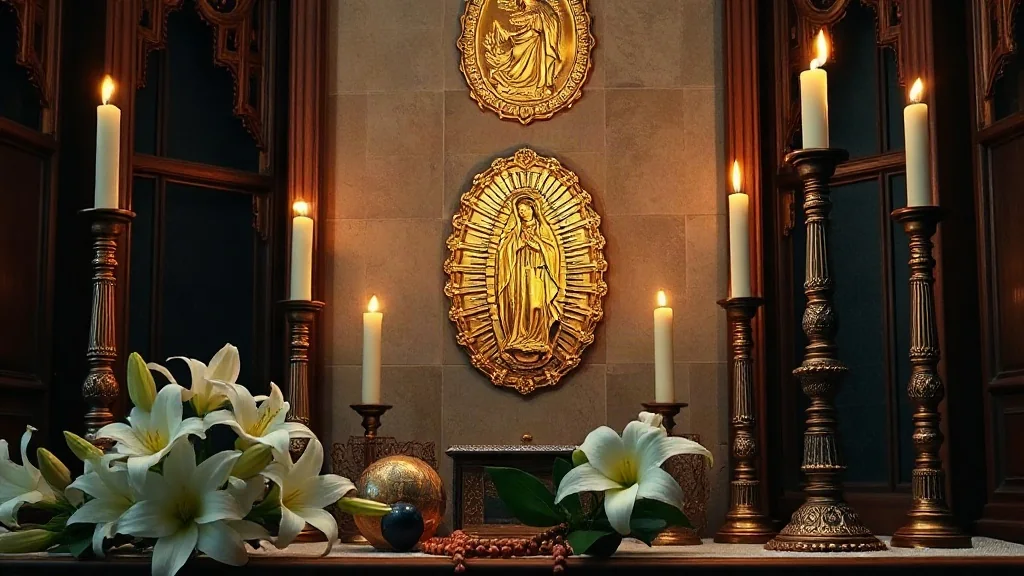
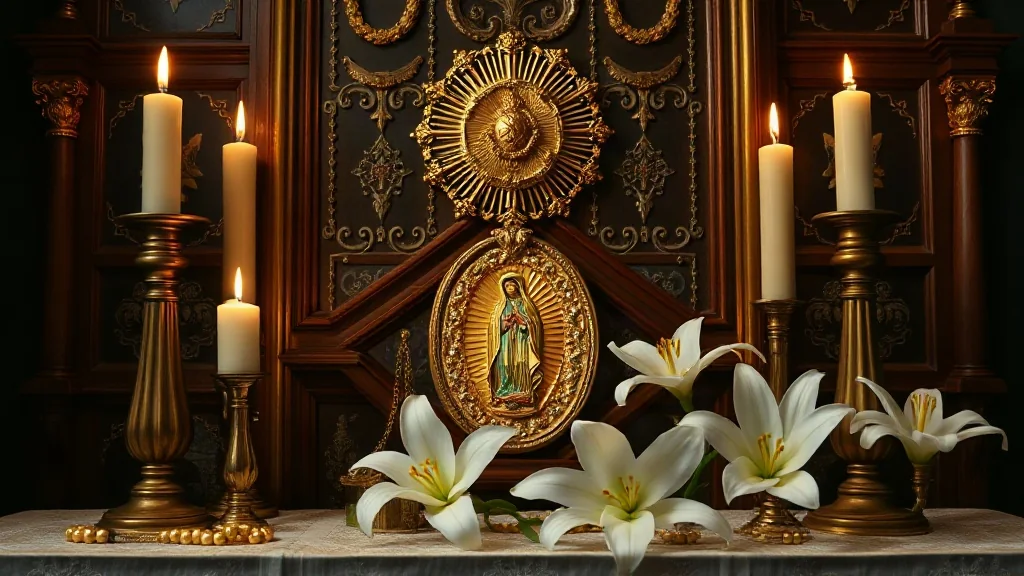
The legacy of the Tilma manifests in the home as a "domestic church," where the image of Our Lady of Guadalupe serves as the centerpiece of family altars. For many families, especially in the Hispanic tradition, the image is the first point of contact for children learning about faith. The story of Juan Diego teaches the value of humility and obedience, while the image itself provides a visual anchor for the Rosary and other familial prayers. The Tilma transforms the home into a space of sanctuary, echoing the sanctuary of Tepeyac. Furthermore, the passing down of devotional jewelry—such as a gold Guadalupe medal from grandmother to granddaughter—creates a tangible chain of faith. These heirlooms are not merely assets; they are repositories of ancestral prayer and spiritual resilience. When a family prays before the image or wears a medal passed through generations, they are participating in a living tradition that transcends time. The "Agave Miracle" thus continues not only in the Basilica of Mexico but in the quiet whispers of faith within millions of homes across the globe.
Affiliate Disclosure: As an Amazon Associate, this devotional portal earns from qualifying purchases at zero additional cost to you.
Find the perfect sacred piece in 3 simple steps
Handpicked based on your preferences and occasion