Laura's Selection

Scapular De Saint Jude
High-Quality Alloy / Aleación Metálica Duradera con acabado de orfebrería fina.
Prime Delivery Guaranteed
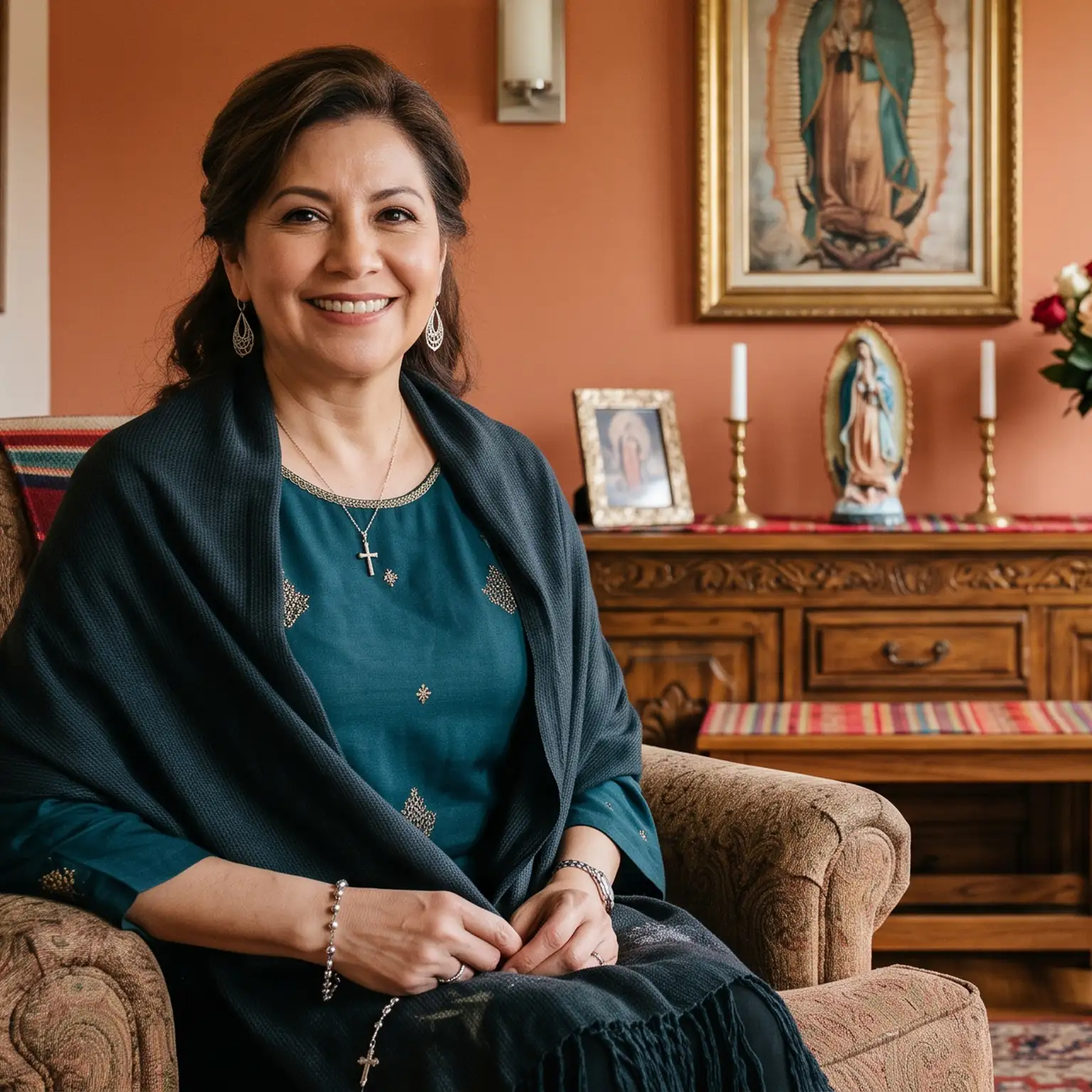
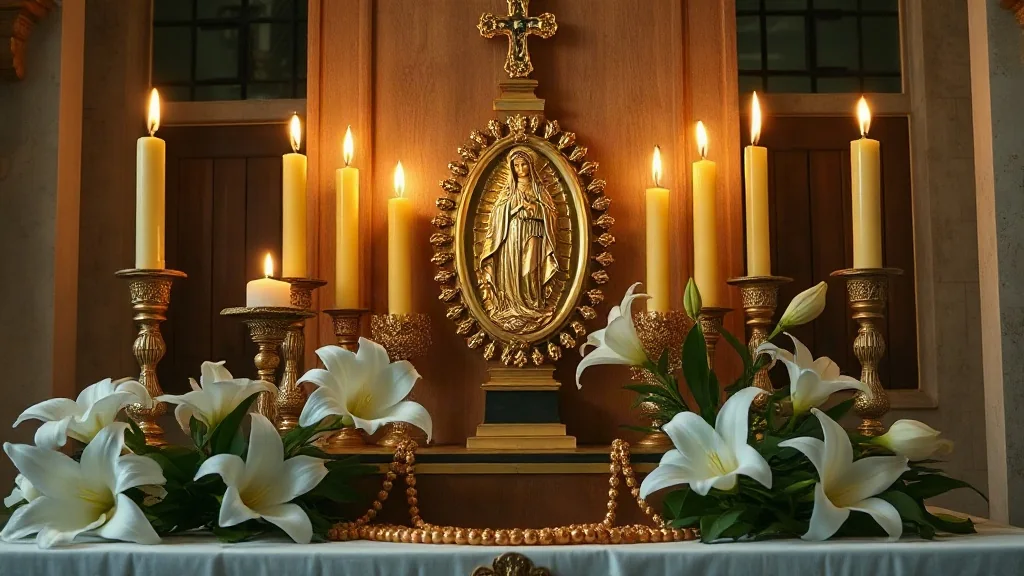
The devotion to Our Lady of Guadalupe transcends the boundaries of simple piety to become a profound cultural and spiritual pillar for millions across the globe. As a researcher of Catholic traditions and a curator of sacred objects, I perceive the image of the *Virgen Morena* not merely as a religious icon, but as a celestial bridge between the divine and the human, specifically tailored for those who find themselves in the periphery of hope. When we approach the Virgin of Guadalupe with prayers for family protection and healing, we are not merely reciting words; we are entering into a covenant of maternal care. The spiritual significance of this devotion lies in the "manto" (mantle), a theological symbol of shelter and sanctuary. To pray to Our Lady of Guadalupe is to seek a refuge where the fractures of the family unit are healed and where the fragility of the human body finds the strength of divine intercession. In the contemporary landscape, where the family structure faces unprecedented pressures and health crises often leave us feeling powerless, the recourse to the Guadalupe devotion offers a synthesis of faith and resilience. The prayers directed toward her are characterized by a deep sense of trust—a "confianza" that is rooted in the historical promise she gave to Saint Juan Diego: "Am I not here, I who am your Mother?" This maternal assurance transforms the act of praying for health and protection into a restorative process. For the believer, healing is not only the absence of physical pathology but the restoration of harmony within the home and the alignment of the soul with the will of God. Thus, the devotion becomes a holistic sanctuary, integrating the physical, emotional, and spiritual dimensions of human existence under the watchful gaze of the Empress of the Americas.
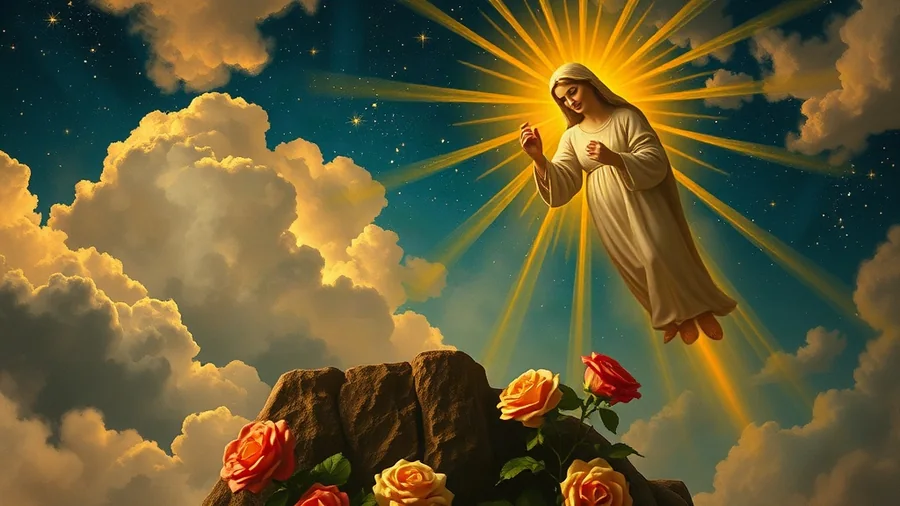
The genesis of the Guadalupan devotion is anchored in the year 1531, on the hill of Tepeyac. According to ecclesiastical tradition and the subsequent historical records, the appearances of the Virgin Mary to the indigenous convert Juan Diego Cuauhtlatoatzin marked a pivotal shift in the evangelization of the New World. This event was not an isolated phenomenon but the beginning of a complex socio-religious integration. Between 1531 and 1538, the local cult consolidated around a primitive sanctuary, establishing a sacred space where the indigenous population found a reflection of their own identity in the features of the Virgin. By 1556, the sermons of the Franciscan friar Francisco de Bustamante already evidenced a robust and widespread devotion in New Spain, indicating that the message of the *Virgen Morena* had permeated the social strata of the colony with remarkable speed.
The intellectual and theological formalization of the devotion occurred in the 17th century, a period of immense literary production. In 1648, Miguel Sánchez published *Imagen de la Virgen María, Madre de Dios de Guadalupe*, providing one of the first rigorous theological interpretations of the apparitions. Shortly thereafter, in 1649, Luis Lasso de la Vega authored the *Huei tlamahuiçoltica*, a narrative written in Nahuatl that effectively codified the traditional account of the apparitions. These texts were essential in transitioning the devotion from a popular oral tradition to a documented ecclesiastical reality, ensuring that the specific petitions for protection and healing were framed within the orthodoxy of the Catholic Church.
The 18th and 19th centuries saw the elevation of the devotion to a global scale. In 1754, Pope Benedict XIV granted a specific Mass and Office for Our Lady of Guadalupe, signaling the Vatican's recognition of her unique role in the Americas. This trajectory of recognition culminated in the Pontifical Coronation of the image in 1895, an event that merged liturgical solemnity with the highest expressions of sacred art. The coronation was not merely a ceremonial act but a theological statement: the recognition of Mary as the Queen and Patroness of the region, the ultimate intercessor for the health and stability of the families residing in the Western Hemisphere.
In the 20th century, the devotion reached its zenith of universal recognition. Pope Pius X proclaimed her Patroness of Latin America in 1910, and Pope Pius XII later bestowed upon her the title "Empress of the Americas" in 1945. The culmination of this historical arc occurred in 1999, when Pope John Paul II declared her Patroness of all the Americas, and in 2002, with the canonization of Saint Juan Diego. This chronology demonstrates that the prayers we recite today for our families are supported by five centuries of institutional faith, historical documentation, and an unbroken chain of answered petitions that have validated the efficacy of her intercession.
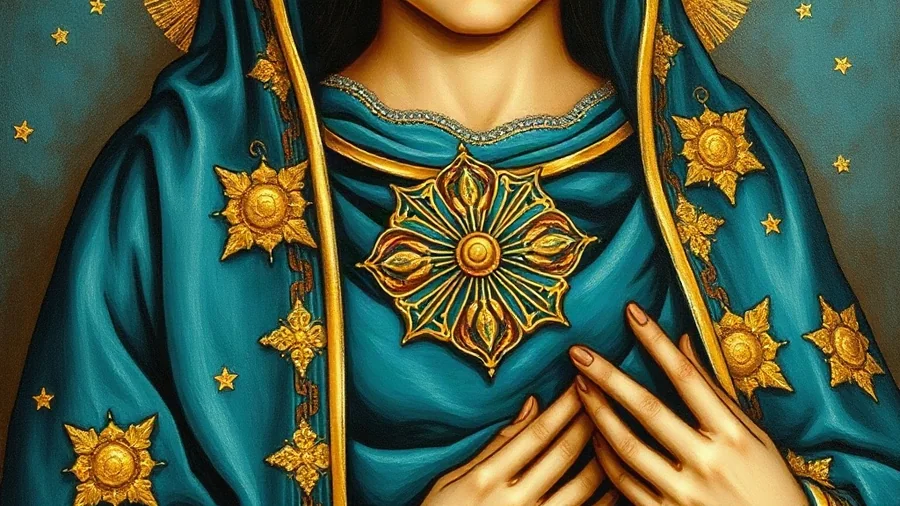
From a rigorous theological perspective, the prayers to Our Lady of Guadalupe for healing and protection are situated within the doctrine of the Communion of Saints and the specific role of Mary as *Mediatrix* and *Intercessor*. It is imperative to understand that in Catholic theology, the Virgin Mary is not the source of the miracle, but the conduit. When a family prays, "Cover us with your sacred mantle," they are invoking the maternal protection that leads directly to Christ. The "mantle" is a powerful symbol of the *Protectio*, echoing the biblical imagery of the wings of the Almighty. To be under the mantle of Guadalupe is to be placed in a position of spiritual safety, where the intercessory power of the Mother accelerates the movement of Divine Grace toward the suffering child or the broken home.
The symbolism embedded in the image of the Tilma further informs the theology of healing. The Virgin is depicted as a *Mestiza*, blending European and Indigenous features, which signifies the healing of cultural and racial divisions. This "healing of the divide" translates spiritually into the healing of family conflicts. When we pray for family unity through her intercession, we are asking for the same reconciliation that she brought to the people of Mexico. The black sash around her waist, a sign of pregnancy in Aztec culture, symbolizes that she is bringing forth the Savior; thus, every prayer for health is essentially a prayer for the "birth" of new hope and the renewal of life within the domestic church.
Furthermore, the request for physical healing through the Virgin of Guadalupe reflects a balanced spirituality that integrates faith with reason. The traditional prayers often ask for "wisdom and accuracy for the physicians," acknowledging that God works through human instruments. This prevents the devotion from sliding into superstition and instead elevates it to a state of "informed faith." The theology of health here is holistic: the physical cure is sought alongside the spiritual cure. A body healed without a soul at peace is only partially restored; therefore, the Guadalupan prayers seek the *salus*—a Latin term that encompasses both salvation and health.
Finally, the spiritual meaning of these prayers is rooted in the concept of "Divine Mercy." The Virgin of Guadalupe is the embodiment of the tenderness of God. In the face of illness or family crisis, the believer does not approach a distant judge, but a loving mother. This psychological and spiritual shift is crucial for healing, as it reduces the anxiety of the sufferer and replaces it with a sense of being cherished. The prayer becomes a therapeutic act of surrender, where the family entrusts its vulnerabilities to the one who is "full of grace," trusting that her intercession before the throne of God is irresistible and filled with maternal compassion.
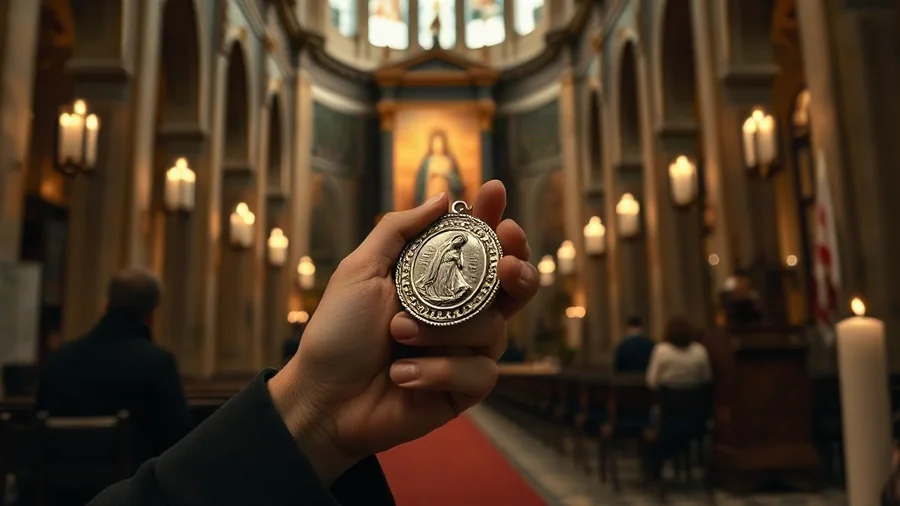
As a curator of sacred jewelry, I observe that the materialization of faith often finds its highest expression in orfebrería (goldsmithing). The devotion to Our Lady of Guadalupe has inspired some of the most exquisite votive objects in the history of the Americas. When selecting a devotional piece—such as a medal or a necklace intended for family protection—the choice of metal is not merely aesthetic but symbolic. 925 Sterling Silver, for instance, has long been associated with purity and the lunar reflection of Mary’s light. In the Baroque period of New Spain, silver repoussé was the primary medium for *ex-votos*, where families offered silver hearts or plaques in gratitude for a healing miracle. A 925 silver medal, characterized by its bright white luster and durability, serves as a tactile reminder of the purity of the Virgin's intercession.
For those seeking a piece of heirloom quality, 14K gold is the gold standard of sacred jewelry. Gold, the "metal of kings," symbolizes the divinity and the eternal nature of the promises of God. A 14K gold medal of the Virgin of Guadalupe is more than an ornament; it is a "sacramental" in the broad sense—an object that disposes the believer to receive grace. The use of 14K gold ensures a balance between the purity of the metal and the structural integrity required for daily wear. From a curatorial standpoint, the fine detailing in gold—such as the delicate rays of the sun surrounding the Virgin or the intricate folds of her mantle—allows the wearer to engage in a meditative practice, tracing the lines of the image during prayer.
The authenticity of these pieces is guaranteed by the hallmark. A rigorous collector or devotee should always look for the "925" stamp for silver or the "14K" or "585" mark for gold. These hallmarks are the signatures of integrity, ensuring that the object will not tarnish or degrade over generations. In the realm of sacred jewelry, the "legacy" aspect is paramount. A gold medal passed from a grandmother to a granddaughter is not just a transfer of wealth, but a transfer of a spiritual legacy of protection. The care of these pieces—using soft cloths and avoiding harsh chemicals—mirrors the care one should have for their own spiritual life: constant, gentle, and attentive.
Moreover, the integration of gemstones, such as small diamonds or sapphires, into Guadalupan jewelry often follows a specific symbolic code. Blue stones represent the celestial nature of the Virgin, while clear stones represent the light of truth. When these are set in 14K gold or 925 silver, the resulting piece becomes a portable sanctuary. For a family praying for healing, wearing a blessed medal of the Virgin acts as a constant, physical anchor to their prayer. It is a silent proclamation of faith that accompanies the believer into hospitals, workplaces, and homes, transforming a piece of jewelry into a shield of spiritual protection.
High-Quality Alloy / Aleación Metálica Duradera con acabado de orfebrería fina.
Prime Delivery Guaranteed
High-Quality Alloy / Aleación Metálica Duradera con acabado de orfebrería fina.
Prime Delivery Guaranteed
High-Quality Alloy / Aleación Metálica Duradera con acabado de orfebrería fina.
Prime Delivery GuaranteedWhen selecting a Guadalupana piece, always prioritize certified precious metals (solid nickel-free 14K gold or Italian 925 sterling silver). Upon receiving it, take it to your parish priest for a traditional Catholic blessing to consecrate it as an enduring sacramental of protection.

Devotional Cord & Wood / Cordón y Madera con acabado de orfebrería fina.
Prime Delivery Guaranteed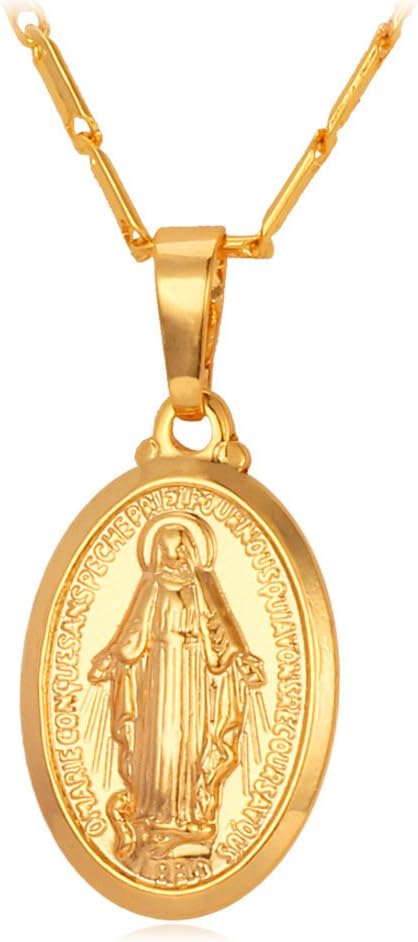
18K Gold Plated / Baño de Oro 18K con acabado de orfebrería fina.
Prime Delivery Guaranteed
High-Quality Alloy / Aleación Metálica Duradera con acabado de orfebrería fina.
Prime Delivery GuaranteedThe most powerful prayers are those that combine traditional liturgical formulas with personal, heartfelt petitions. A foundational prayer is the "Novena to Our Lady of Guadalupe," which, when prayed for nine consecutive days, creates a spiritual discipline of persistence and trust. For immediate family protection, the "Prayer of the Mantle" is highly effective: "O Most Holy Virgin of Guadalupe, we place our home and our loved ones under your sacred mantle. Protect us from spiritual attacks, shield us from physical harm, and weave a bond of unity and love among us that no earthly force can break." For healing, the prayer should be specific yet surrendered to the Divine Will. A powerful formula is: "Mother of the Americas, you who saw the suffering of the humble, look upon the illness of [Name]. We ask that you intercede for a complete restoration of health, granting the doctors wisdom and the patient strength. May your healing touch reach the depths of the body and the recesses of the soul, bringing peace where there is pain." The power of these prayers lies not in the repetition of words, but in the faith of the heart and the intention of the family praying in unison.
To ensure the authenticity of a devotional medal, one must examine the hallmarks. For silver, look for the "925" stamp, which indicates that 92.5% of the metal is pure silver. For gold, look for "14K," "18K," or "585" (which is the decimal equivalent of 14K). Additionally, reputable jewelers provide a certificate of authenticity. From a curatorial perspective, the weight and the crispness of the engraving are also indicators; high-quality sacred jewelry avoids blurred lines and excessive lightness, which often characterize cheap alloys or plated metals. Regarding the blessing, while the medal itself is a beautiful object of faith, the act of blessing it by a priest transforms it into a sacramental. A blessing is a prayer of the Church that asks God to set the object apart for a holy purpose. When a priest blesses a medal of Our Lady of Guadalupe, he is essentially invoking the Holy Spirit to make that object a reminder of God's presence and a channel of grace. While the metal does not possess "magic" powers, the blessing focuses the intention of the wearer and connects the individual to the wider prayer community of the Catholic Church.
When selecting jewelry for a sick family member, comfort and symbolism should be the primary considerations. A small, lightweight 14K gold or 925 silver medal on a soft chain is ideal, as it avoids irritating the skin during long periods of bed rest. I recommend choosing an image of the Virgin that evokes peace and tenderness. If the person is unable to wear a necklace, a small blessed medal placed under the pillow or taped near the bed can serve as a powerful psychological and spiritual anchor, reminding the patient that they are not alone. In terms of wearing the jewelry, it is suggested that the family member wear it close to the heart. This placement is symbolic of the "heart-to-heart" connection between the devotee and the Virgin. Furthermore, the act of putting the medal on the patient can be a ritual of love and hope. The family can pray a short aspiration, such as "Our Lady of Guadalupe, protect and heal this child of yours," while fastening the chain. This transforms the act of dressing into a liturgical moment of healing and familial solidarity.
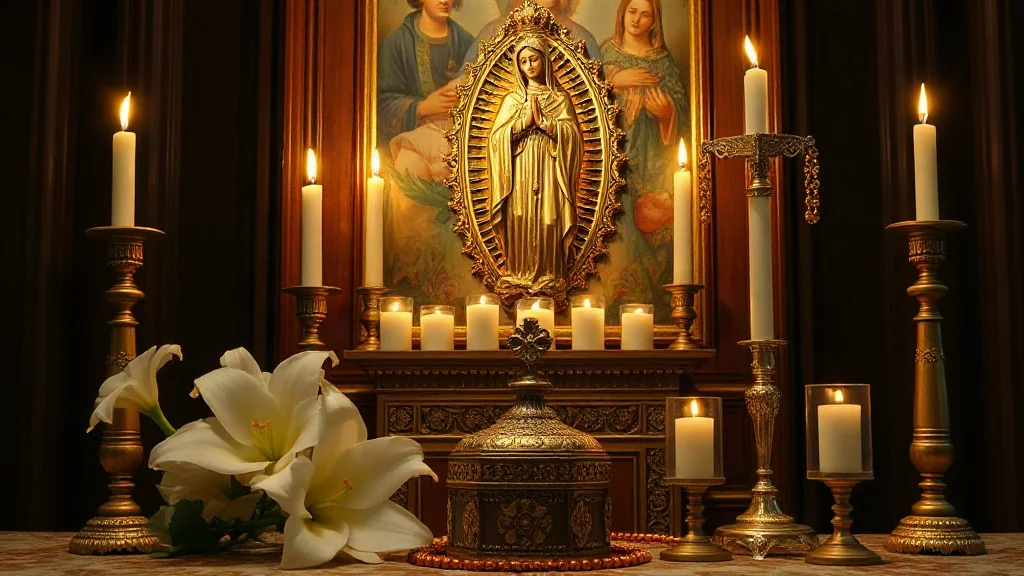
Establishing a legacy of devotion begins with the creation of a "domestic altar" or a sacred space in the home. Placing a prominent image of Our Lady of Guadalupe, perhaps adorned with a silver frame or accompanied by a family heirloom medal, creates a visual focal point for faith. The key is consistency; designating a specific time—such as Sunday evenings—for the family to gather and pray for the health and protection of their relatives ensures that the practice becomes an ingrained habit rather than an occasional event. Moreover, the passing down of sacred jewelry is a potent way to cement this legacy. When a child reaches a milestone—such as a First Communion or a graduation—gifting them a 14K gold medal of the Virgin of Guadalupe, accompanied by a written history of the family's answered prayers, creates a tangible link to their spiritual ancestry. By documenting the "miracles" and favors received through the intercession of the Virgin, the family creates a spiritual chronicle. This ensures that future generations do not see faith as an abstract concept, but as a living, breathing reality that has protected and healed their ancestors for decades.
Affiliate Disclosure: As an Amazon Associate, this devotional portal earns from qualifying purchases at zero additional cost to you.
Find the perfect sacred piece in 3 simple steps
Handpicked based on your preferences and occasion