Laura's Selection
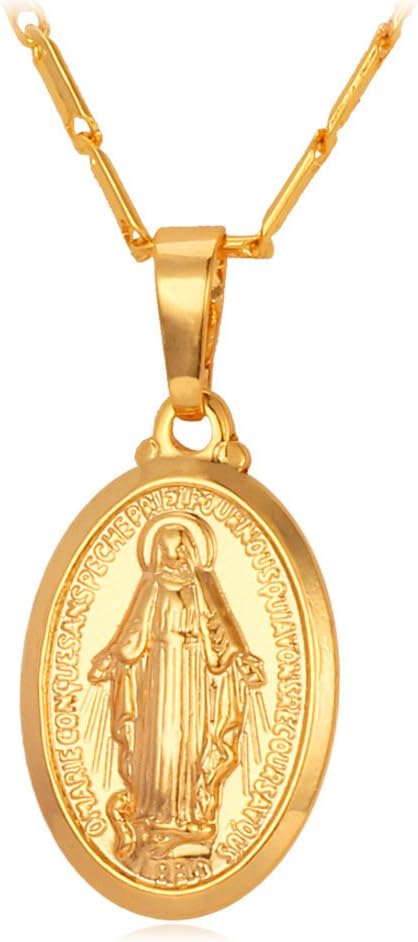
U7 Virgin Mary Necklace for Women,18K Gold Plated/Sterling Silver
18K Gold Plated / Baño de Oro 18K con acabado de orfebrería fina.
Prime Delivery Guaranteed
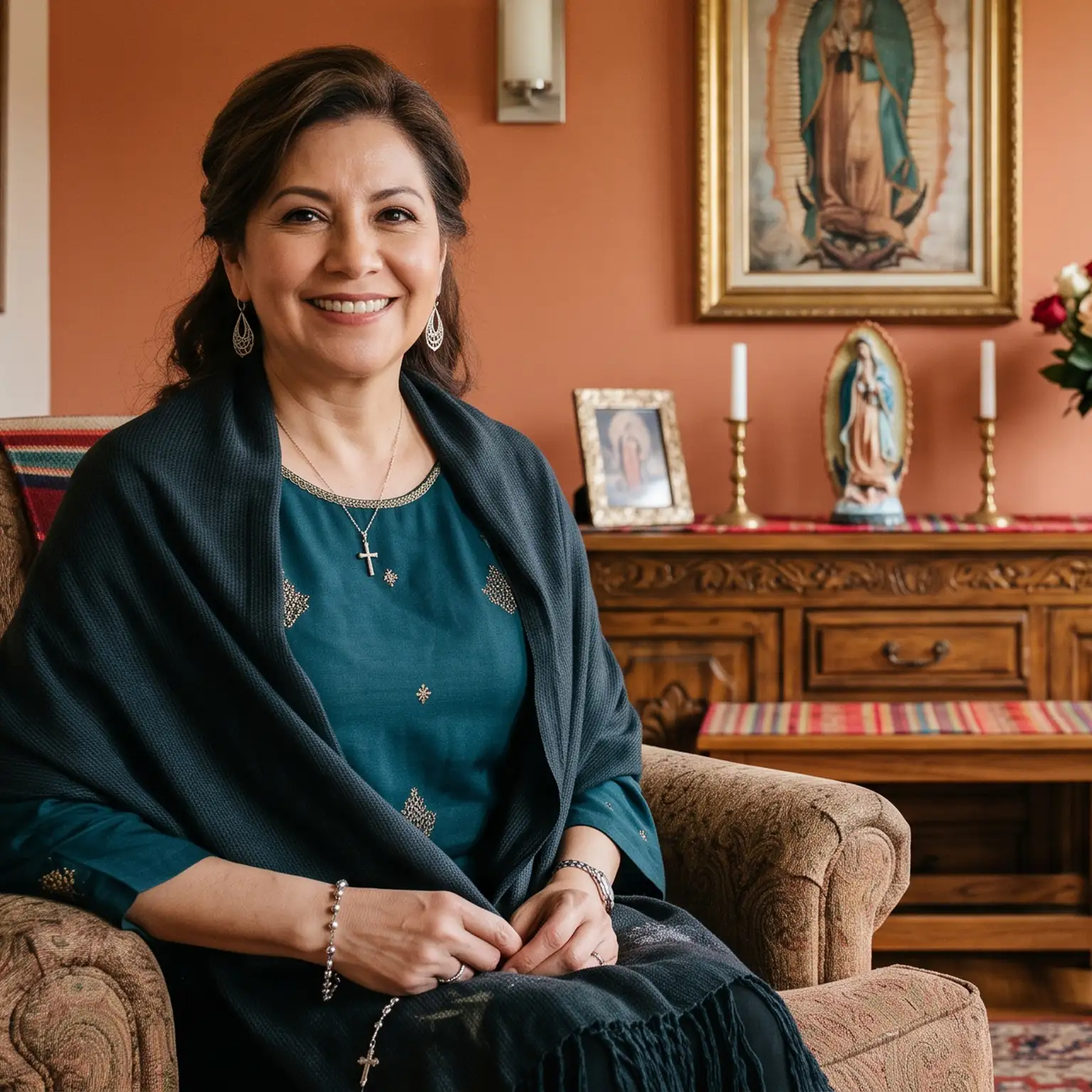
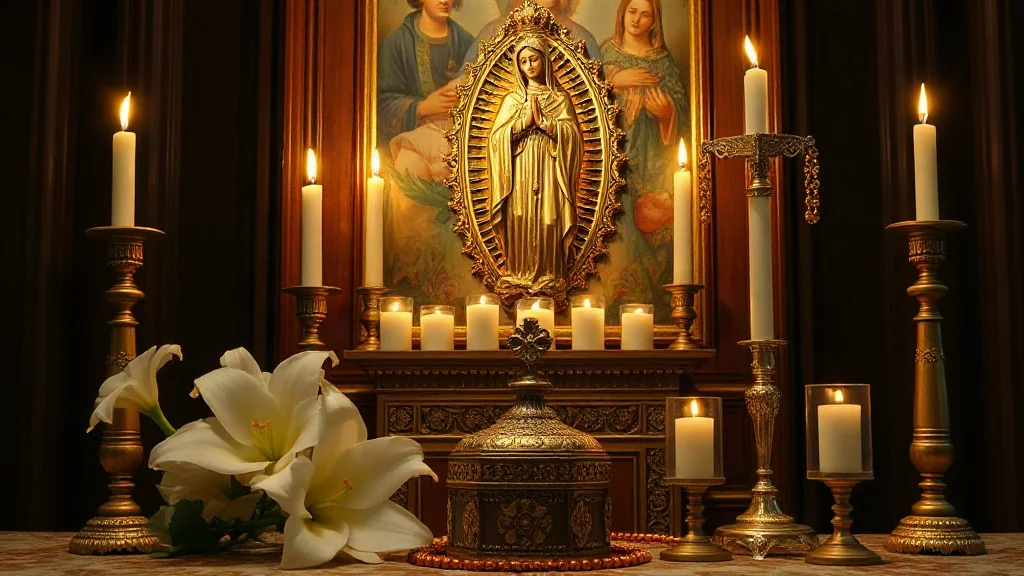
The image of Our Lady of Guadalupe is not merely a religious icon or a piece of traditional Mexican art; it is a profound theological synthesis and a spiritual beacon that has radiated from the hills of Tepeyac to every corner of the globe. To inquire whether a non-Catholic may wear a necklace bearing her likeness is to enter a complex dialogue between faith, cultural identity, and the ethics of sacred aesthetics. For the believer, the image of the *Virgen Morena* is a window into the divine, a reminder of the maternal protection of Mary, and a testament to a miraculous encounter that reshaped the spiritual landscape of the Americas. Consequently, the jewelry associated with this devotion is rarely viewed as a mere accessory, but rather as a "sacramental"—an object that, while not conferring grace in the same manner as a sacrament, prepares the heart to receive grace and reminds the wearer of a higher spiritual calling. From a curatorial and historical perspective, the transition of this image from a sacred tilma to a gold or silver medallion reflects the enduring human desire to carry the divine close to the heart. When a non-Catholic considers wearing such a piece, they are engaging with a symbol that carries centuries of weight, hope, and liberation. The spiritual significance of the Guadalupe necklace lies in its ability to evoke a sense of universal motherhood and compassion. However, the tension arises when the boundary between "appreciation" and "appropriation" becomes blurred. To wear the image is to carry a narrative of faith; therefore, the act is stripped of its potential for offense only when accompanied by a fundamental respect for the sanctity of the figure represented and the millions of souls for whom she is the ultimate intercessor.
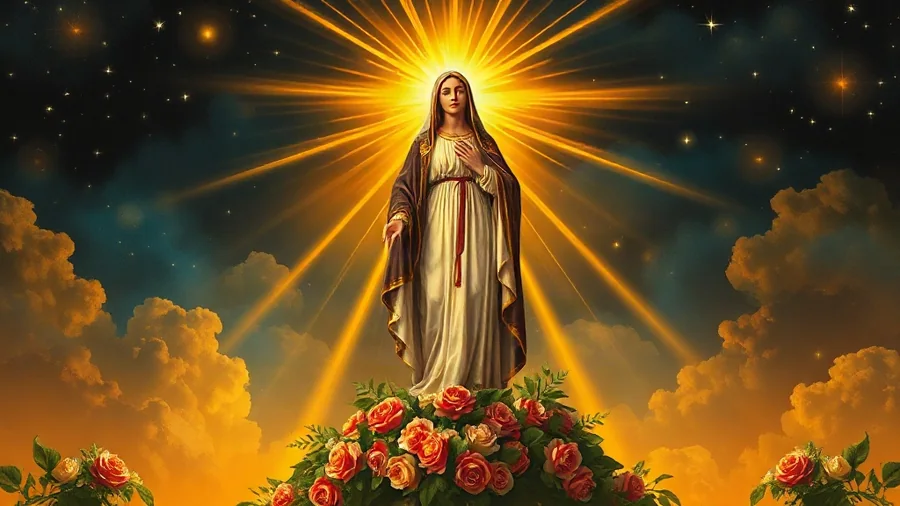
The genesis of this devotion dates back to December 1531, a pivotal moment in the colonial history of New Spain. According to ecclesiastical tradition and historical accounts, the Virgin Mary appeared four times to Juan Diego Cuauhtlatoatzin, a humble indigenous convert, on the Tepeyac hill. The climax of these apparitions occurred when the Virgin requested that the Bishop of Mexico, Juan de Zumárraga, build a temple in her honor. To provide proof of her divine mandate, the Virgin instructed Juan Diego to gather roses—flowers not native to the region in December—and place them in his tilma (a cloak made of agave fiber). Upon opening the cloak before the Bishop, the roses fell, and the miraculous image of the Virgin was found imprinted upon the fabric.
Throughout the colonial era, the devotion to Our Lady of Guadalupe evolved from a local phenomenon into a cornerstone of Mexican identity. The image served as a bridge between the indigenous populations and the Spanish settlers, blending European Marian iconography with indigenous symbols—such as the sun's rays and the crescent moon—which resonated deeply with the Nahua people's understanding of the cosmos. By the 17th and 18th centuries, the image had become an emblem of protection and a catalyst for the consolidation of the Catholic faith in the New World, eventually transitioning from the walls of the Basilica to the personal adornments of the faithful.
In the 19th and 20th centuries, the image transcended the strictly religious sphere to become a potent symbol of national identity and social justice. During the Mexican War of Independence, Father Miguel Hidalgo famously used the banner of the Virgin of Guadalupe as a rallying cry for freedom. This shift expanded the "meaning" of the image; it was no longer just about the theology of the Incarnation, but about the dignity of the marginalized and the sovereignty of a people. This historical layering is why a Guadalupe necklace today can be seen as both a statement of piety and a statement of cultural heritage.
In the contemporary era, the globalization of the image has led to its presence in high fashion and commercial jewelry. From the streets of Los Angeles to the ateliers of Europe, the *Virgen Morena* is frequently reproduced in various metals and styles. However, the historical trajectory reminds us that the image did not originate as a fashion statement, but as a divine communication. The chronology of the Guadalupe image is a movement from the miraculous tilma to the institutional altar, and finally to the personal jewelry of the individual, each step adding a layer of meaning that demands a mindful approach from the wearer.
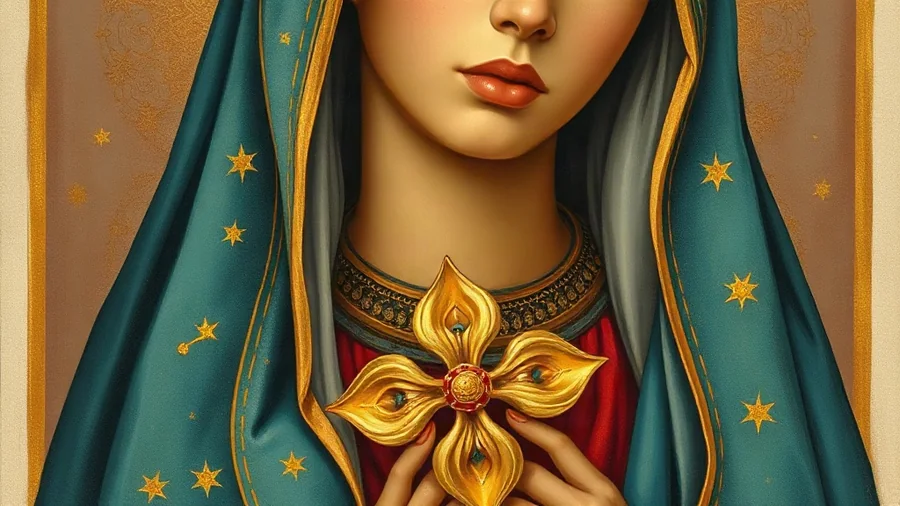
To understand the implications of wearing a Guadalupe necklace, one must first grasp the theological distinction between *latria* and *dulia*. In Catholic doctrine, *latria* is the adoration reserved exclusively for God (the Father, Son, and Holy Spirit). In contrast, *dulia* is the veneration given to saints, and *hyperdulia* is the special, highest form of veneration reserved for the Virgin Mary. When a devotee wears a medal of Our Lady of Guadalupe, they are not worshipping the metal or the image itself, nor are they worshipping Mary as a goddess. Rather, they are practicing a form of visual prayer, using the image as a conduit to honor the role Mary played in the history of salvation—specifically, her "Fiat," her humble acceptance of becoming the Mother of God.
The symbolism embedded in the image is a masterclass in theological communication. The rays of the sun surrounding her indicate that she is the "Woman Clothed with the Sun" from the Book of Revelation, yet she stands in front of the sun, signifying that she does not obscure the light of Christ but reflects it. The crescent moon beneath her feet symbolizes her victory over darkness and the temporal world. Her hands are joined in prayer, emphasizing her role as the *Mediatrix*—the one who intercedes on behalf of humanity. For the wearer, these symbols are not mere decorations; they are a silent catechism, a reminder of the humility and strength required to trust in Divine Providence.
Furthermore, the image represents the "Inculturation of the Gospel." By appearing as a *Mestiza* (a woman of mixed race), Mary signaled that the divine love of God is not restricted to one ethnicity or social class. This theological openness is why many non-Catholics feel drawn to the image; it speaks to a universal longing for a maternal figure who understands human suffering and cultural displacement. However, the spiritual meaning is fundamentally rooted in the relationship between the Creator and the created. To treat the image as a "lucky charm" or a "talisman" is a theological error, as it reduces a sacred intercessor to a magical object, stripping the image of its true purpose: to lead the soul toward Christ.
Finally, the use of the image in jewelry, such as the scapular or the medallion, is intended to foster a state of "perpetual remembrance." In the Catholic tradition, wearing a sacred image is an outward sign of an inward commitment. It is an act of entrustment. When a believer places a Guadalupe necklace around their neck, they are symbolically placing themselves under her mantle of protection. This depth of meaning is what distinguishes a devotional piece from a piece of costume jewelry. The spiritual weight of the image resides in the faith of the community that honors her, making the act of wearing it a participation in a collective spiritual history.
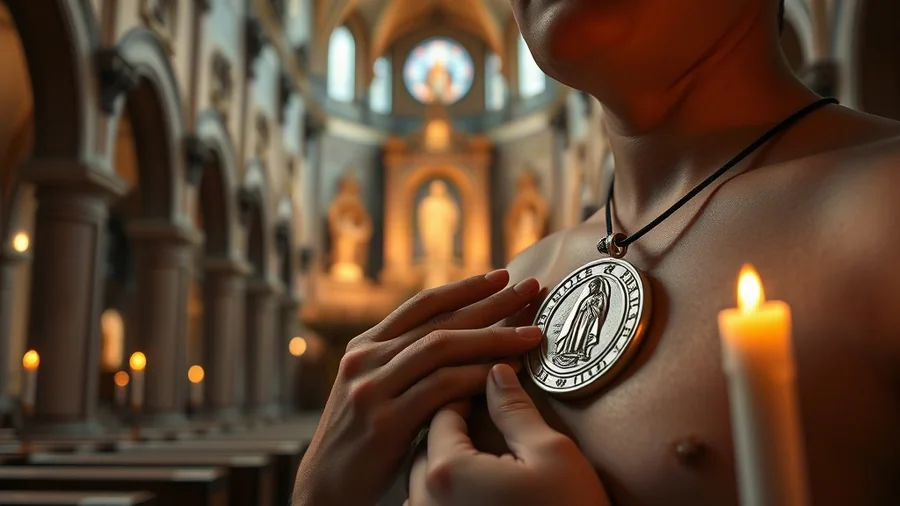
The creation of a Guadalupe necklace is an intersection of artistic mastery and devotional intent. In the realm of sacred orfebrería (goldsmithing), the choice of material is never arbitrary. Gold, particularly 14K or 18K, has been used since antiquity to represent the divine, the eternal, and the incorruptible. A gold Guadalupe medal is designed to be an heirloom, a piece of "sacred capital" passed from grandmother to granddaughter, carrying with it the prayers and tears of previous generations. The luster of gold reflects the "Light of the World," making it the most appropriate medium for an image that represents the Queen of Heaven.
Sterling silver (925) holds a different but equally significant place in the tradition of sacred jewelry, particularly in Mexico. Silver is associated with purity and the lunar qualities of the Virgin. The craftsmanship of silver medals often involves intricate *repoussé* and *chasing* techniques, where the artisan hammers the metal from the reverse side to create a three-dimensional relief of the Virgin. A high-quality 925 silver piece is characterized by its crisp detail—the delicate folds of the mantle, the precise rays of the sun, and the serene expression of the face. These hallmarks of quality are not merely for aesthetic pleasure but are intended to honor the subject by providing the most beautiful representation possible.
From a curatorial standpoint, the authenticity of the metal is paramount. Genuine devotional jewelry should bear the appropriate hallmarks (such as "925" for silver or "14K" for gold) to ensure that the object is durable enough to withstand the rigors of daily wear. Because these pieces are often worn close to the skin and subjected to the elements, the use of base metals or poor plating can lead to oxidation and degradation, which some devotees view as a lack of respect for the image. The care of these heirlooms involves gentle cleaning with non-abrasive cloths and the avoidance of harsh chemicals, treating the object with the same reverence one would afford a liturgical vessel in a cathedral.
Moreover, the design of the necklace—whether it is a simple bezel-set medallion, a complex filigree frame, or a traditional scapular—affects its perception. A minimalist design in polished gold often leans toward a contemporary aesthetic, while a heavily ornamented silver piece evokes the Baroque splendor of the colonial cathedrals. Regardless of the style, the goal of the sacred goldsmith is to ensure that the image of the Virgin remains the focal point. The metal serves as the frame for the miracle, ensuring that the physical beauty of the jewelry points toward the spiritual beauty of the figure it depicts.
18K Gold Plated / Baño de Oro 18K con acabado de orfebrería fina.
Prime Delivery Guaranteed
18K Gold Plated / Baño de Oro 18K con acabado de orfebrería fina.
Prime Delivery Guaranteed
Stainless Steel / Acero Inoxidable con acabado de orfebrería fina.
Prime Delivery GuaranteedWhen selecting a Guadalupana piece, always prioritize certified precious metals (solid nickel-free 14K gold or Italian 925 sterling silver). Upon receiving it, take it to your parish priest for a traditional Catholic blessing to consecrate it as an enduring sacramental of protection.

18K Gold Plated / Baño de Oro 18K con acabado de orfebrería fina.
Prime Delivery Guaranteed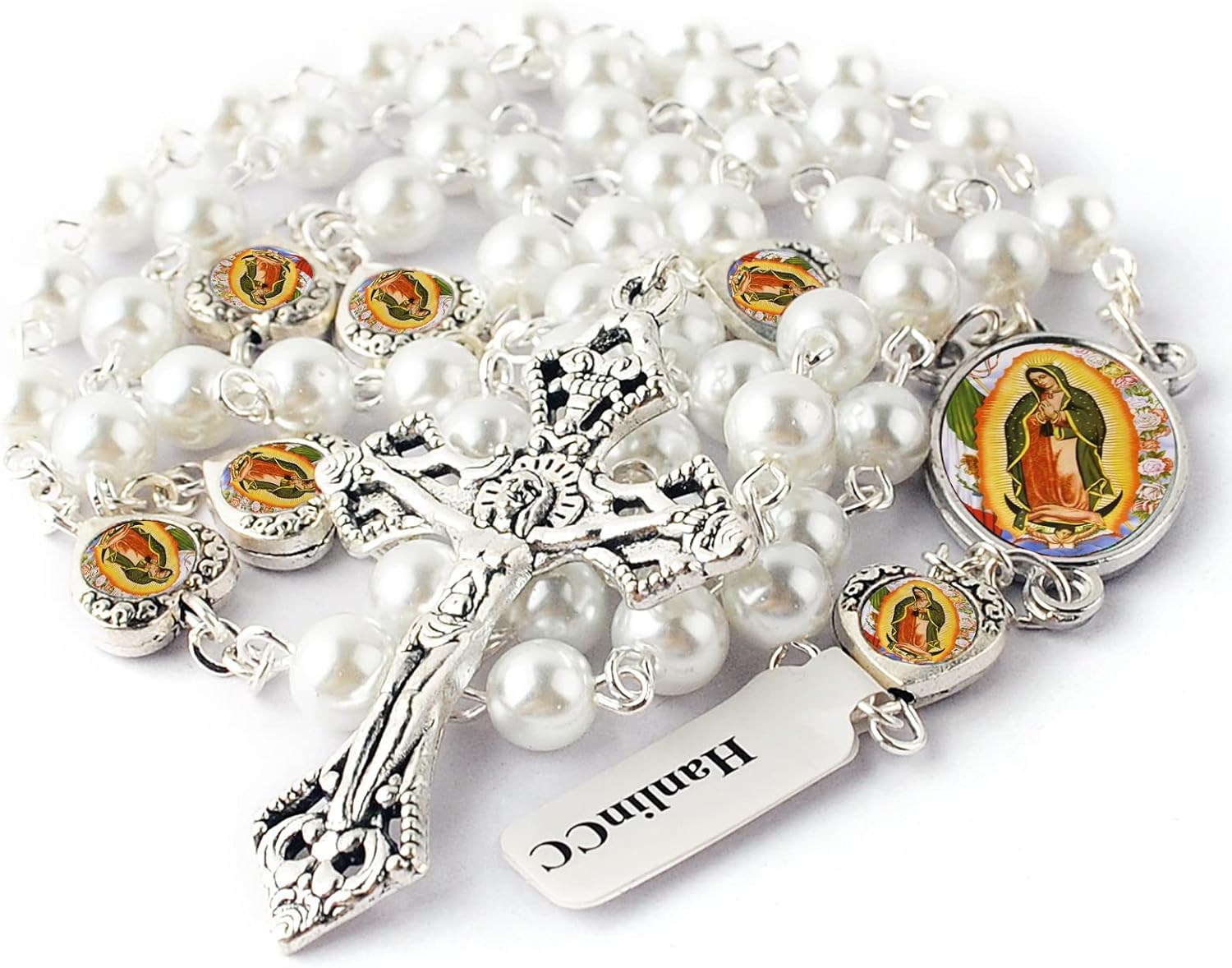
High-Quality Alloy / Aleación Metálica Duradera con acabado de orfebrería fina.
Prime Delivery Guaranteed
18K Gold Plated / Baño de Oro 18K con acabado de orfebrería fina.
Prime Delivery GuaranteedYes, a non-Catholic may wear a necklace featuring Our Lady of Guadalupe, but it is essential to distinguish between aesthetic appreciation and devotional practice. There is no universal prohibition or "sin" in wearing the image if the intent is one of cultural respect, an appreciation for the art, or a connection to Mexican heritage. Many people wear the image as a symbol of motherhood, peace, or identity without adhering to the tenets of the Catholic faith. In these instances, the necklace is viewed as a cultural accessory that honors a significant historical and artistic icon. However, the wearer should be mindful of the context. To wear the image in a way that is mocking, trivializing, or purely as a "fashion trend" without acknowledging its sacred nature can be perceived as offensive to those for whom the Virgin is a source of profound spiritual solace. The most prudent approach is to wear the piece with a spirit of humility and respect, recognizing that for millions, this image is not a piece of jewelry, but a sacred portal to the divine.
There is a significant theological difference between a commercial piece of jewelry and a blessed sacramental. A commercial necklace is an object of art or fashion; a blessed medal has been set apart by a priest through a prayer of blessing, invoking God's grace upon the object and the person who wears it. While a non-Catholic cannot receive a sacramental blessing in the same way a believer does, they can still wear the physical object. A blessed medal is intended to be a tool for prayer, whereas a commercial piece is primarily decorative. Regarding metal authenticity, one should look for the "hallmark"—a small stamp engraved into the metal. "925" indicates sterling silver, while "14K" or "585" indicates 14-karat gold. If a piece is marketed as "gold plated" or "gold filled," it is a base metal covered in a thin layer of gold, which will eventually wear off. For those seeking a legacy piece, investing in solid 14K gold or 925 silver is recommended, as these materials do not tarnish as quickly and maintain their value over time.
When selecting a piece, consider the design's intent. If you are drawn to the image for its cultural or artistic beauty, a more ornamental or stylized design may be appropriate. If you are seeking a connection to the spiritual qualities of the Virgin—such as compassion and protection—a more traditional, sober medallion may be more fitting. It is advisable to avoid designs that are overly provocative or that blend the sacred image with inappropriate imagery, as this can be seen as a lack of reverence. In terms of wearing the piece, the most respectful approach is to treat it with a degree of mindfulness. While you are not bound by Catholic rubrics, avoiding the use of the image in contexts of blatant disrespect is a gesture of courtesy toward the faith community. If asked about the necklace, being honest about your appreciation for the image's history or its symbolic meaning is generally well-received and fosters a dialogue of mutual respect.
Absolutely. In many families, the Our Lady of Guadalupe necklace transcends religious practice to become a symbol of ancestral lineage and familial love. Even in households where the faith has waned, the image often remains as a link to a grandmother's devotion or a father's heritage. In this context, the necklace becomes a "secular relic"—an object that holds the emotional memory of the family. Passing it down is an act of honoring one's roots and acknowledging the values of love and protection that the image represents. To preserve such a legacy, it is recommended to document the history of the piece—who wore it, when it was acquired, and what it meant to them. By doing so, the necklace continues to serve its purpose as a reminder of a shared history. Whether the next generation is Catholic, agnostic, or of another faith, the image of the Virgin of Guadalupe remains a powerful symbol of the enduring bond between generations and the universal hope for maternal guidance.
Affiliate Disclosure: As an Amazon Associate, this devotional portal earns from qualifying purchases at zero additional cost to you.
Find the perfect sacred piece in 3 simple steps
Handpicked based on your preferences and occasion