Laura's Selection

Ascona Catholic First Communion/Confirmation Gifts for Women Teen
14K Solid Gold / Oro 14K Sólido con acabado de orfebrería fina.
Prime Delivery Guaranteed
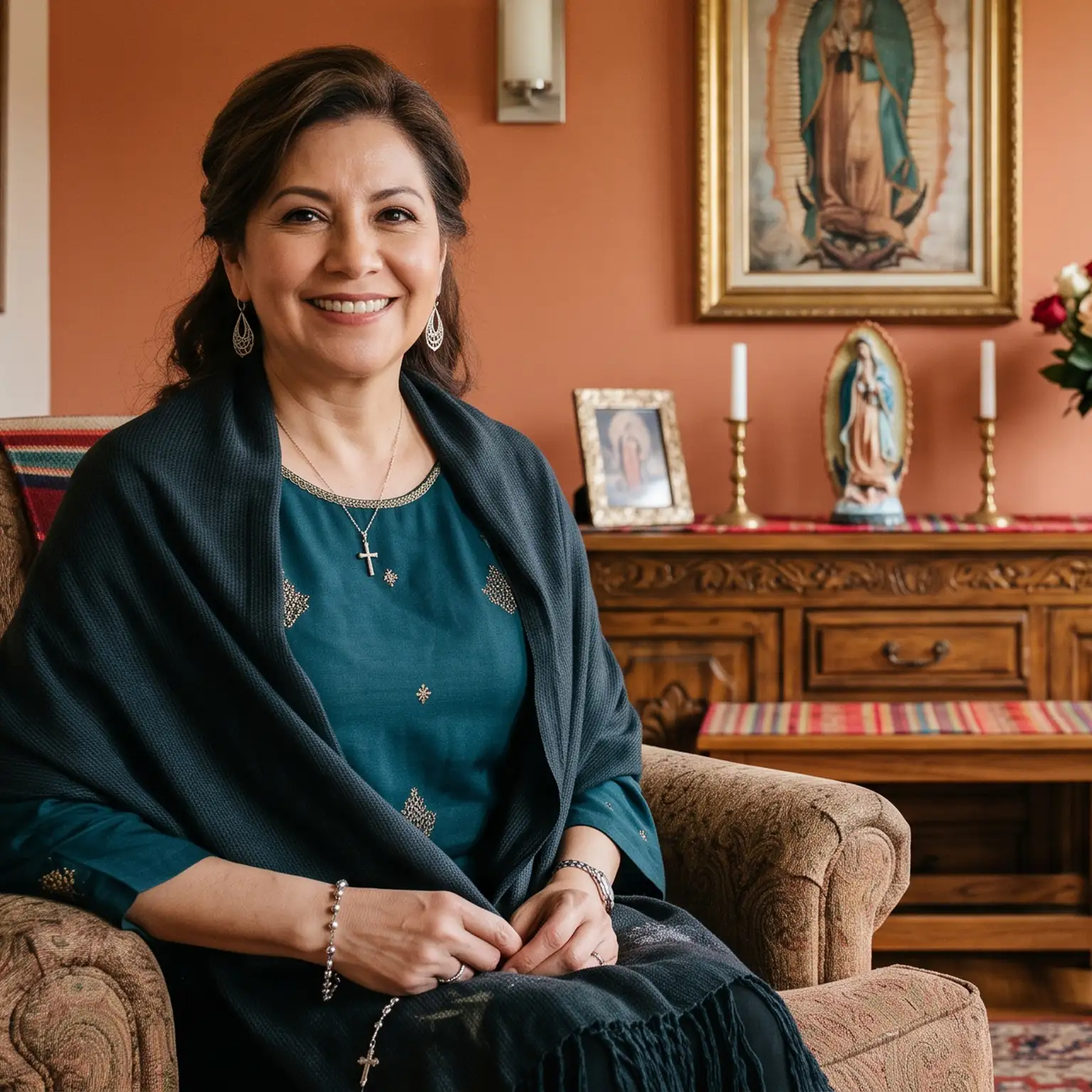
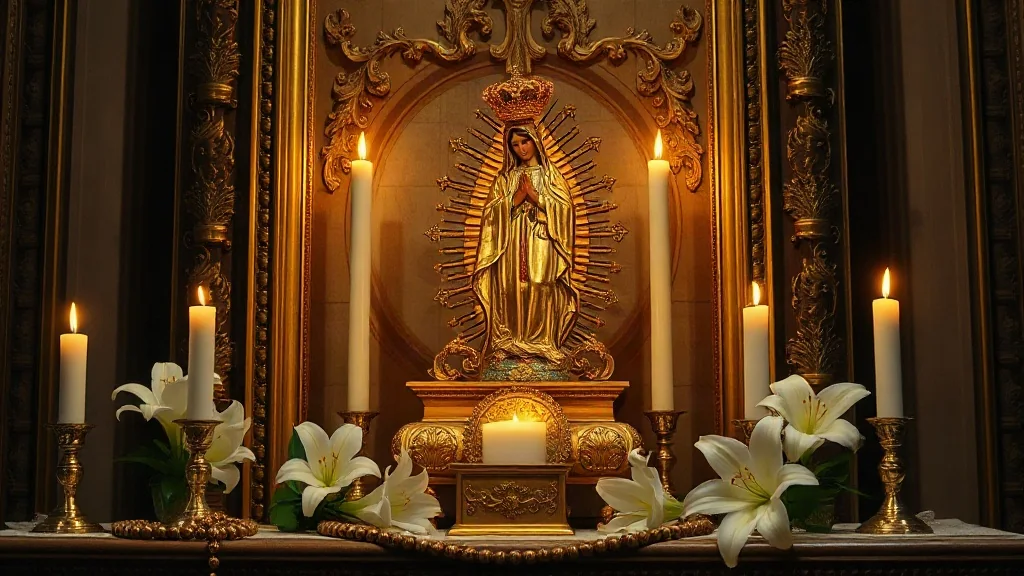
The devotion to Our Lady of Guadalupe transcends the boundaries of geography and culture, anchoring itself in the heart of the Americas and radiating globally. To wear her image is to carry a reminder of the *Tlatelolco* encounter, a testament to the maternal protection of Mary and her role as the Mediatrix of all graces. From a spiritual perspective, the medal acts as a constant "memento" of the divine promise: "Am I not here, I who am your Mother?" The physical presence of the metal against the chest creates a somatic connection to the divine, transforming a simple piece of jewelry into a shield of faith and a beacon of hope. In the context of sacred curation, we understand that the size of a medal often reflects the specific devotional intent of the believer. A miniature medal, perhaps 10mm in diameter, is often chosen for its discretion, representing a private, intimate conversation between the soul and the Virgin. Conversely, a larger medal, exceeding 30mm, is frequently intended as a public witness of faith or a ceremonial piece for significant milestones such as Bautizos or Quinceañeras. Regardless of the dimensions, the spiritual significance remains immutable: the medal is a window into the mystery of the Incarnation, reminding the faithful that God chose a humble woman and a humble land to manifest His infinite love.
As a researcher of Catholic devotion and a curator of sacred jewelry, I have spent decades analyzing how the tangible—the gold, the silver, the precise millimeter of a relief—intersects with the intangible grace of faith. A medal of Our Lady of Guadalupe is never merely an accessory; it is a *sacramental*, a physical anchor for the soul, and a silent prayer worn against the skin. When selecting such a piece, the dimensions are not merely a matter of aesthetics, but of intention. Whether one seeks a discreet sign of protection for a child or a prominent statement of faith for a matriarch, understanding the proportions of sacred jewelry is essential to honoring both the wearer and the Image.
The act of choosing the correct size for a Guadalupe pendant requires a delicate balance between the visibility of the sacred iconography and the humility of the wearer. In the realm of high jewelry and devotional art, we distinguish between the *diámetro* (diameter) of circular medals and the *alto por ancho* (height by width) of oval or silhouette pieces. Because the image of the Virgin of Guadalupe is rich in detail—from the rays of the sun to the stars on her mantle—the size of the piece directly affects the legibility of these theological symbols. This guide serves as a rigorous technical and spiritual roadmap for those seeking to acquire a piece that will serve as a legacy of faith for generations.
The genesis of this devotion dates back to December 1531 on the hill of Tepeyac, near Mexico City. The apparitions of the Virgin Mary to Saint Juan Diego Cuauhtlatoatzin marked a pivotal moment in the spiritual conquest of the New World. The culmination of these events—the miraculous imprint of the image on the *tilma* (cloak) of Juan Diego—provided a visual catechism for the indigenous peoples. This image, characterized by its synthesis of European and Nahua symbolism, became the blueprint for every medal and pendant produced in the centuries that followed. The historical transition from the original textile image to metallic reproductions allowed the devotion to be portable, enabling the faithful to carry the "Empress of the Americas" wherever they journeyed.
Throughout the colonial era, the production of Guadalupe medals was entrusted to the great guilds of goldsmiths in Mexico City and Puebla. These artisans utilized the *repoussé* technique, hammering the metal from the reverse side to create a high-relief image that captured the ethereal quality of the Virgin's gaze. By the 18th and 19th centuries, these medals had become essential components of the Catholic identity in Latin America, often passed down as family heirlooms. The evolution of these pieces reflects the broader history of the Church in the Americas, moving from the heavy, ornate styles of the Baroque period to the more streamlined and accessible designs of the modern era.
In the 20th century, the global spread of the Mexican diaspora further popularized the Guadalupe pendant. The image ceased to be exclusively Mexican and became a universal symbol of the marginalized and the hopeful. The industrialization of jewelry allowed for the creation of various sizes—from the 10mm "mini" medals to the 40mm ornamental pieces—making the devotion accessible to all social strata. This democratization of sacred art ensured that the message of Tepeyac could be worn by the laborer and the aristocrat alike, maintaining a consistent theological thread through varying materials and scales.
Today, the study of these medals reveals a fascinating intersection of art history and sociology. Curators observe that the preference for specific sizes often correlates with the liturgical use of the piece. For instance, the 15mm to 20mm range has historically been the standard for daily wear, while larger pieces were reserved for the *altar* or for use during specific novenas. The persistence of these dimensions in contemporary catalogs is a testament to the enduring nature of Catholic tradition, where the physical form of the object is designed to facilitate a timeless spiritual experience.
Theologically, the medal of Our Lady of Guadalupe is a *sacramental*. Unlike a sacrament, which confers grace *ex opere operato*, a sacramental prepares the believer to receive grace and disposes them to a spiritual effect. When a believer dons a Guadalupe pendant, they are not invoking a magical amulet, but rather engaging in a conscious act of entrustment. The medal serves as a physical manifestation of the *Hyperdulia*—the special veneration accorded to the Virgin Mary. It is a sign of the believer's desire to be clothed in the virtues of Mary: her humility, her obedience, and her unwavering faith in the Divine Plan.
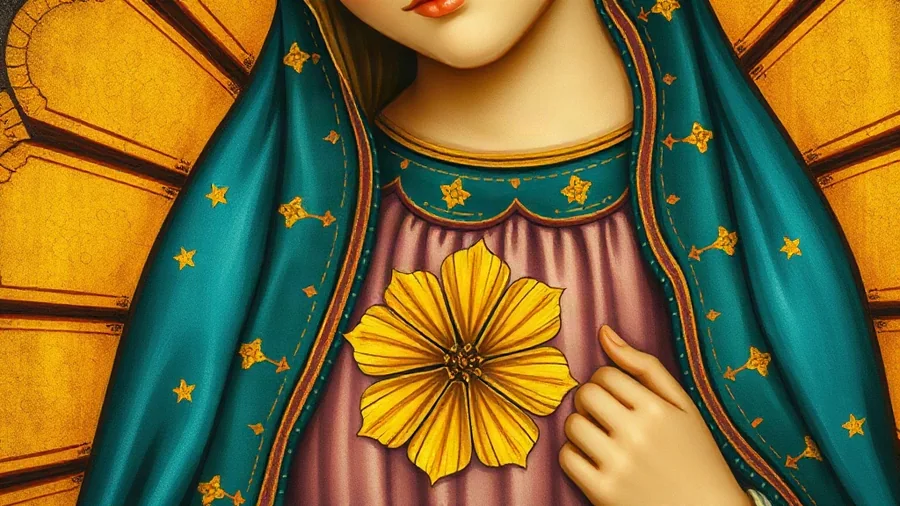
The symbolism embedded within the image—and thus replicated in the jewelry—is a profound theological treatise. The rays of the sun surrounding the Virgin signify that she is the "Woman Clothed with the Sun" from the Book of Revelation, yet she eclipses the sun, indicating that her light is derived from her Son, Jesus Christ. The crescent moon beneath her feet symbolizes her victory over darkness and the temporal world. The stars on her mantle represent the heavens, while her hands joined in prayer emphasize her role as the Intercessor. In a small 15mm medal, these details may be subtle; in a 30mm piece, they become a legible map of salvation history.
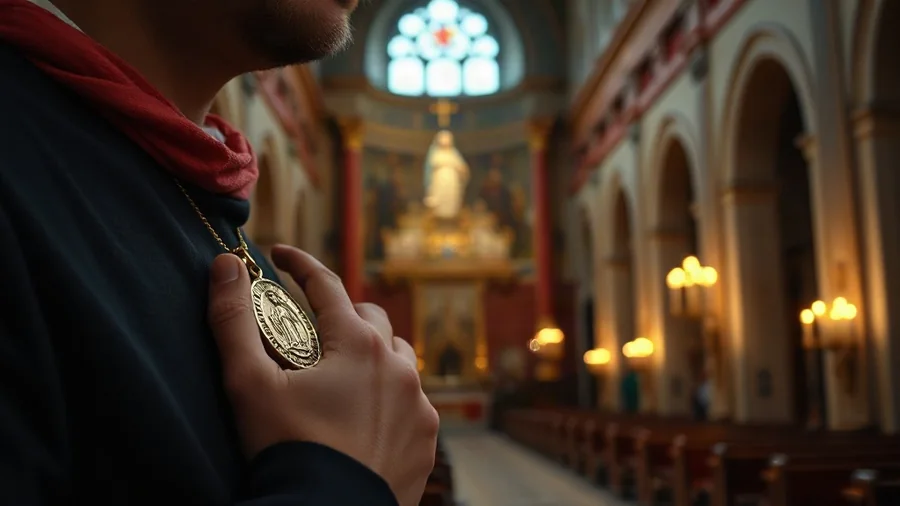
Furthermore, the image of the *Morenita* represents the theology of Inculturation. By appearing as a woman of mixed heritage, Mary bridged the gap between the Old World and the New, signaling that the Gospel is for all nations. Wearing this medal is an affirmation of the universality of the Church. For many, the pendant is a symbol of maternal protection; the "mantle" of the Virgin is seen as a spiritual refuge. The act of placing the medal close to the heart is a symbolic gesture of seeking sanctuary in the maternal care of Mary, who leads the faithful directly to Christ.
Finally, the use of these medals in the context of the sacraments—such as Baptism or Confirmation—integrates the jewelry into the believer's spiritual biography. A medal given at a baptism is not merely a gift, but a spiritual commitment. It marks the beginning of a lifelong relationship with the Church. As the child grows, the medal remains a constant, a tactile reminder of their identity as a child of God. The theological weight of the piece far exceeds its physical mass in gold or silver, as it carries the weight of a promise: that the believer is never alone in their pilgrimage toward eternity.
From the perspective of a curator, the choice of metal in a Guadalupe medal is inextricably linked to the concept of "offering." The use of precious metals is a tradition rooted in the biblical practice of offering the best of one's resources to the Divine. 14K gold is the gold standard for devotional jewelry due to its balance of purity and durability. While 24K gold is too soft for the intricate reliefs required to depict the Virgin's features, 14K gold provides the structural integrity necessary for a piece to survive decades of daily wear. The warm hue of gold also symbolizes the divine light and the kingship of Christ, making it the ideal medium for a piece intended to be a family heirloom.
Sterling Silver (925) holds a different, yet equally profound, significance. Silver is often associated with purity and the lunar qualities of the Virgin Mary. In the tradition of Hispanic orfebrería, silver has been the primary medium for religious expression for centuries. A 925 silver medal is prized for its luminosity and its ability to hold fine detail, particularly in the delicate folds of the Virgin's mantle. For the curator, the hallmark—the small stamp indicating the purity of the metal—is the certificate of authenticity that ensures the piece is a genuine investment in both faith and material.
The technical execution of the medal—the *relief*—is where the art of the goldsmith becomes a form of prayer. A "high relief" or 3D effect gives the image a lifelike presence, allowing the light to play across the contours of the Virgin's face. The thickness of the medal is a critical technical specification; a piece that is too thin may warp over time, while a piece with a thickness of 3mm to 6mm possesses a "heft" that signifies quality and permanence. The bezel, or the edge of the medal, can be polished to a mirror finish or left matte to draw more attention to the central image.
Care for these sacred pieces is an act of stewardship. Gold and silver naturally oxidize or dull over time, but in the context of devotional jewelry, this "patina" is often seen as a record of the wearer's journey. However, to maintain the clarity of the image, professional cleaning is recommended. It is vital to avoid abrasive chemicals that could erode the fine lines of the iconography. When pairing a medal with a chain, the curator suggests a proportional match: a 10-15mm medal pairs elegantly with a fine cable or curb chain, whereas a 30mm ornamental piece requires a robust wheat or rope chain to support the weight and maintain the balance of the piece on the chest.
14K Solid Gold / Oro 14K Sólido con acabado de orfebrería fina.
Prime Delivery Guaranteed
14K Gold Plated / Baño de Oro 14K con acabado de orfebrería fina.
Prime Delivery Guaranteed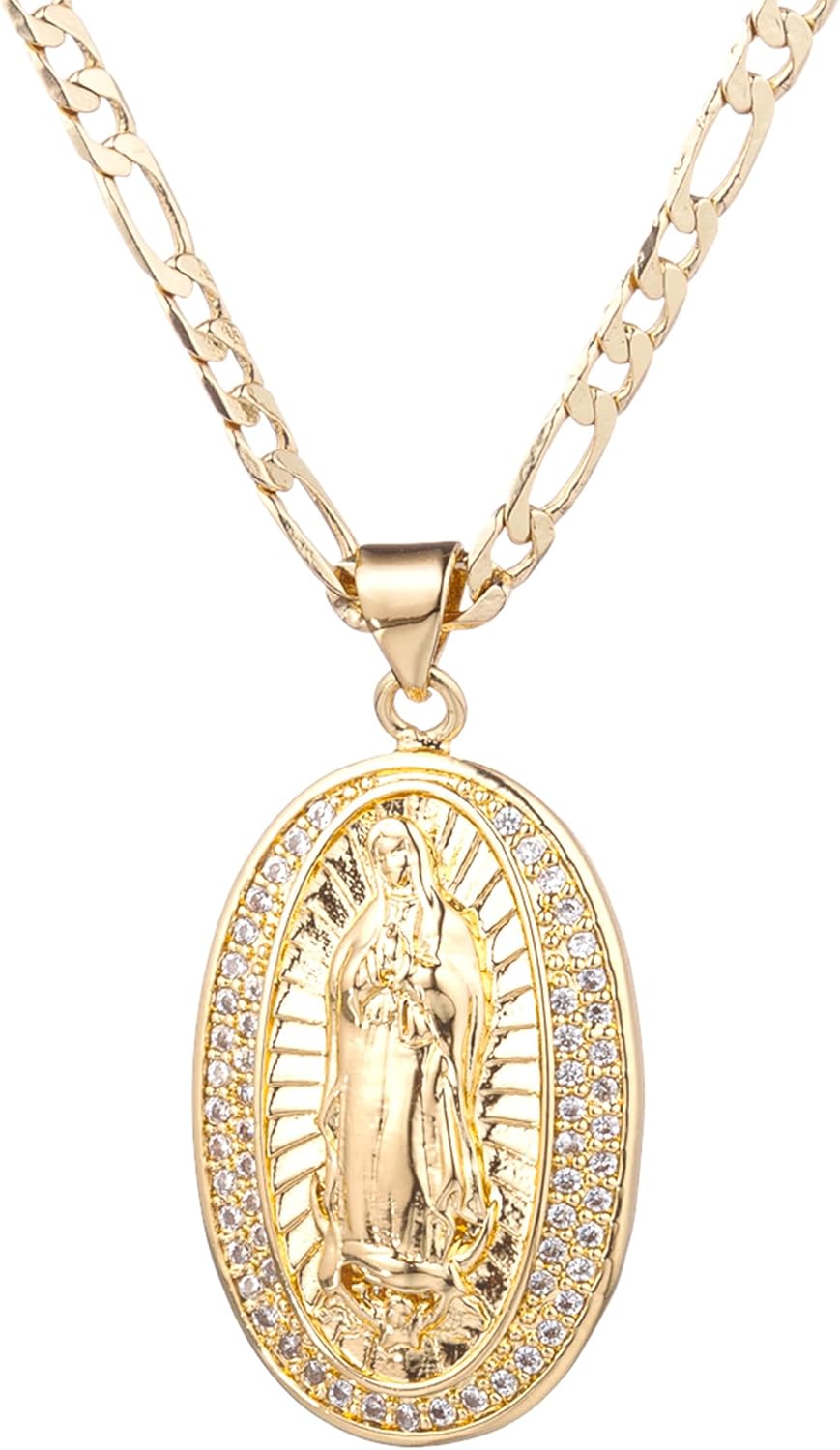
14K Gold Plated / Baño de Oro 14K con acabado de orfebrería fina.
Prime Delivery GuaranteedWhen selecting a Guadalupana piece, always prioritize certified precious metals (solid nickel-free 14K gold or Italian 925 sterling silver). Upon receiving it, take it to your parish priest for a traditional Catholic blessing to consecrate it as an enduring sacramental of protection.

Stainless Steel / Acero Inoxidable con acabado de orfebrería fina.
Prime Delivery Guaranteed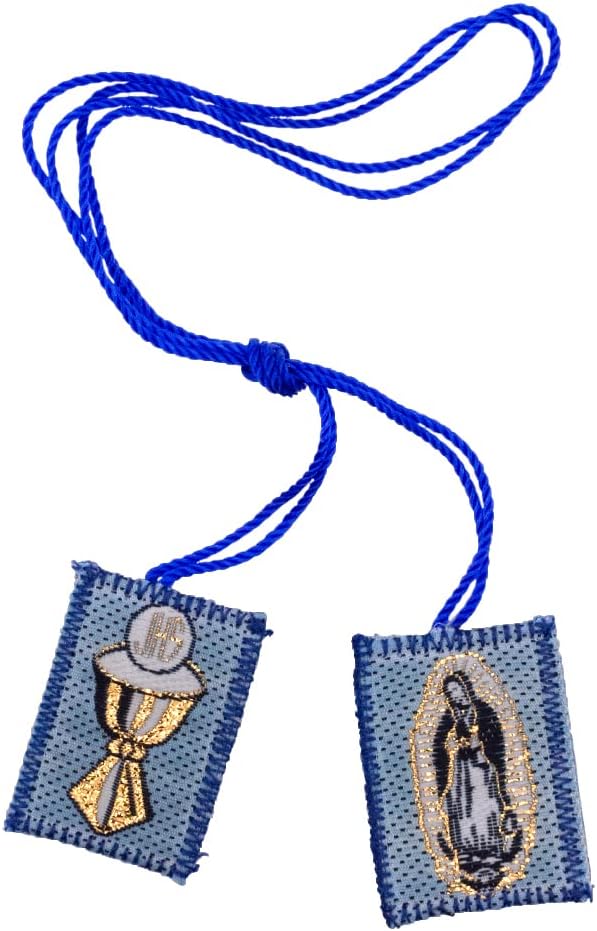
High-Quality Alloy / Aleación Metálica Duradera con acabado de orfebrería fina.
Prime Delivery Guaranteed
18K Gold Plated / Baño de Oro 18K con acabado de orfebrería fina.
Prime Delivery GuaranteedSelecting the correct size requires an assessment of both the intended wearer and the purpose of the piece. For those seeking a "discreet" or "minimalist" presence, the range of 10mm to 13mm (approx. 0.39 to 0.51 inches) is ideal. These sizes are frequently chosen for infants or for adults who prefer their faith to be a private, intimate anchor. At this scale, the image is a symbolic suggestion rather than a detailed portrait, making it perfect for layering with other necklaces or for wearing under a garment. For a "standard" devotional experience, the 15mm to 23mm (0.59 to 0.91 inches) range is the most versatile. A 20mm medal, for instance, provides enough surface area for the Virgin's features to be clearly visible while remaining comfortable for 24-hour wear. If the goal is a "protagonist" piece—one that serves as the central focus of an outfit or a bold statement of faith—I recommend the 25mm to 40mm (0.98 to 1.57 inches) range. These larger pieces are often used for special occasions or as primary devotional objects, though they require a sturdier chain to ensure they hang correctly.
From a theological standpoint, having a medal blessed is highly recommended. While the image itself is sacred, the blessing by a priest transforms the object into a *sacramental*. Through the prayer of the Church, the medal is set apart for a holy purpose, invoking the Holy Spirit to assist the wearer in their spiritual growth and protection. The blessing does not "charge" the metal with magic, but rather aligns the intention of the wearer with the grace of the Church, making the act of wearing the medal a conscious prayer. Regarding authenticity, one should always look for the "hallmark" or "stamp." For gold, this is typically "14K" or "585"; for silver, it is "925." A reputable jeweler or curator will provide a certificate of authenticity. When purchasing online, be wary of terms like "gold-plated" or "gold-filled" if you are seeking an heirloom piece, as these are layers of gold over a base metal (like brass or steel) and will wear away over time. True 14K gold or 925 silver is solid throughout, ensuring that the piece will maintain its value and integrity for generations.
The harmony between the medal and the chain is essential for both comfort and aesthetics. For small medals (10-15mm), a fine cable or box chain is appropriate. These chains are delicate and do not distract from the medal, creating a look of humility and grace. For mid-sized medals (16-23mm), a slightly thicker curb or rope chain provides the necessary support while maintaining a balanced silhouette. The chain should be long enough to allow the medal to rest on the upper chest, typically between 16 and 20 inches for women and 20 to 24 inches for men. For larger, ornamental medals (25-40mm), a robust chain is non-negotiable. A heavy rope or wheat chain prevents the medal from pulling too harshly on the neck and ensures that the piece remains centered. Furthermore, the "bale" (the loop that connects the medal to the chain) must be wide enough to accommodate the thickness of the chain. As a curator, I always advise clients to consider the weight; a large gold medal can be heavy, and a high-quality chain prevents the risk of breakage, ensuring the sacred image is never lost.
A Guadalupe medal is more than a piece of jewelry; it is a "spiritual heirloom." When a grandmother passes a silver medal to her granddaughter, she is not merely transferring a material asset, but a legacy of faith. This act can be integrated into a family prayer tradition, where the giving of the medal is accompanied by the sharing of personal testimonies of how the Virgin Mary has intervened in the family's life. This transforms the object into a narrative device, linking the current generation to their ancestors through a shared devotion. In the modern home, the medal can serve as a focal point for daily prayer. Some families keep a larger medal on a home altar, while wearing smaller ones during the day. By teaching children the symbolism of the image—the stars, the moon, the rays—parents use the medal as a visual aid for catechesis. In this way, the Guadalupe pendant becomes a bridge between the liturgical life of the Church and the domestic life of the family, ensuring that the "Morenita" remains a constant, loving presence in the household.
Affiliate Disclosure: As an Amazon Associate, this devotional portal earns from qualifying purchases at zero additional cost to you.
Find the perfect sacred piece in 3 simple steps
Handpicked based on your preferences and occasion