Laura's Selection

Ascona Catholic First Communion/Confirmation Gifts for Women Teen
14K Solid Gold / Oro 14K Sólido con acabado de orfebrería fina.
Prime Delivery Guaranteed
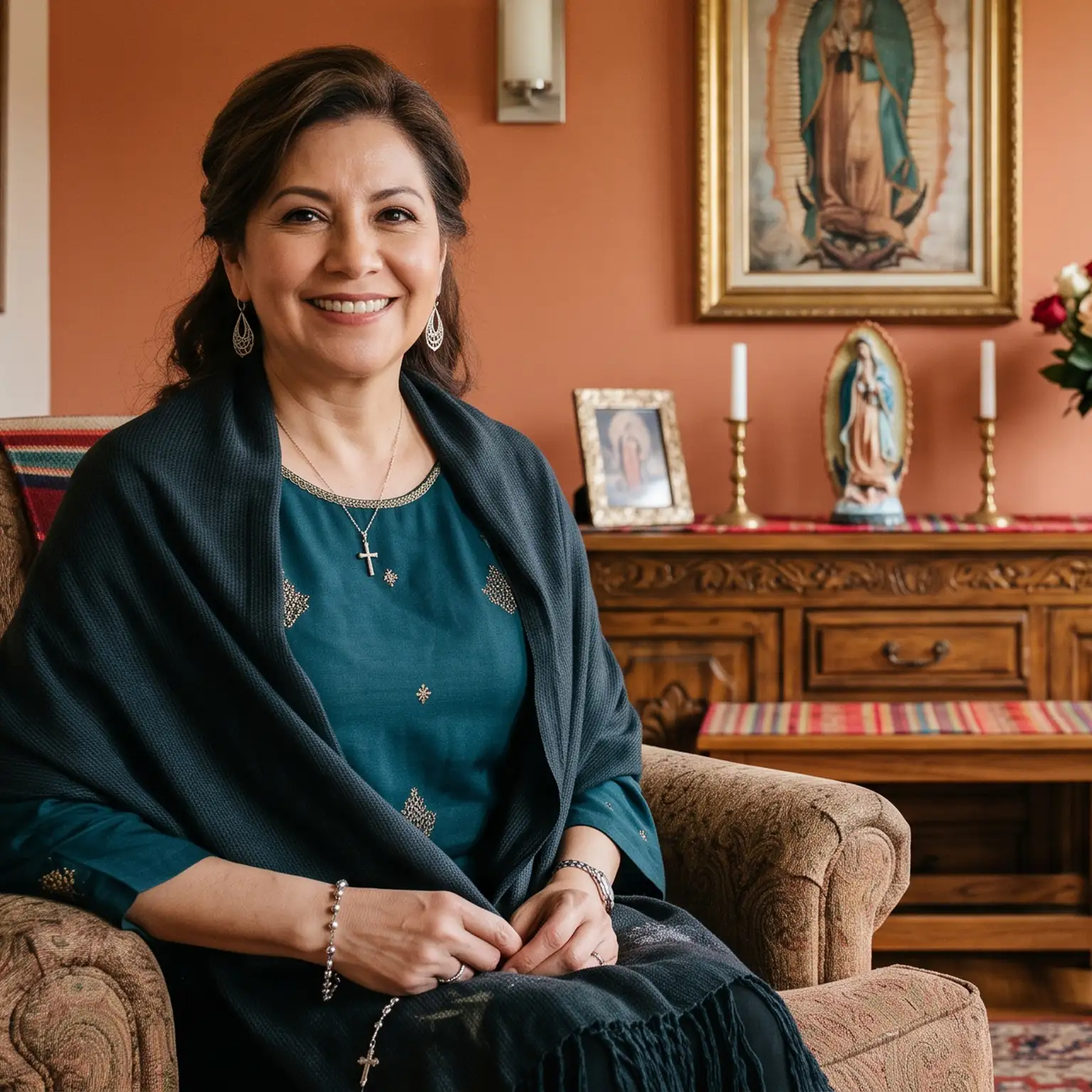
The act of wearing a devotional image around one's neck transcends the boundaries of mere ornamentation or contemporary fashion. When we speak of the Our Lady of Guadalupe necklaces for 2026, we are not discussing a seasonal trend, but rather the physical manifestation of a faith that has endured for centuries. For the Catholic believer, a medal of the Virgin of Guadalupe is a "sacramental"—a sacred sign that prepares the soul to receive grace and disposes the wearer to a supernatural effect. In the current landscape of sacred jewelry, where mass production often eclipses artisanal quality, the search for the "best" necklace requires a discerning eye that balances the purity of the metal with the fidelity of the iconographic representation. To wear the image of the Morenita is to carry a silent prayer, a constant reminder of maternal protection, and a public testimony of a devotion that unites millions across the globe, particularly in the Americas. From a curatorial perspective, the significance of these pieces lies in their ability to bridge the gap between the celestial and the terrestrial. A well-crafted necklace serves as a tactile anchor for the spirit; the weight of the gold or the cool touch of the silver against the skin acts as a sensory trigger for interior recollection. As we approach 2026, the market has evolved to offer a spectrum of options—from high-jewelry heirloom pieces in 18k gold to resilient stainless steel for daily pilgrimage. However, the spiritual value of the necklace remains independent of its price tag. Whether it is a modest medal of 11x9 mm or a grand medallion of 30x22 mm, the essence of the piece is found in the intention of the wearer and the sacredness of the image it bears. This guide seeks to provide the rigorous technical and spiritual criteria necessary to select a piece that will not only withstand the passage of time but will also serve as a spiritual legacy for future generations.
The genesis of the Guadalupan devotion, and consequently the proliferation of its imagery in sacred goldsmithing, dates back to December 1531. According to ecclesiastical tradition and historical accounts, the Virgin Mary appeared four times to Juan Diego, a humble indigenous convert, on the hill of Tepeyac. The culmination of these apparitions occurred when the Virgin requested that the Bishop of Mexico, Juan de Zumárraga, be informed of her desire to build a temple in her honor. The miraculous sign provided—the blooming of Castilian roses in winter and their subsequent imprint upon the tilma (cloak) of Juan Diego—established a visual and spiritual paradigm that would redefine the evangelization of the New World. This event was not merely a local occurrence but a cosmic intersection where the divine entered the history of the Nahua people, blending indigenous symbolism with Catholic dogma.
Throughout the colonial era, the image of the Virgin of Guadalupe became the central pillar of Mexican identity and a beacon of hope for the oppressed. The iconographic details found on the tilma—the rays of the sun, the lunar crescent, the stars on her mantle, and the sash of maternity—were meticulously translated into metal by the great goldsmiths of the Viceroyalty. Early devotional jewelry was often commissioned by the nobility and the clergy, utilizing heavy gold and precious gemstones to honor the "Empress of the Americas." These early pieces were not intended for daily wear but were kept as altar treasures or worn during solemn liturgical processions, cementing the image of Guadalupe as a symbol of both royal dignity and maternal humility.
As the centuries progressed, the democratization of faith led to the creation of more accessible devotional objects. By the 19th and 20th centuries, the production of medals in silver and gold-plated alloys allowed the working class to possess a physical connection to the Virgin. The transition from artisanal, one-of-a-kind pieces to standardized religious catalogs enabled the global spread of the devotion. The 20th century saw the rise of specialized religious jewelry houses, particularly in Italy and Mexico, which refined the stamping and engraving techniques to ensure that the delicate features of the Virgin's face and the folds of her mantle remained crisp and recognizable even in miniature scales.
Entering the year 2026, we observe a synthesis of traditional craftsmanship and modern metallurgy. The historical continuity of the image remains unbroken; the medals produced today still adhere to the proportions and symbols established in 1531. However, the materials have diversified. We now see the integration of mother-of-pearl to simulate the luminosity of the divine light and the use of high-grade stainless steel for those who seek a durable, hypoallergenic option for daily use. Despite these technical advancements, the historical weight of the Tepeyac apparitions continues to be the primary driver of value, making every necklace a link in a chain of faith that spans nearly five centuries.
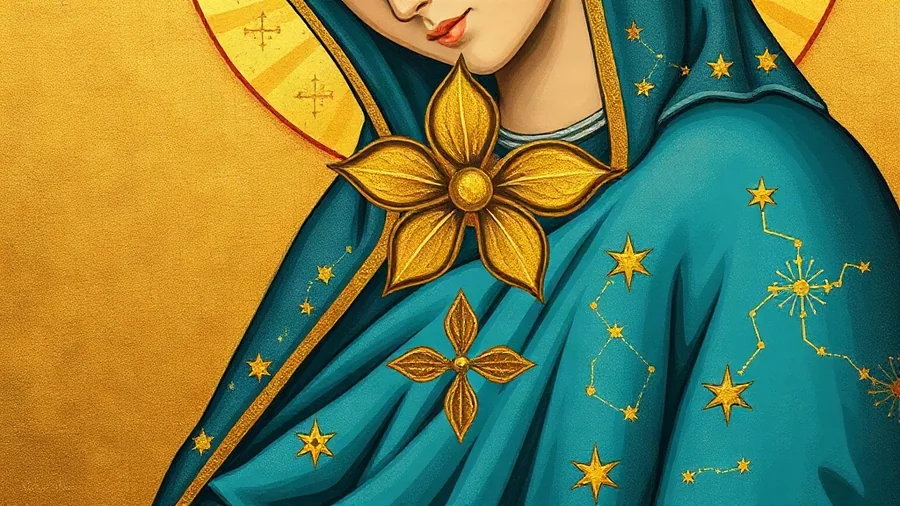
To understand the value of an Our Lady of Guadalupe necklace, one must delve into the profound Marian theology embedded in the image. The Virgin of Guadalupe is not merely a cultural icon but a theological synthesis of the Incarnation. Her posture—hands joined in prayer and eyes cast downward—reflects the "Ancilla Domini" (the Handmaid of the Lord), emphasizing her role as the mediatrix who leads the faithful to her Son. The gold or silver that encases this image serves as a metaphor for the purity and preciousness of the grace she distributes. When a believer wears this medal, they are not wearing an amulet for luck, but a "signum" (sign) of a covenant between God and humanity, mediated through the maternal care of Mary.
The symbolism within the image is a masterclass in divine communication. The sun surrounding her signifies that she is clothed with the sun, as described in the Book of Revelation, yet she does not obscure the light; rather, she reflects it. The moon beneath her feet symbolizes her dominion over time and the changing tides of the world, asserting the eternal nature of the Gospel. The stars on her mantle represent the heavens, suggesting that the Virgin is the Queen of the Universe. In the context of jewelry, these details are often highlighted through polishing or the addition of small zirconias, which, while ornamental, serve to remind the wearer of the celestial glory that awaits the faithful.
Furthermore, the theological concept of the "Mestizaje" is central to the Guadalupan message. By appearing as a woman of mixed heritage and speaking in the native tongue, the Virgin signaled the unification of disparate peoples under one faith. A necklace bearing her image is therefore a symbol of inclusivity and universal motherhood. It speaks to the theological truth that the love of God knows no ethnic or social boundaries. For the wearer, the medal becomes a reminder of their own identity as a child of God, protected by a Mother who understands the struggles of the marginalized and the hopes of the humble.
Finally, the spiritual meaning of wearing such a piece is rooted in the practice of "sacramental living." In Catholic tradition, the use of medals encourages a state of constant prayer. The physical sensation of the medal resting on the chest—near the heart—is intended to foster a rhythmic interior dialogue with the Divine. It is an act of entrustment. By placing the image of the Virgin upon their person, the devotee expresses a desire to be clothed in her virtues: her humility, her obedience, and her unwavering faith. Thus, the selection of the material—be it the nobility of gold or the purity of silver—is a reflection of the honor the believer wishes to render to the Queen of Heaven.
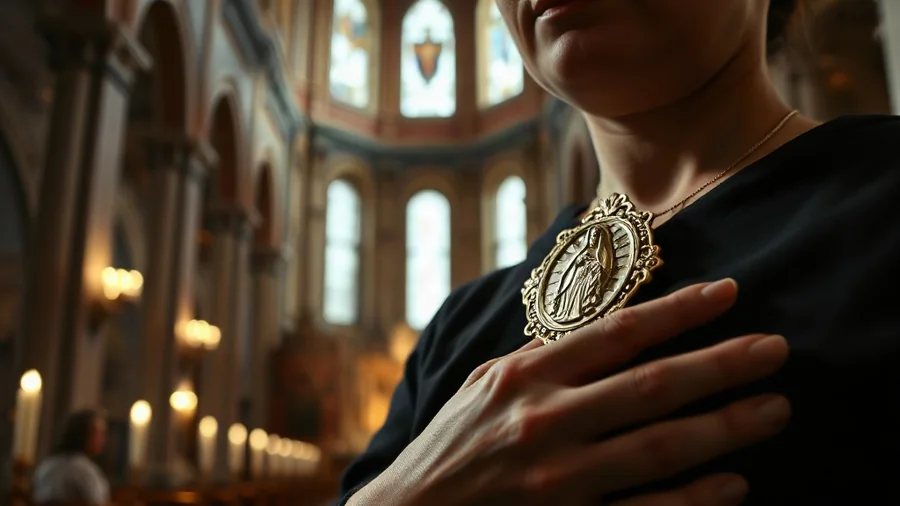
From the perspective of a curator of sacred jewelry, the choice of metal is not merely a matter of budget, but a decision regarding durability, symbolism, and legacy. For those seeking a piece of high jewelry that can be passed down through generations, 14K or 18K gold remains the gold standard. Gold is chemically inert, meaning it does not oxidize or tarnish, mirroring the eternal and incorruptible nature of the divine. A solid gold Our Lady of Guadalupe medal is an investment in patrimony. When evaluating these pieces, it is imperative to look for official hallmarks—small stamps that certify the purity of the metal. A piece without a clear hallmark lacks the transparency required for high-value religious acquisitions.
Sterling silver (925 silver) offers a sublime balance between aesthetic elegance and accessibility. Silver has long been associated with the lunar qualities of the Virgin Mary—pure, reflective, and serene. However, unlike gold, silver is subject to natural oxidation, creating a patina over time. For the devout wearer, this oxidation can be seen as a reflection of the journey of faith—requiring periodic cleaning and care to maintain its brilliance. When selecting a silver necklace, one should ensure the piece is "925 Sterling," meaning it consists of 92.5% pure silver and 7.5% other metals (usually copper) to provide the necessary structural strength for the intricate reliefs of the Guadalupan image.
For the modern believer who requires a piece for daily, rigorous use, stainless steel with a 14K gold plating is an increasingly viable option. While it lacks the intrinsic value of precious metals, its resistance to corrosion and hypoallergenic properties make it ideal for those with sensitive skin or those who wear their jewelry during physical labor or exercise. The key here is the quality of the plating; a "3-micron" gold bath is significantly more durable than a simple flash plating, ensuring that the golden hue remains vibrant for a longer period. These pieces are often the best choice for "daily devotion" necklaces, where the priority is the visibility of the image rather than the value of the material.
Finally, the artistry of the "engaste" (setting) and the "relieve" (relief) are what distinguish a masterwork from a mass-produced trinket. A high-quality Guadalupan necklace will feature a crisp, deep relief where the contours of the Virgin's face and the rays of the sun are clearly defined, creating a play of light and shadow that gives the image life. If the piece includes gemstones or zirconias, they should be securely set in prongs or bezels to prevent loss. The chain itself—whether a delicate cable chain, a robust curb chain, or a simple braided cord—must be proportional to the weight of the medal to ensure the piece hangs correctly and does not put undue stress on the loop (the bail). Proper maintenance, including the use of soft cloths and the avoidance of harsh chemicals, ensures that these sacred objects remain luminous witnesses of faith for decades.
14K Solid Gold / Oro 14K Sólido con acabado de orfebrería fina.
Prime Delivery Guaranteed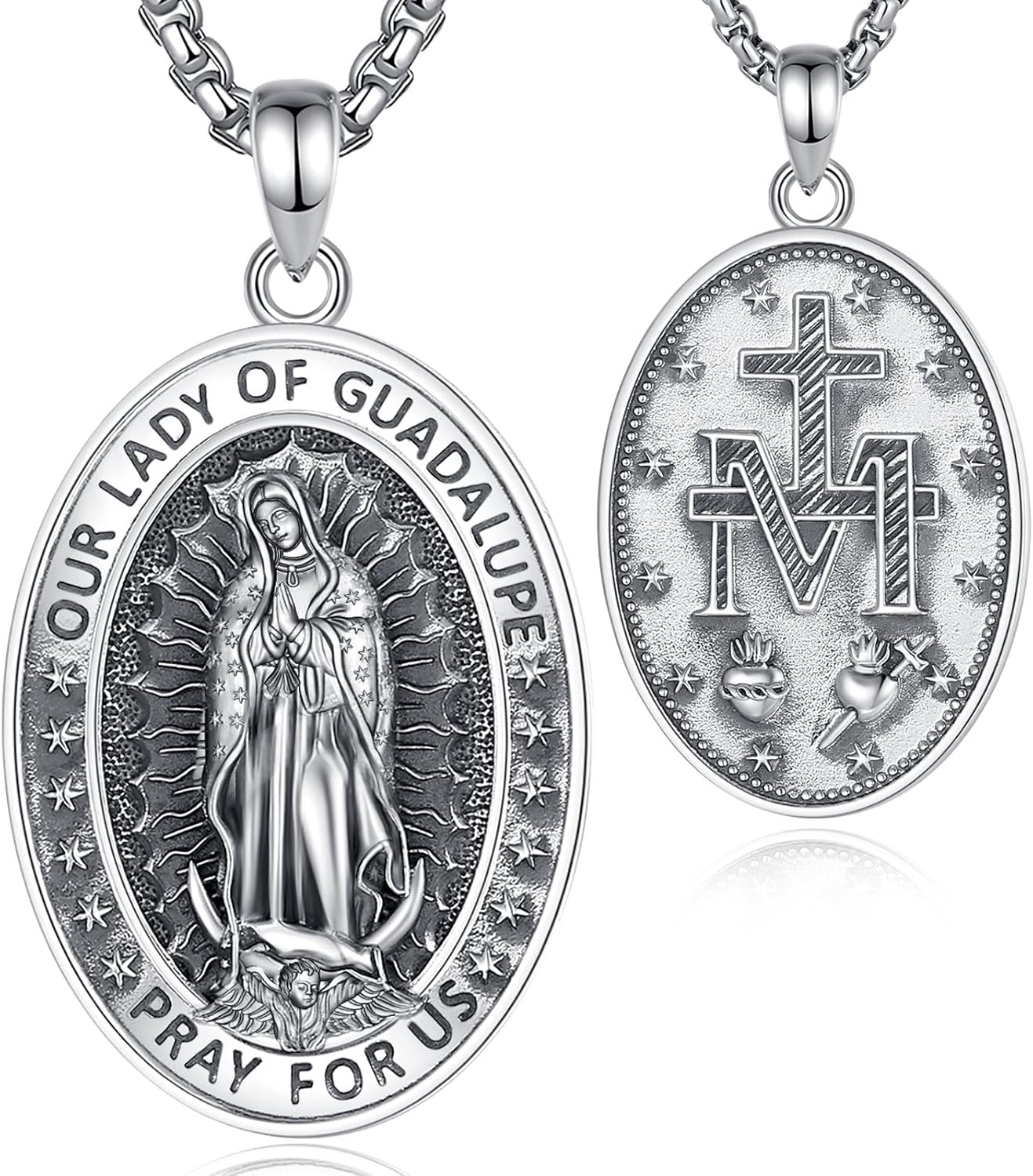
925 Sterling Silver / Plata de Ley 925 con acabado de orfebrería fina.
Prime Delivery Guaranteed
Gold Plated / Chapa de Oro con acabado de orfebrería fina.
Prime Delivery GuaranteedWhen selecting a Guadalupana piece, always prioritize certified precious metals (solid nickel-free 14K gold or Italian 925 sterling silver). Upon receiving it, take it to your parish priest for a traditional Catholic blessing to consecrate it as an enduring sacramental of protection.

925 Sterling Silver / Plata de Ley 925 con acabado de orfebrería fina.
Prime Delivery Guaranteed
Gold Plated / Chapa de Oro con acabado de orfebrería fina.
Prime Delivery Guaranteed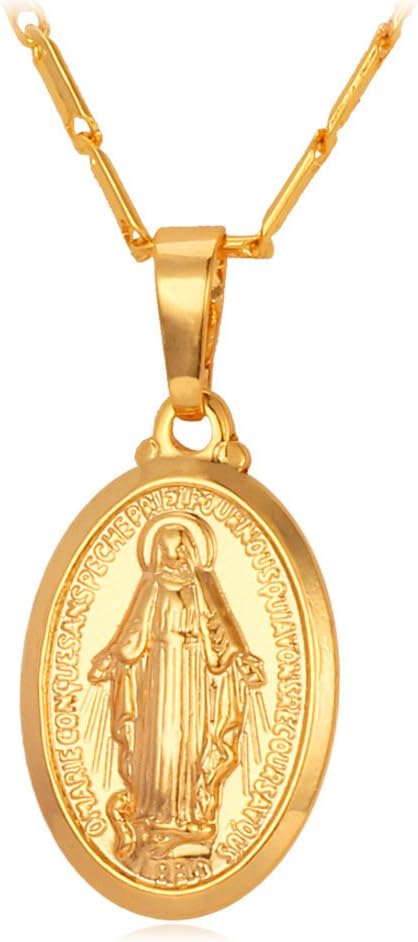
18K Gold Plated / Baño de Oro 18K con acabado de orfebrería fina.
Prime Delivery GuaranteedDetermining the "best" necklace depends entirely on the intended use and the wearer's priorities. For those seeking a lifelong heirloom or a solemn gift for a milestone such as a Quinceañera or a wedding, a solid 14K gold medal is the superior choice due to its permanence and intrinsic value. These pieces are typically characterized by high-definition relief and are often paired with a sturdy gold chain to ensure they remain a family treasure for generations. Conversely, for daily wear and constant devotional use, the best options are 925 Sterling Silver or high-grade stainless steel with a 14K gold finish. Silver provides a classic, ecclesiastical look that is highly respected in Catholic tradition, while stainless steel offers unmatched durability for those with an active lifestyle. When choosing, one should prioritize the clarity of the iconographic details over the brand name, ensuring the image faithfully represents the original tilma of 1531.
Authenticity is verified through hallmarks. A genuine silver piece must be stamped with "925," and gold pieces should have a stamp indicating their karatage (e.g., "14K" or "585"). I recommend purchasing from established religious jewelers or houses that provide a certificate of authenticity. If a piece is described as "gold-plated" or "gold-filled," the seller should be able to specify the thickness of the plating in microns; anything less than 2-3 microns is likely to wear off quickly. Regarding the blessing, while the medal is a beautiful object of art, it becomes a true sacramental when blessed by a priest. A priestly blessing does not change the metal, but it sets the object apart for a sacred purpose, invoking the Holy Spirit to assist the wearer in their spiritual journey. It is highly recommended to take the necklace to your parish priest for a simple blessing, transforming the jewelry from a decorative accessory into a spiritual tool for prayer and protection.
The selection of size should be governed by the desired level of discretion and the occasion. A small medal (approximately 11x9 mm) is ideal for those who prefer a subtle, intimate connection to the Virgin, often worn tucked under clothing as a private devotion. Medium-sized medals (around 20mm) are the most versatile, suitable for both daily wear and formal events. Large medallions (30x22 mm or larger) are statement pieces of faith, often used in more ornamental settings or as central pieces in a layered jewelry arrangement. Style-wise, the choice between a metallic chain and a braided cord reflects the wearer's personal aesthetic and the context of use. A gold or silver chain is formal and traditional, aligning with the liturgical dignity of the Church. A braided cord or leather strap is more casual and contemporary, often preferred by youth or for informal daily wear. Regardless of the style, the most important criterion is that the image of the Virgin remains the focal point, not overshadowed by excessive ornamentation.
In an era of digital distraction, a physical object like a Guadalupe necklace serves as a tangible link to ancestral faith. When a mother passes a silver medal to her daughter, or a grandfather gives a gold pendant to his grandson, they are not merely transferring jewelry; they are transmitting a spiritual heritage. The necklace becomes a conversation starter, allowing elders to share the history of the 1531 apparitions and the personal testimonies of how the Virgin has intervened in their lives. Furthermore, these pieces can act as a catalyst for family prayer. The act of blessing a new medal together as a family or wearing them during a Novena to the Virgin of Guadalupe fosters a sense of communal identity and spiritual security. By integrating these sacred objects into the rhythms of daily life, families create a "domestic church" where the presence of Mary is felt and honored, ensuring that the flame of devotion is kept alive for the generations to come.
Affiliate Disclosure: As an Amazon Associate, this devotional portal earns from qualifying purchases at zero additional cost to you.
Find the perfect sacred piece in 3 simple steps
Handpicked based on your preferences and occasion