Laura's Selection
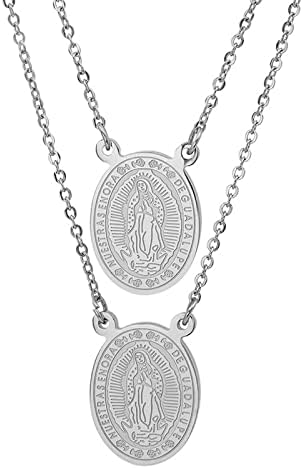
Steeltime Stainless Steel Virgin Mary Guadalupe Scapular
18K Gold Plated / Baño de Oro 18K con acabado de orfebrería fina.
Prime Delivery Guaranteed
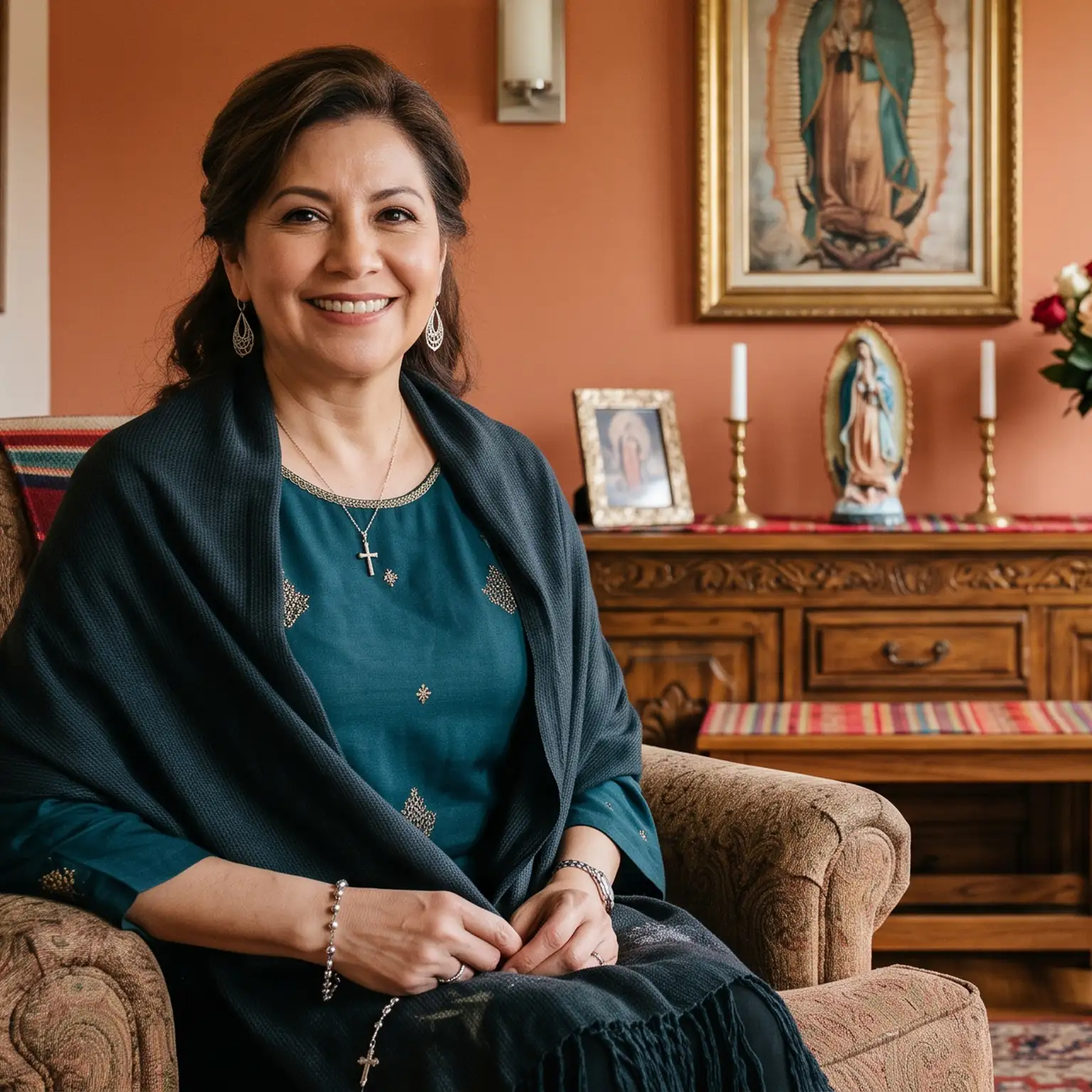
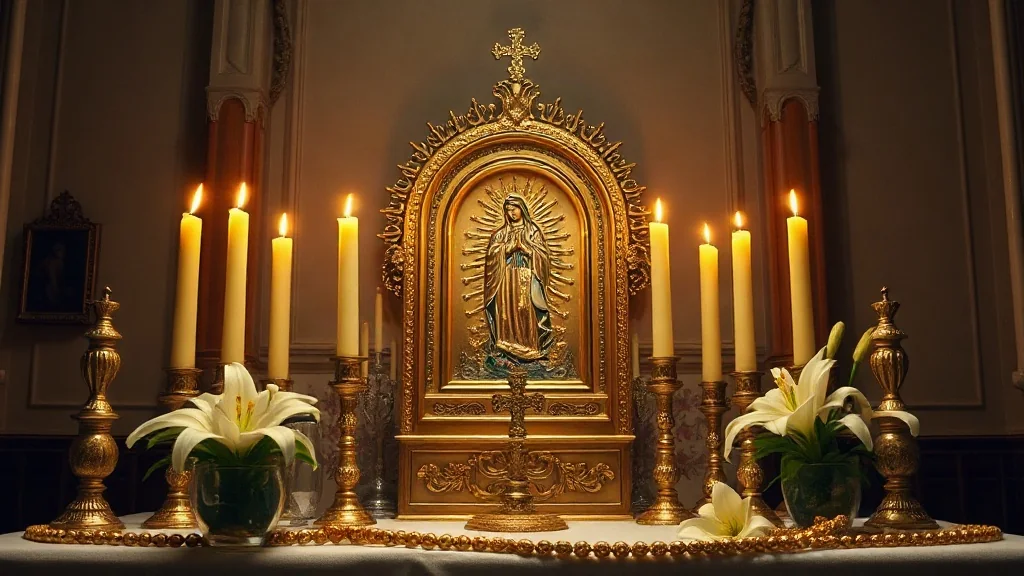
The phenomenon of the Castilian roses at Tepeyac represents one of the most profound intersections of divine intervention and human history within the Catholic tradition. To the discerning eye of a researcher and curator, this event is not merely a narrative of floral anomaly, but a sophisticated theological statement encoded in the language of nature. The appearance of *Rosa gallica*—the Castilian rose—in the arid, stony heights of the Tepeyac hill during the depths of December 1531, constitutes a rupture in the natural order intended to signal a new spiritual dawn. In the context of the early colonial period, where the indigenous world and the Hispanic world were colliding in a crucible of trauma and transformation, the rose served as a celestial bridge. It was a sign that transcended linguistic barriers, speaking a universal language of beauty, purity, and divine favor to a people whose landscape had been irrevocably altered. From a spiritual perspective, the miracle of the winter blossoms functions as a powerful metaphor for the Grace of God operating within the sterility of human limitation. The Tepeyac hill, described in historical accounts as a desolate and rocky terrain, mirrors the spiritual drought and cultural disorientation of the indigenous population of the sixteenth century. That life—and specifically a flower of such exquisite delicacy and foreign origin—could bloom in a place and season where nature forbade it, underscores the central tenet of the Guadalupan message: that the Impossible becomes Possible through the mediation of the Virgin Mary. This event does not merely validate the apparitions to Juan Diego; it establishes the concept of "sacred fecundity," where the barrenness of the earth is overcome by the will of Heaven, promising a spiritual flowering for all who seek refuge under the mantle of the *Morenita*.
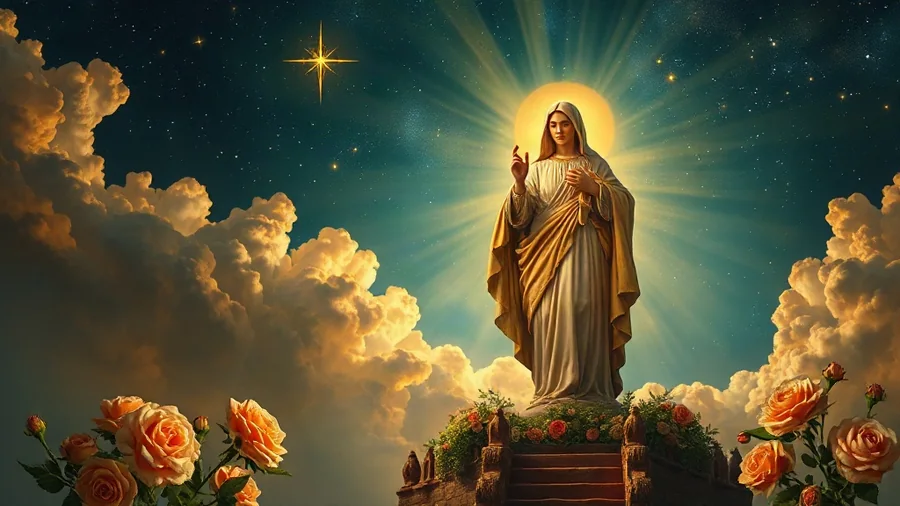
The sequence of events that culminated in the Miracle of the Roses is meticulously preserved in the *Nican Mopohua*, the foundational Nahuatl text that narrates the apparitions. The chronology begins on December 9, 1531, when Juan Diego, known in historical records as Cuauhtlatoatzin, encountered the Virgin Mary on the hill of Tepeyac. This initial meeting set in motion a series of divine requests that challenged the social and ecclesiastical hierarchies of the time. The Virgin expressed her desire for a temple to be built on the site, a request that Juan Diego was tasked with delivering to the bishop of Mexico, Fray Juan de Zumárraga. However, as is common in the hagiography of divine interventions, the messenger was met with skepticism; the bishop required a tangible, undeniable sign to validate the claims of a humble indigenous convert.
The climax of this divine dialogue occurred on December 12, 1531. According to the tradition, the Virgin instructed Juan Diego to ascend the Tepeyac hill once more. Despite the winter season and the naturally arid, semi-desert conditions of the terrain—which rendered the growth of any flower, let alone a European variety, an impossibility—Juan Diego found a lush bed of Castilian roses in full bloom. These roses were not native to the Valley of Mexico; they were symbols of the Spanish gardens, yet here they grew spontaneously, defying the laws of botany and climatology. Juan Diego gathered these blossoms in his *tilma* (a cloak made of coarse agave fiber), treating the fabric not merely as a vessel, but as a sacred reliquary for the evidence of the divine.
Upon returning to the presence of Fray Juan de Zumárraga, Juan Diego presented the tilma. The moment the cloak was unfurled, the Castilian roses fell before the bishop, but the miracle did not end with the flowers. In the place where the roses had rested, the image of the Virgin of Guadalupe was found miraculously imprinted upon the coarse fabric. This dual miracle—the impossible bloom and the supernatural painting—served as the definitive seal of authenticity. The *tilma* transitioned from a garment of poverty to a canvas of eternity, merging the material reality of the indigenous worker with the celestial glory of the Queen of Heaven.
Following this prodigy, the ecclesiastical authority was compelled to accept the sign, leading to the initiation of the construction of the first chapel on the Tepeyac hill. The historical significance of this event cannot be overstated; it provided a catalyst for the mass conversion of the indigenous peoples of New Spain, as they recognized in the Virgin a mother who spoke their language and understood their suffering. The canonization of Saint Juan Diego by Pope John Paul II in 2002 further solidified the historical and spiritual legitimacy of this account, acknowledging the man who carried the roses as a pivotal figure in the salvation history of the Americas.
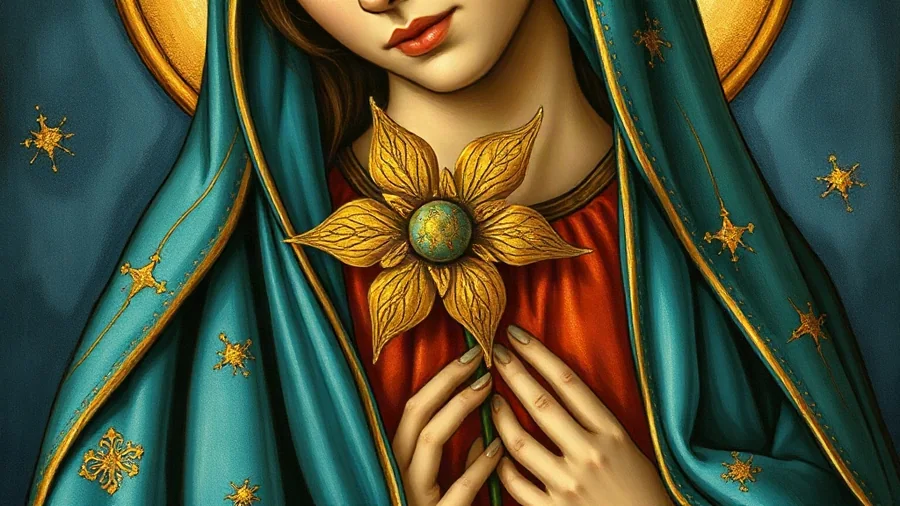
Theologically, the Miracle of the Castilian Roses is a masterclass in Marian semiotics. The rose has long been associated with the Virgin Mary in Catholic iconography, often referred to as the "Mystical Rose" (*Rosa Mystica*). By choosing the rose as the sign for the bishop, the Virgin utilized a symbol that was deeply embedded in the European tradition of the Church, while placing it in an indigenous setting. This act symbolizes the synthesis of two worlds. The Castilian rose, an import from the Old World, blooming in the New World, represents the grafting of the Gospel onto the indigenous soul. It is a theological statement of unity, suggesting that the Grace of God is not the property of one culture, but a universal gift that flourishes wherever faith is planted.
Furthermore, the timing of the miracle—occurring in the dead of winter—carries a profound eschatological meaning. In the liturgical and natural cycle, winter represents death, dormancy, and the absence of life. For roses to bloom in December is a prefiguration of the Resurrection. It suggests that the arrival of the Virgin at Tepeyac was a herald of a new spring for the Americas, a spiritual awakening that would bring life to a land devastated by conquest and disease. The miracle asserts that the Divine Will is not bound by the limitations of time or nature; it is an invitation to the believer to trust in the providence of God even when the "winter" of their own life seems insurmountable.
The role of the *tilma* in this theological framework is equally significant. The choice of a humble, coarse material—the *ayate*—is a deliberate manifestation of the "preferential option for the poor." The image of the Virgin did not appear on a silk canvas or a gold leaf, but on the garment of a laborer. This signifies that the sacred is accessible to all and that the most humble instruments are often the most capable of carrying the divine presence. The roses, which acted as the catalyst for the image's appearance, represent the "fragrance of virtue" and the beauty of faith that precedes the revelation of Truth.
Ultimately, the miracle of the roses teaches us about the nature of divine validation. The bishop demanded a sign, and the Virgin provided one that was both beautiful and impossible. This highlights the tension between human reason (which sees only the arid hill and the winter frost) and divine revelation (which sees the potential for a garden). The roses at Tepeyac are thus a perpetual reminder that the heart of the believer must be like the Tepeyac hill: ready to be transformed by the touch of the Divine, allowing the blossoms of grace to emerge from the most unexpected and sterile places of our existence.
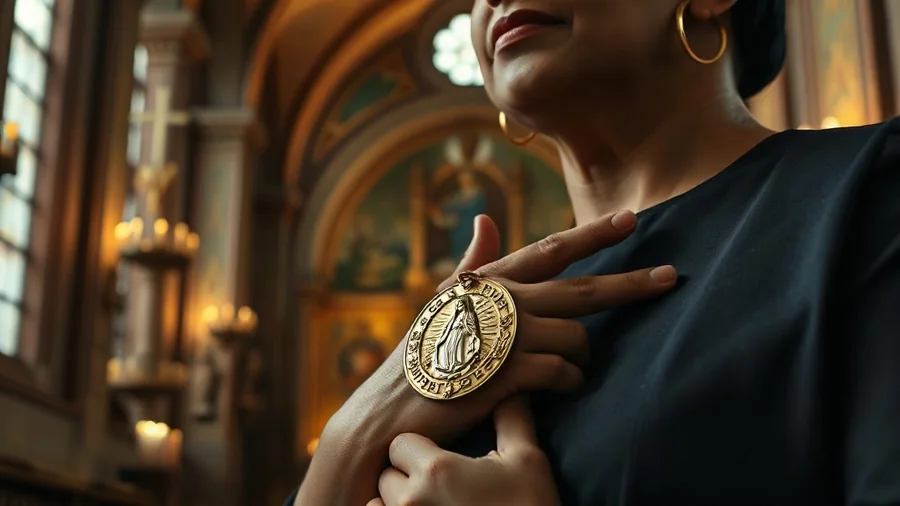
As a curator of sacred jewelry, I find that the spiritual essence of the Guadalupan miracle is most eloquently preserved when translated into the permanence of precious metals. When commissioning or selecting a devotional piece that commemorates the Miracle of the Roses, the choice of material is not merely aesthetic but symbolic. 14K gold is the gold standard for such heirlooms; its balance of purity and durability ensures that the piece can be passed through generations without losing its luster. In the language of sacred metallurgy, gold represents the Divine Light, the Kingship of Christ, and the incorruptibility of the soul. A medal depicting the Virgin of Guadalupe or the symbolic roses, cast in 14K gold, serves as a tangible anchor for prayer, reflecting the eternal nature of the promise made at Tepeyac.
For those seeking a purity that mirrors the virginal nature of Mary, 925 Sterling Silver is the ideal selection. Silver, in the tradition of sacred arts, is associated with the lunar, the reflective, and the purifying. A finely crafted silver necklace featuring the roses of Tepeyac captures the ethereal quality of the miracle. To ensure the authenticity and value of such a piece, one must look for the official hallmarks—the "14K" or "925" stamps—which serve as a guarantee of metal purity. In the realm of high-end sacred jewelry, the craftsmanship should involve a combination of lost-wax casting for detail and hand-polishing to achieve a mirror-like finish, reflecting the light of the wearer's faith.
The care of these sacred objects is a form of devotion in itself. Gold and silver, while durable, require mindful maintenance to preserve their spiritual radiance. I recommend the use of a soft microfiber cloth and mild, non-abrasive cleaners to remove the patina of time without scratching the intricate details of the iconography. For pieces that feature gemstones—perhaps a small ruby to represent the red of the Castilian rose—it is imperative to check the settings periodically to ensure the stones remain secure. Treating a devotional medal not as a mere accessory, but as a "sacramental" object, elevates the act of wearing it to a continuous prayer.
When selecting a piece of jewelry to honor the Miracle of the Roses, I encourage the seeker to look for "heirloom quality" craftsmanship. This means avoiding plated metals, which peel and fade, and instead investing in solid gold or silver. A solid piece of jewelry does not decay; it matures. Just as the image on the *tilma* has endured for centuries against all scientific explanation, a solid gold or silver medal becomes a vessel of family history, carrying the prayers of the grandmother to the granddaughter. In the intersection of orfebrería and faith, the metal becomes a witness to the enduring nature of the miracle.
18K Gold Plated / Baño de Oro 18K con acabado de orfebrería fina.
Prime Delivery Guaranteed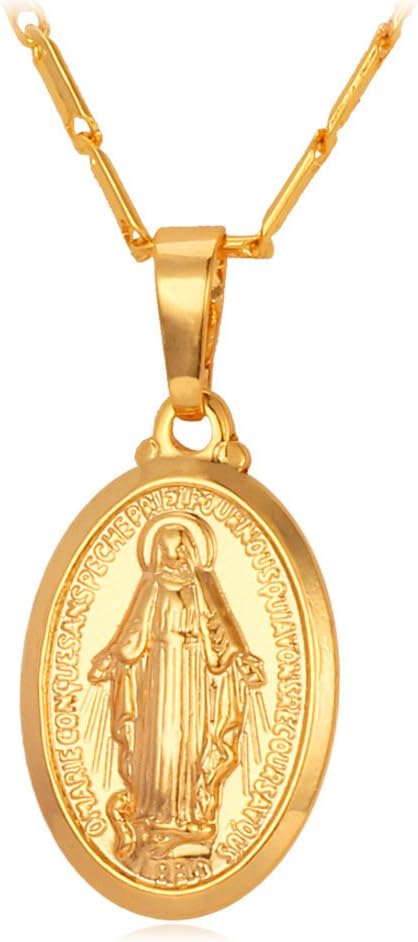
18K Gold Plated / Baño de Oro 18K con acabado de orfebrería fina.
Prime Delivery Guaranteed
Stainless Steel / Acero Inoxidable con acabado de orfebrería fina.
Prime Delivery GuaranteedWhen selecting a Guadalupana piece, always prioritize certified precious metals (solid nickel-free 14K gold or Italian 925 sterling silver). Upon receiving it, take it to your parish priest for a traditional Catholic blessing to consecrate it as an enduring sacramental of protection.
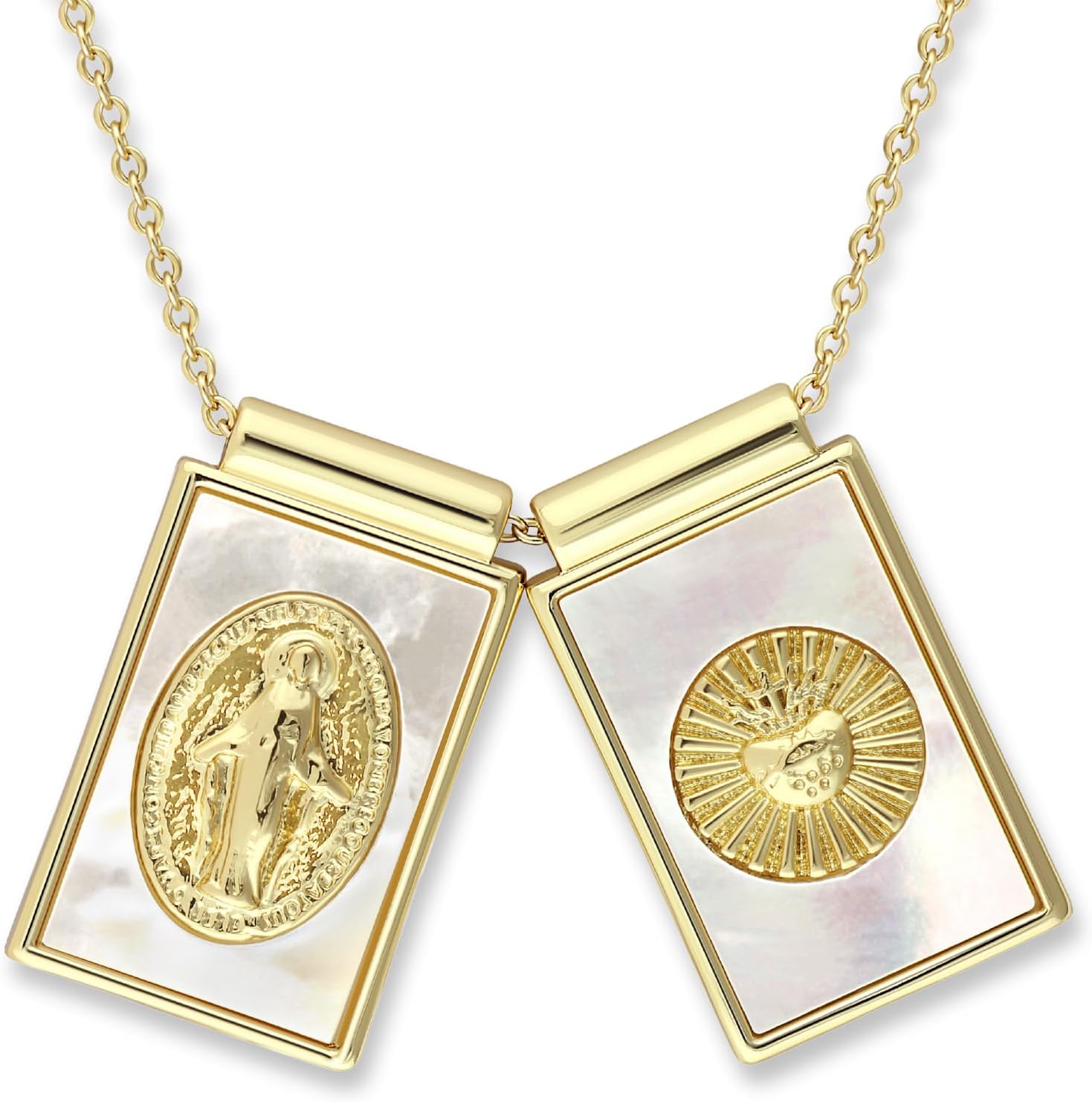
18K Gold Plated / Baño de Oro 18K con acabado de orfebrería fina.
Prime Delivery Guaranteed
Gold Plated / Chapa de Oro con acabado de orfebrería fina.
Prime Delivery Guaranteed
Devotional Cord & Wood / Cordón y Madera con acabado de orfebrería fina.
Prime Delivery GuaranteedThe specification of "Castilian roses" (*rosas de Castilla*) is crucial because it emphasizes the supernatural nature of the event. These roses were not indigenous to the Mexican highlands; they were European flowers that required specific cultivation and climates to thrive. By producing a European flower in a wild, indigenous landscape during winter, the Virgin Mary was providing a sign that was recognizable to the Spanish authorities (like Bishop Zumárraga) while simultaneously claiming the land for her own divine purpose. Furthermore, the Castilian rose symbolizes the union of two disparate worlds. It represents the "planting" of the faith of the Old World into the soil of the New World. The fact that they bloomed spontaneously without human cultivation signifies that the conversion of the Americas was not merely a result of human effort or conquest, but a divine orchestration. The roses were the floral signature of a Mother who belongs to all nations.
To verify the authenticity of a sacred piece, first examine the hallmarks. A genuine piece of 14K gold should be stamped "14K" or "585," while sterling silver must be stamped "925." These marks are the industry standard for purity. However, hallmarks alone can be forged; therefore, I recommend a professional acid test or an XRF (X-ray fluorescence) analysis if the piece is an antique or of high value. Beyond the metal, look at the "crispness" of the detail. High-quality sacred jewelry is characterized by deep relief and precise lines in the iconography. If the image of the Virgin or the petals of the roses appear blurred or "melted," it may be a sign of low-quality casting or a plated base metal. A true piece of sacred orfebrería possesses a weight and a resonance that reflect the quality of the materials used.
When selecting devotional jewelry, one should prioritize the "intention" of the piece. If the jewelry is intended for daily wear and constant prayer, a sturdy chain (such as a wheat or cable chain) in 14K gold or 925 silver is recommended to prevent breakage. The medal should be sized proportionally to the wearer, ensuring it remains a discreet yet present reminder of the divine. In terms of wearing, it is a beautiful tradition to have the jewelry blessed by a priest. While the object itself is not a sacrament, the blessing sets it apart for a sacred purpose, transforming it into a sacramental. I suggest wearing the medal close to the heart, allowing it to warm against the skin, which serves as a physical reminder of the warmth of the Virgin's mantle and the fragrance of the roses of Tepeyac.
A piece of jewelry becomes a legacy when it is imbued with a history of intercession. I advise families to keep a "spiritual diary" accompanying the piece, noting the dates it was worn during specific novenas, pilgrimages, or moments of family crisis and triumph. When the medal is eventually passed from a parent to a child, it is not just a piece of gold or silver being handed down, but a chronicle of the family's faith. To ensure the piece survives for generations, avoid exposing it to harsh chemicals or wearing it during strenuous activities that could damage the setting. By treating the jewelry as a sacred trust, the family ensures that the "Miracle of the Roses" continues to bloom in the hearts of their descendants, serving as a golden thread that connects the present generation to the ancestral faith and the eternal love of the Virgin of Guadalupe.
Affiliate Disclosure: As an Amazon Associate, this devotional portal earns from qualifying purchases at zero additional cost to you.
Find the perfect sacred piece in 3 simple steps
Handpicked based on your preferences and occasion