Laura's Selection
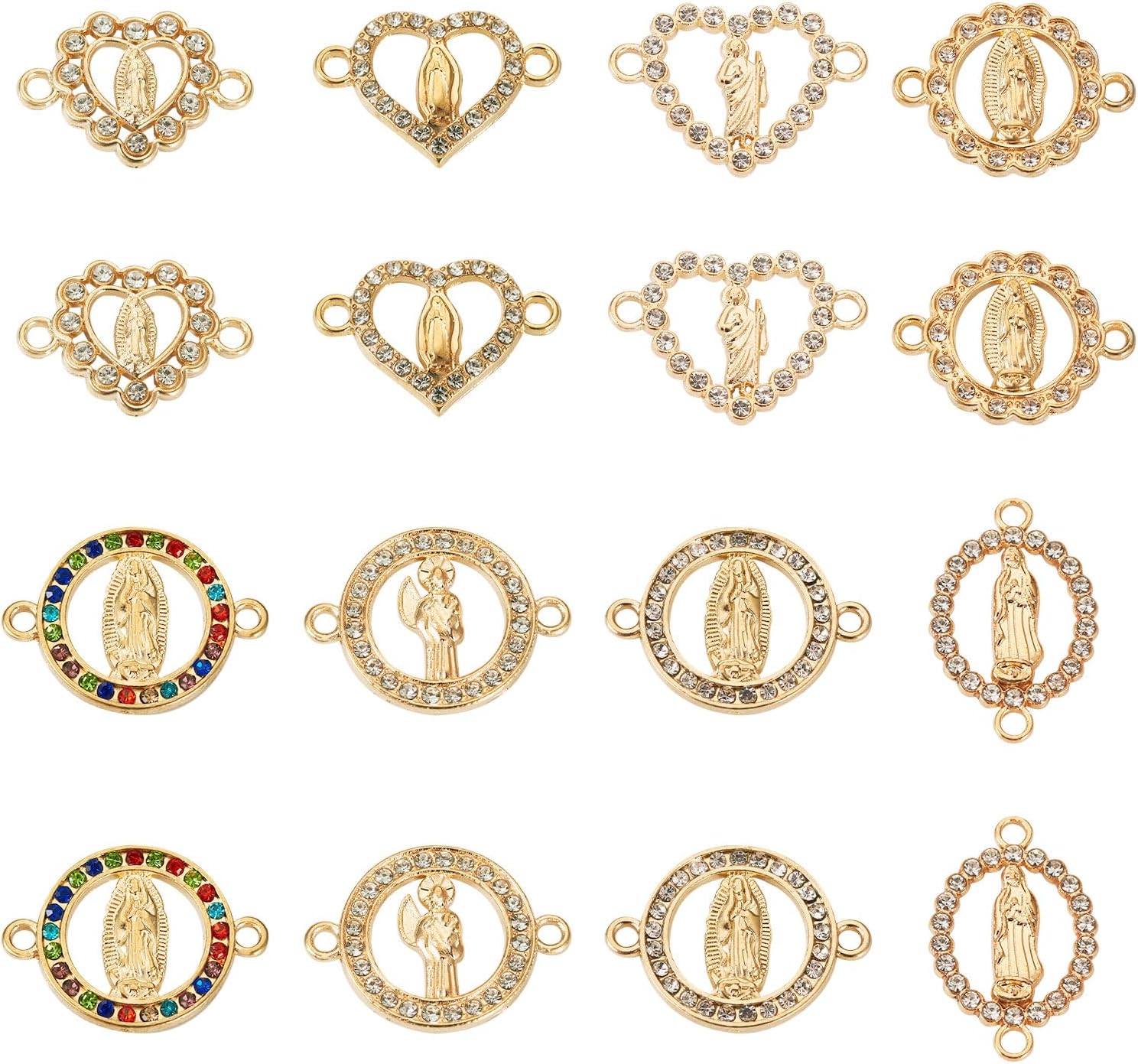
Colorful Rhinestone Connectors Colorful Glass Rhinestone Links Go
Zirconia & Crystal / Cristales y Circonias con acabado de orfebrería fina.
Prime Delivery Guaranteed
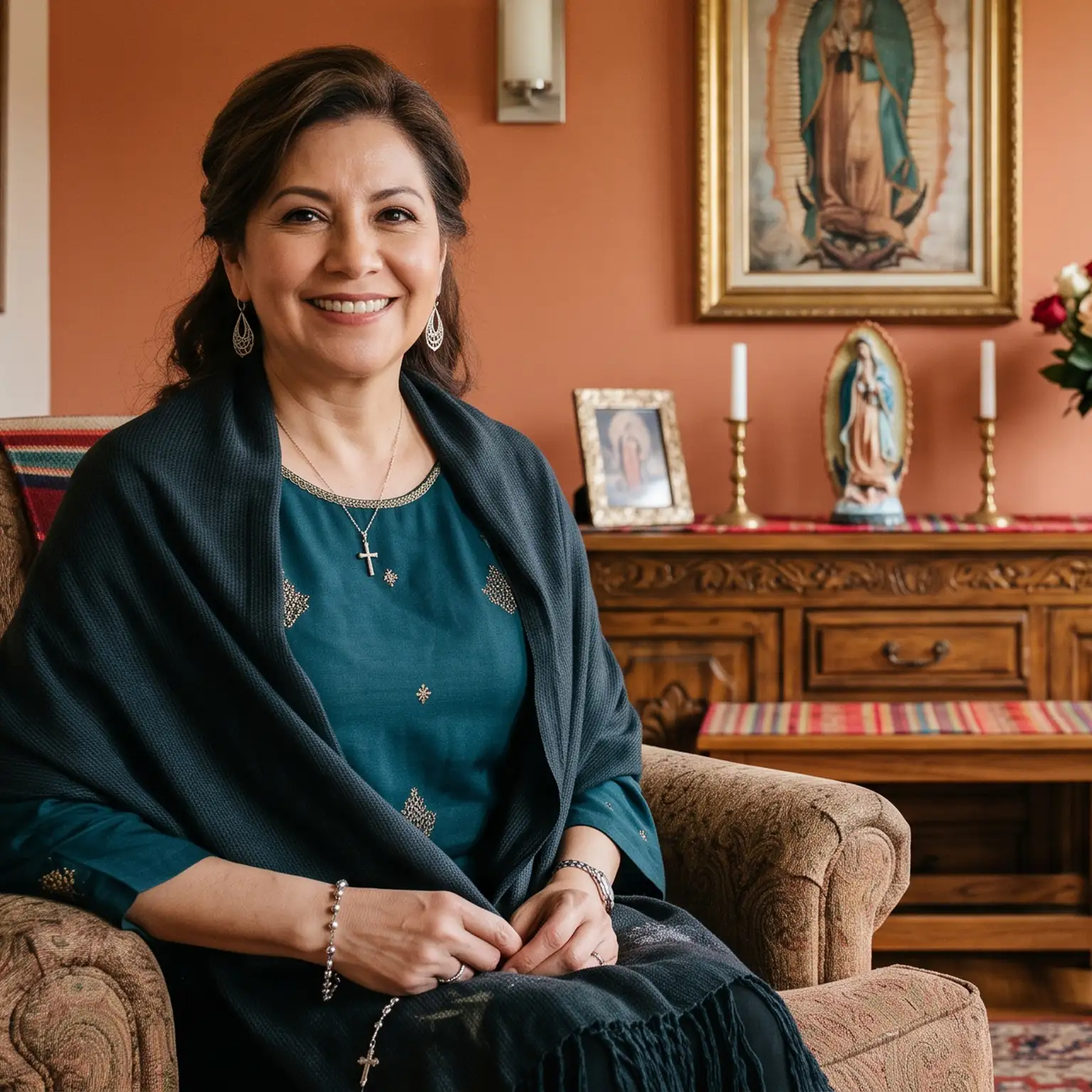
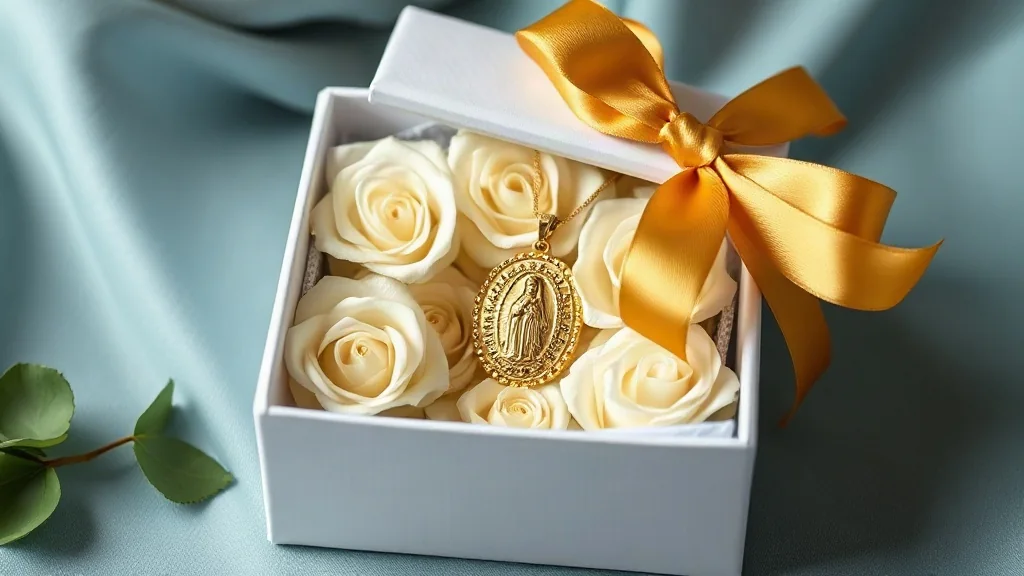
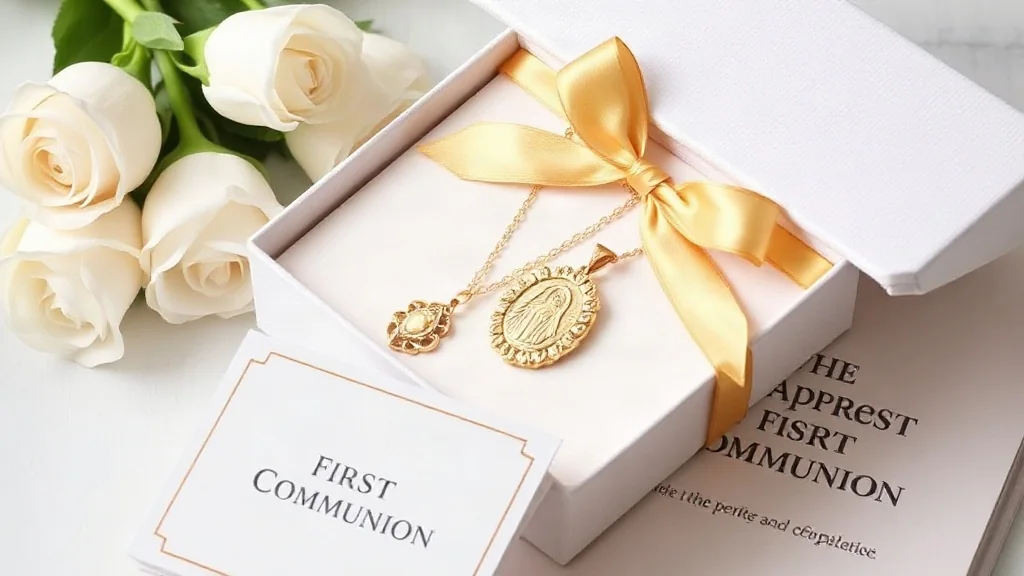
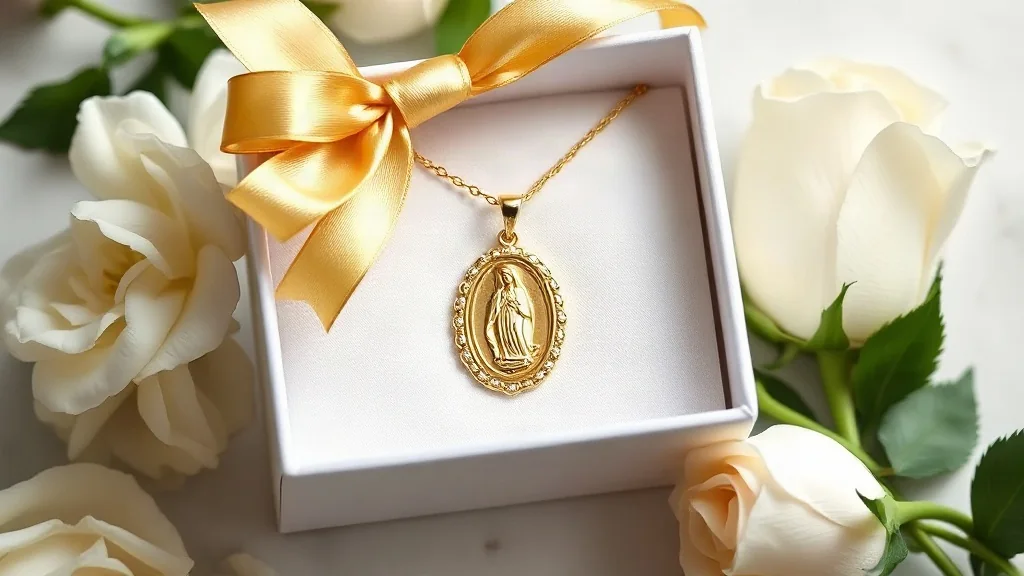
The selection of a gift for the sacraments of Initiation—Baptism and Confirmation—is an act that transcends mere social convention; it is a profound exercise in spiritual stewardship. When we choose a gift centered on the image of Our Lady of Guadalupe, we are not simply offering a piece of jewelry or a decorative object, but rather a tangible anchor of faith. In the Catholic tradition, the sacraments are the visible signs of invisible grace. Baptism cleanses the soul and incorporates the neophyte into the Mystical Body of Christ, while Confirmation seals this identity with the Seven Gifts of the Holy Spirit, empowering the believer to witness the Gospel with courage. To introduce the patronage of the *Morenita* into these milestones is to place the child or the adolescent under the maternal mantle of the Mother of God, ensuring that their journey of faith is accompanied by a presence of tenderness, protection, and unwavering intercession. From a curatorial and devotional perspective, a "Guadalupan gift" serves as a catechetical tool. The image of the Virgin of Guadalupe is a synthesis of theology and culture, a bridge between the divine and the human. Whether it is a delicate silver medal for a newborn or a robust gold cross for a confirmand, these objects are designed to be "sacramentals"—sacred signs that dispose the soul to receive grace. The spiritual significance lies in the permanence of the material; just as the faith is intended to be an eternal commitment, the choice of noble metals and timeless iconography reflects the enduring nature of the covenant made between the believer and God. By gifting a piece of sacred art, the godparents and family members are not merely marking a date on a calendar, but are establishing a spiritual legacy that will likely be passed down through generations as a testament to a family's devotion.
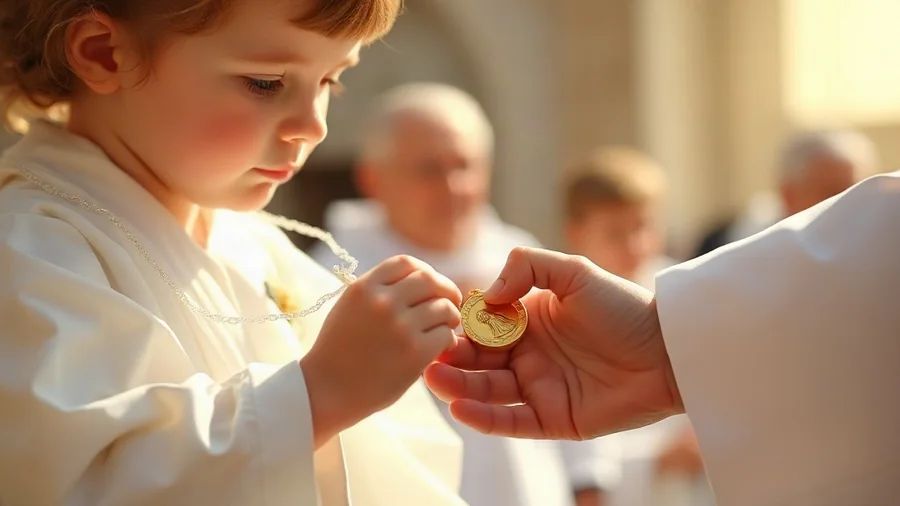
The historical trajectory of the devotion to Our Lady of Guadalupe begins in the winter of 1531 on the hill of Tepeyac, near Mexico City. According to ecclesiastical tradition and historical accounts, the Virgin Mary appeared to the indigenous peasant Juan Diego Cuicatl. This event was not merely a localized apparition but a pivotal moment in the evangelization of the Americas. The miracle of the *tilma*—the coarse agave-fiber cloak upon which the image was imprinted—served as a divine credential that bypassed human artifice. For the early Church in the New World, Guadalupe became the "Star of the New Evangelization," blending indigenous symbols with Christian truths, thereby facilitating a profound cultural and spiritual synthesis that defined the identity of millions.
Throughout the 17th and 18th centuries, the devotion transitioned from a local phenomenon to a cornerstone of the Spanish Empire's religious life in the Americas. During the Baroque period, the image of Guadalupe began to appear in the most sophisticated works of sacred art. Orfebreros (goldsmiths) in Mexico City and Spain began crafting exquisite altarpieces, monstrances, and personal devotional medals. This era established the aesthetic standards for what we now recognize as "sacred jewelry." The use of gold and silver was not for ostentation, but to reflect the "Light of Christ" and the purity of the Virgin. The iconography became standardized: the mandorla of sun rays, the crescent moon, and the stars of the mantle, all of which carry deep biblical and cosmological meanings.
By the 19th century, the image of Guadalupe had evolved into a symbol of both religious faith and national identity. As Mexico navigated its independence and subsequent political upheavals, the *Virgen de Guadalupe* remained the one constant, unifying figure. In the domestic sphere, it became customary for families to gift small silver medals or embroidered images to children during their first sacraments. This period solidified the practice of "sacramental gifting," where the material value of the silver or gold was seen as a reflection of the high value placed on the child's soul and their entry into the ecclesiastical community.
In the 20th and 21st centuries, the devotion expanded globally, transcending borders to become a universal symbol of Catholic motherhood. The industrialization of jewelry allowed for a wider range of accessibility, yet the prestige of handcrafted, high-carat pieces remained the gold standard for Baptisms and Confirmations. Today, the integration of modern laser engraving and 3D casting allows for unprecedented personalization, but the core intent remains unchanged since 1531: to provide the faithful with a physical reminder that they are loved by a Mother who speaks to them in their own language and accompanies them in their specific cultural context.
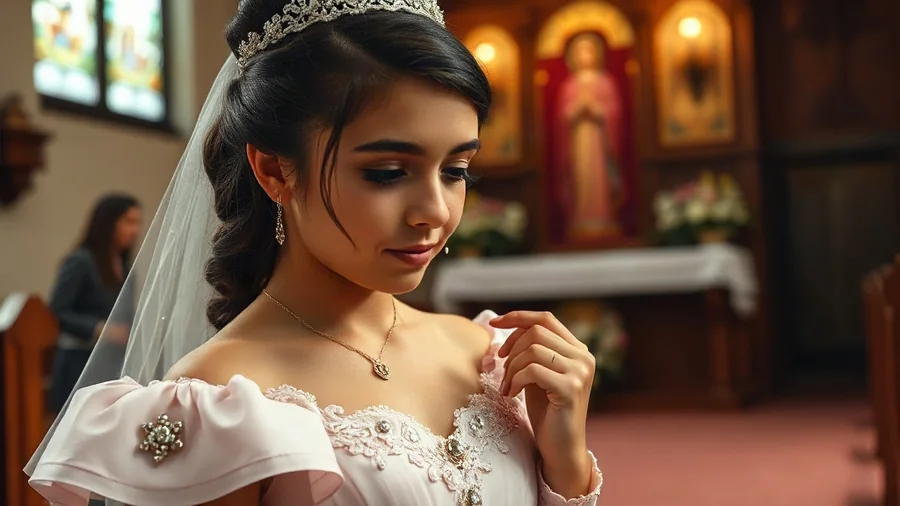
To understand why the Virgin of Guadalupe is an ideal centerpiece for Baptism and Confirmation gifts, one must delve into the Marian doctrine of *Mediatrix* and *Intercessor*. In the theology of the Catholic Church, Mary does not replace Christ but leads the believer toward Him. When a child receives a Guadalupe medal at Baptism, the symbol represents the "maternal welcome" into the Church. Just as Mary gave birth to Christ in the flesh, she is seen as the spiritual mother who helps give birth to the new life of grace in the baptized soul. The gift is thus a theological statement: the child is not alone in their journey toward holiness; they are held in the arms of the Mother of God.
The symbolism within the image itself provides a rich source for catechesis during the sacrament of Confirmation. The rays of the sun surrounding the Virgin signify that she is clothed with the sun, a reference to the Woman of the Apocalypse in the Book of Revelation, pointing to her victory over darkness. For a confirmand, who is receiving the "seal" of the Holy Spirit to fight spiritual battles in the world, this imagery is profoundly empowering. The crescent moon beneath her feet symbolizes her dominion over the changing tides of the world and the temporal nature of earthly existence, encouraging the youth to seek the eternal rather than the ephemeral.
Furthermore, the posture of the Virgin—hands joined in prayer and head bowed—is a masterclass in humility (*humilitas*). This is the primary virtue required for both the infant in Baptism and the adolescent in Confirmation. The gift of a Guadalupe-themed object serves as a silent sermon on the necessity of surrender to the Divine Will. By wearing the image, the believer is reminded to emulate Mary's *Fiat* ("Let it be done to me according to your word"), transforming their own life into a vessel for the Holy Spirit. The theological weight of the gift is therefore not in the metal, but in the invitation to a life of obedience and love.
Finally, the "Morena" aspect of the Virgin—her indigenous features—speaks to the universality of salvation. In the context of the sacraments, which are open to all regardless of race or social standing, the Guadalupe iconography reinforces the truth that the Grace of God is inclusive. For a family, gifting a piece of Guadalupe jewelry is an acknowledgment of their own heritage and a prayer that the recipient will grow in a faith that is both deeply personal and universally welcoming. It is a spiritual anchor that reminds the believer that they are a citizen of the Kingdom of Heaven, rooted in a tradition of love that spans centuries and continents.
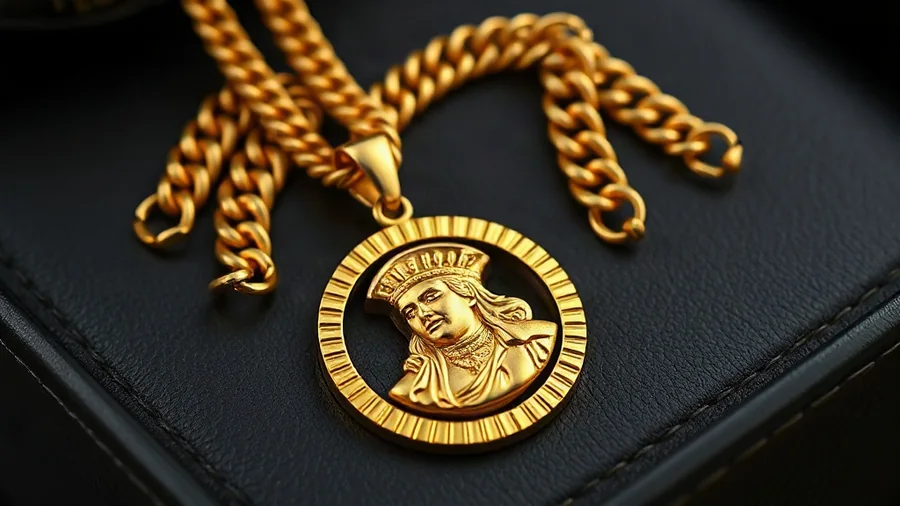
As a curator of sacred jewelry, I must emphasize that the material choice for a sacramental gift is not merely an aesthetic decision, but one of durability and reverence. For Baptisms and Confirmations, I exclusively recommend the use of noble metals—specifically 14K gold and .925 sterling silver. These materials are chemically stable, hypoallergenic, and possess an intrinsic value that mirrors the spiritual value of the occasion. A medal cast in base metals may tarnish or cause skin irritation, whereas a piece of .925 silver or 14K gold is designed to last a lifetime, evolving from a childhood accessory into a cherished family heirloom.
When evaluating a Guadalupe medal, the discerning buyer should look for "high-relief" or "die-struck" craftsmanship. In high-relief orfebrería, the image of the Virgin is not merely etched but sculpted, giving the piece a three-dimensional quality that captures the light and shadow of the mantle's folds. For 14K gold pieces, I recommend a polished finish for the rays of the sun and a satin or brushed finish for the Virgin's face to create a sophisticated contrast. The hallmarks—the small stamps indicating the purity of the metal (e.g., "14K" or "925")—are non-negotiable markers of authenticity and quality that ensure the piece will retain its value over decades.
The selection of the chain or bracelet is equally critical. For infants in Baptism, a "curb" or "cable" chain in .925 silver is ideal due to its strength and smoothness, preventing any snagging on delicate skin. For Confirmands, a more substantial gold chain or a refined silver bracelet with a secure lobster clasp is appropriate. I often suggest the addition of a personalized engraving on the reverse side of the medal. The inclusion of the name, the date of the sacrament, and perhaps a short biblical reference (such as *Luke 1:38*) transforms a beautiful object into a unique historical document of the person's spiritual biography.
Care for these sacred pieces is an extension of the devotion itself. To maintain the luster of sterling silver, one should avoid contact with chlorine and use a soft polishing cloth. Gold, while more resilient, should be cleaned with mild soap and warm water to remove oils and residues. I always advise clients to store these pieces in a velvet-lined box, treating them not as jewelry, but as "sacred vessels." When a piece of jewelry is handled with such care, it reinforces the idea that the faith it represents is also something to be protected, polished, and held in the highest esteem.
Zirconia & Crystal / Cristales y Circonias con acabado de orfebrería fina.
Prime Delivery Guaranteed
14K Gold Plated / Baño de Oro 14K con acabado de orfebrería fina.
Prime Delivery Guaranteed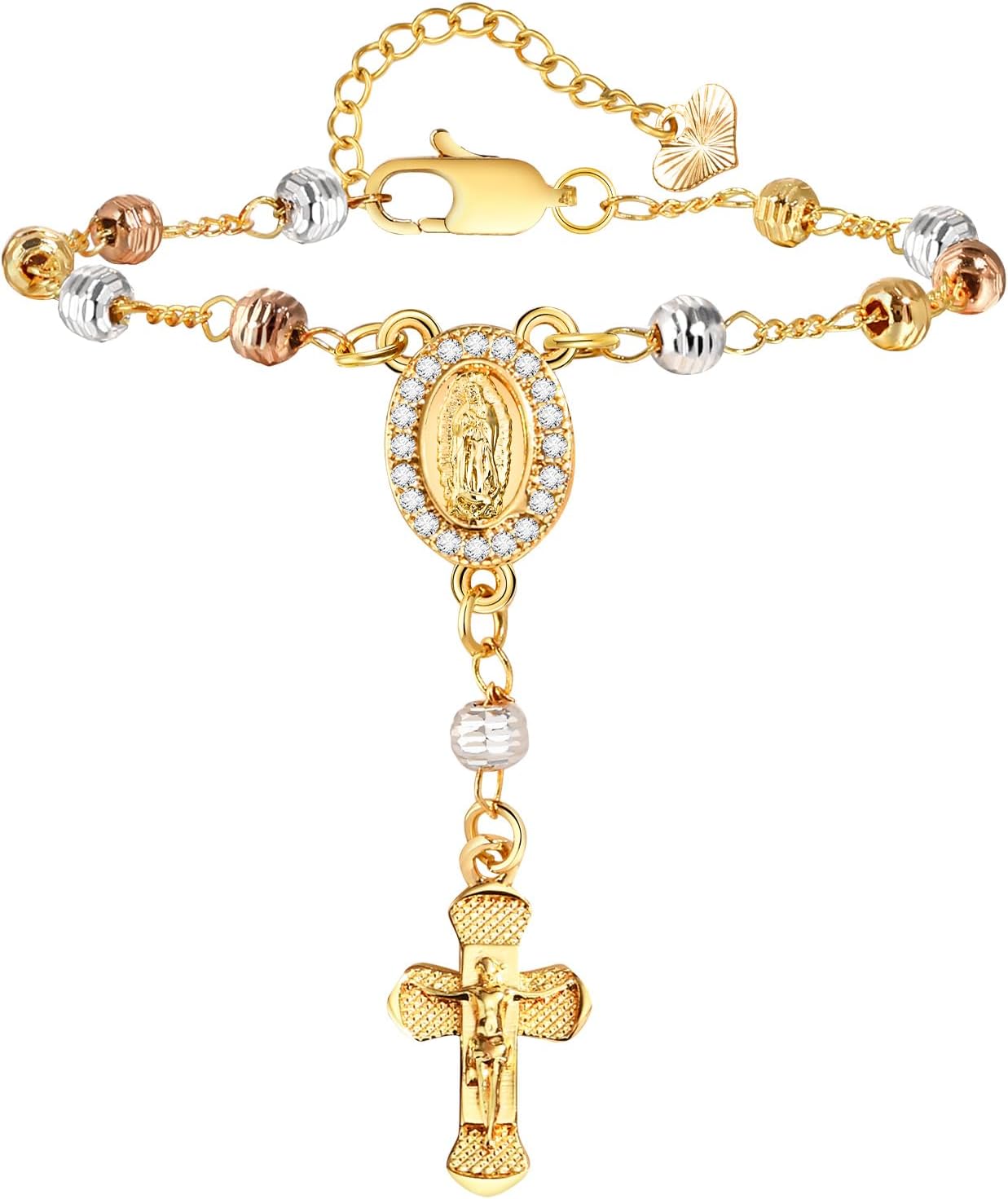
14K Gold Plated / Baño de Oro 14K con acabado de orfebrería fina.
Prime Delivery GuaranteedWhen selecting a Guadalupana piece, always prioritize certified precious metals (solid nickel-free 14K gold or Italian 925 sterling silver). Upon receiving it, take it to your parish priest for a traditional Catholic blessing to consecrate it as an enduring sacramental of protection.
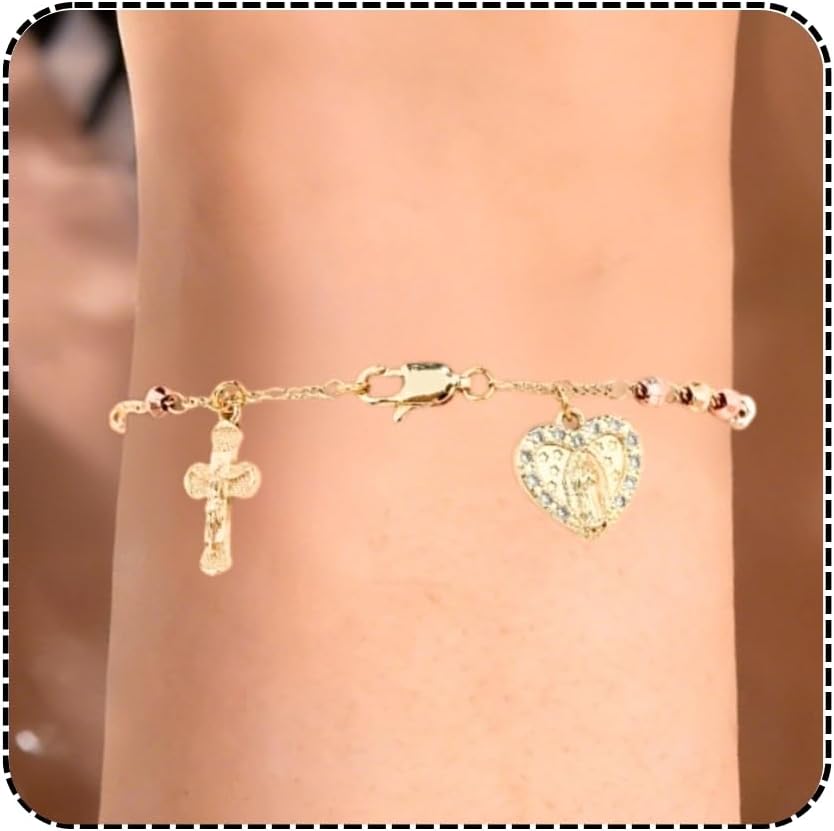
14K Gold Plated / Baño de Oro 14K con acabado de orfebrería fina.
Prime Delivery Guaranteed
Stainless Steel / Acero Inoxidable con acabado de orfebrería fina.
Prime Delivery Guaranteed
14K Gold Plated / Baño de Oro 14K con acabado de orfebrería fina.
Prime Delivery GuaranteedFor Baptisms, the gold standard is a small, high-polish .925 sterling silver medal of Our Lady of Guadalupe, often paired with a delicate infant bracelet or a "cuna" (crib) cross. These pieces should be lightweight and safe for a child. Additionally, a personalized "Prayer Box" containing a small Guadalupe image, a white baptismal candle, and a miniature rosary is an exquisite choice that combines material beauty with liturgical utility. For Confirmations, the gifts should reflect the maturity of the recipient. A 14K gold chain with a Guadalupe pendant or a sophisticated silver rosary with a central Guadalupe medal is highly recommended. Because Confirmation is a "strengthening" of the faith, gifts that encourage a disciplined prayer life—such as a leather-bound Bible with a Guadalupe bookmark or a high-quality devotional journal—are particularly appropriate and spiritually impactful.
Yes, it is highly recommended that any devotional object be blessed by a priest. While the object itself is not a sacrament, the blessing transforms it into a "sacramental," a sacred sign that invokes the intercession of the saints and the protection of God. This ritual act marks the transition of the object from a commercial product to a spiritual tool, imbuing the gift with a deeper layer of ecclesiastical meaning. To verify authenticity, always look for the official hallmarks stamped into the metal. Sterling silver must be marked "925," and gold should be marked "14K," "18K," or with the corresponding decimal (e.g., "585" for 14K). I suggest requesting a certificate of authenticity from the jeweler. In the world of sacred orfebrería, transparency regarding the weight and purity of the metal is a reflection of the integrity of the artisan.
The choice often depends on the intended longevity and the budget, but also on the symbolism. Silver is traditionally associated with purity and the moon, making it a poetic choice for Baptisms, where the "white garment" and the purity of the soul are emphasized. It is an elegant, timeless option that is generally more accessible while remaining a noble metal. Gold, on the other hand, symbolizes the Divine Light, royalty, and the eternal nature of God's kingdom. This makes it an exceptional choice for Confirmation, symbolizing the "golden" strength of the Holy Spirit. If the gift is intended as a primary heirloom to be worn daily for the rest of the person's life, 14K gold is the superior choice due to its resistance to tarnish and its enduring brilliance.
A sacred gift acts as a "visual trigger" for prayer. When a child grows up wearing a Guadalupe medal, the object becomes associated with the love of their godparents and the protection of the Virgin. Over time, the jewelry becomes a touchstone; in moments of anxiety or doubt, the act of touching the medal can lead to a silent prayer, bridging the gap between the material world and the spiritual realm. Furthermore, when these pieces are passed down from a grandmother to a granddaughter, they carry the "spiritual scent" of previous generations' faith. They become tangible links in a chain of devotion. By gifting a piece of high-quality sacred art, you are not just giving a present for a day, but are planting a seed of devotion that can blossom into a lifelong habit of prayer and a profound sense of belonging to the Catholic Church.
Affiliate Disclosure: As an Amazon Associate, this devotional portal earns from qualifying purchases at zero additional cost to you.
Find the perfect sacred piece in 3 simple steps
Handpicked based on your preferences and occasion