Laura's Selection
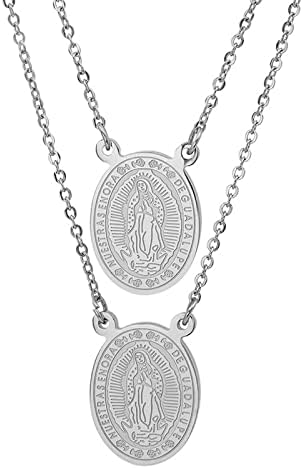
Steeltime Stainless Steel Virgin Mary Guadalupe Scapular
18K Gold Plated / Baño de Oro 18K con acabado de orfebrería fina.
Prime Delivery Guaranteed
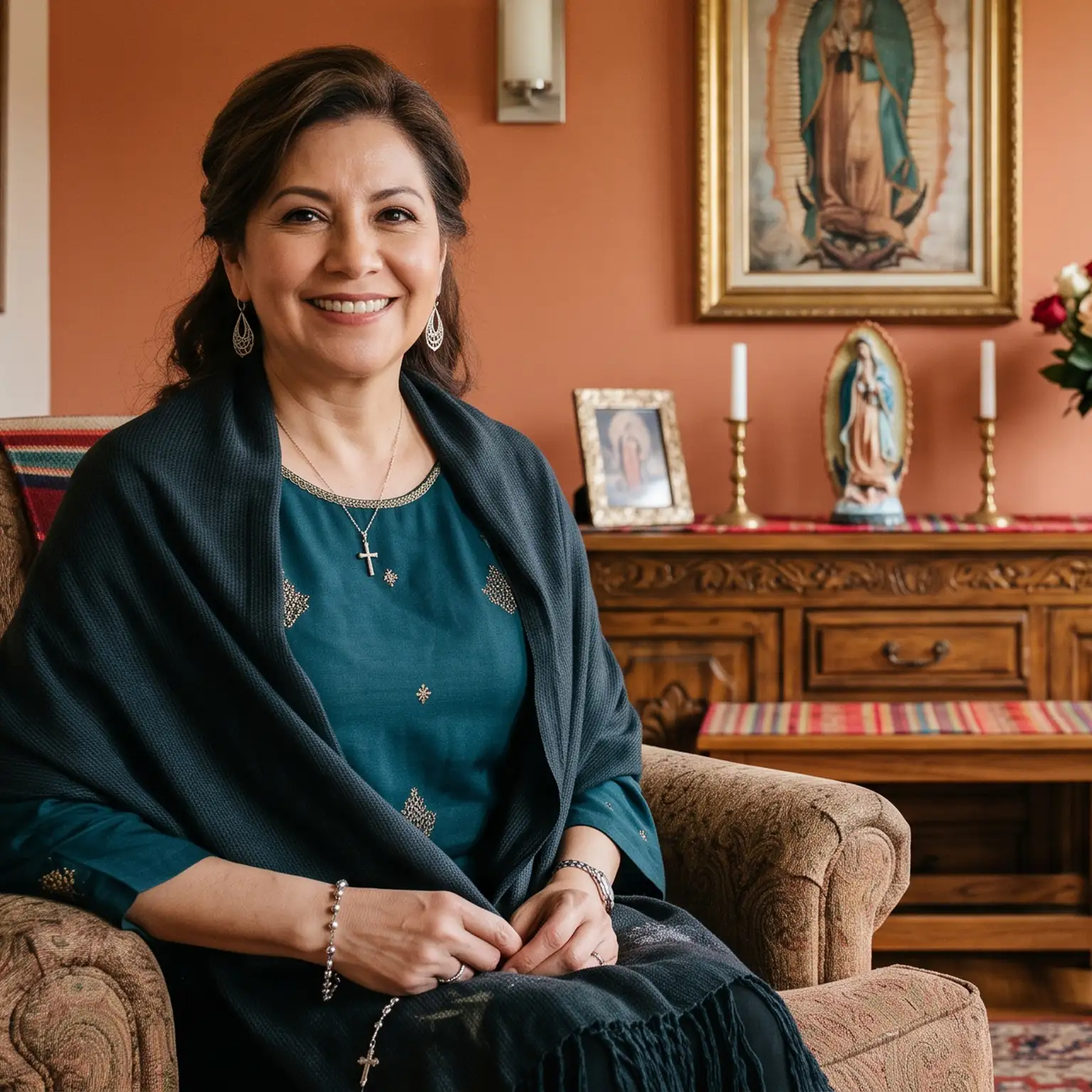
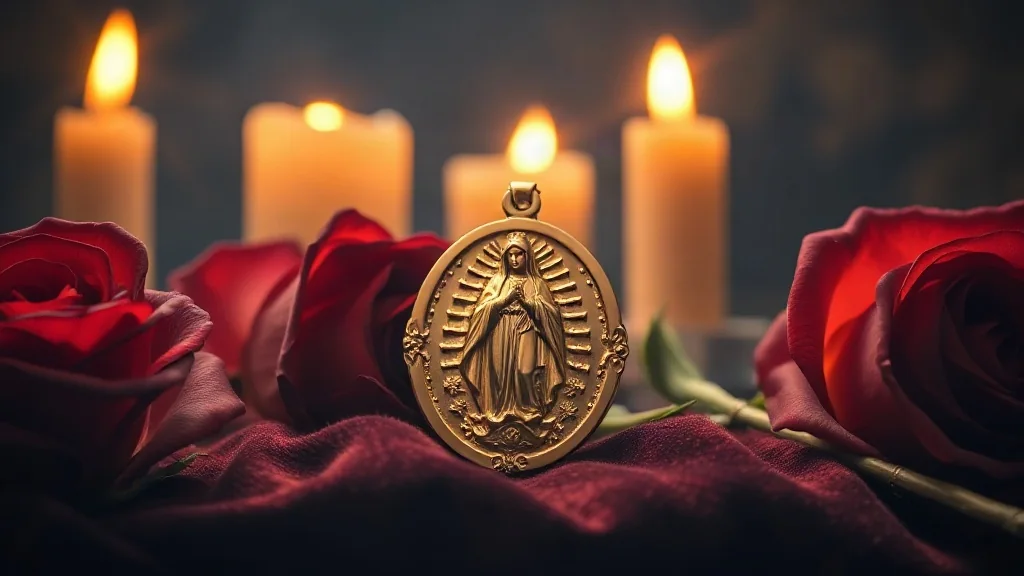
The apparitions of Our Lady of Guadalupe represent one of the most profound intersections of divine providence and human history, serving as the spiritual cornerstone of the Americas. To understand the events of December 1531 is to delve into a period of immense cultural upheaval, where the collision of the Spanish Empire and the indigenous civilizations of Mexico created a vacuum of identity and a desperate need for hope. The Virgin of Guadalupe did not appear merely as a celestial visitor, but as the *Tonantzin*—the Mother—who bridged the chasm between two worlds. Her presence on the hill of Tepeyac was a theological declaration that the Gospel was not an imposition of conquest, but an invitation to a maternal embrace, offering a synthesis of faith that allowed the indigenous peoples to encounter Christ through a visage that reflected their own dignity and heritage. From a devotional and curatorial perspective, the significance of Guadalupe transcends the temporal boundaries of the sixteenth century. She is the *Star of the New Evangelization*, whose image—imprinted not by human hands but by a divine agency upon a coarse tilma of agave fiber—continues to act as a living sacrament. For the believer, the apparitions are not merely historical footnotes but an ongoing dialogue between Heaven and Earth. The spiritual resonance of this event is found in the humility of the chosen messenger, Juan Diego Cuauhtlatoatzin, and the enduring power of a message centered on compassion, protection, and the promise of a sanctuary. This apparition established a spiritual geography in Mexico that remains a pilgrimage site for millions, cementing the role of Mary as the Mediatrix of Grace and the protector of the marginalized.
The historical narrative of the Guadalupe apparitions unfolds during a precarious moment in the early colonial period of New Spain. On the morning of Saturday, December 9, 1531, Juan Diego, a humble indigenous convert, was walking toward Tepeyac to attend Mass. It was here that he encountered a celestial presence, a woman of extraordinary beauty and radiance, who addressed him in his native Nahuatl language. This linguistic detail is historically significant, as it demonstrates the Virgin's desire to communicate directly with the indigenous soul, bypassing the colonial linguistic barriers. She identified herself as the Mother of the True God and the Mother of the True God for all, requesting that a temple be built on the site to propagate the knowledge of her Son's love and mercy.
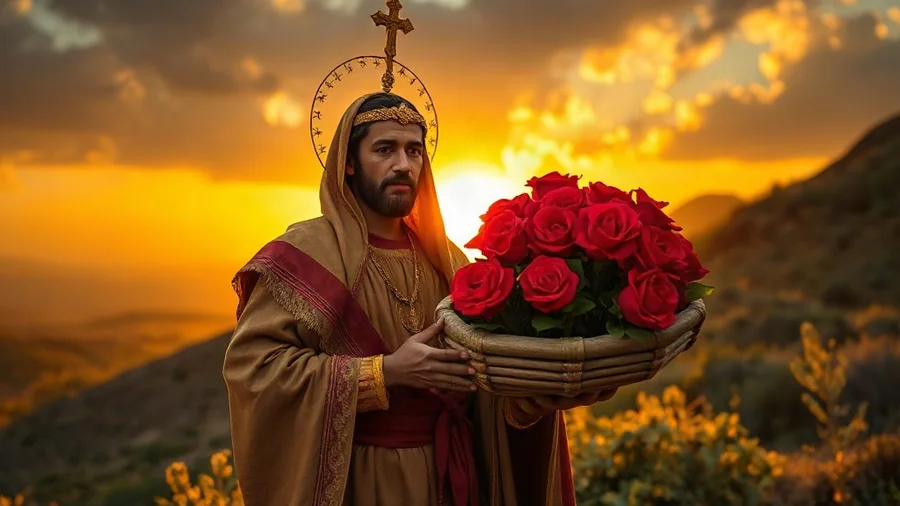
The subsequent days were marked by a tension between divine revelation and human skepticism. On Sunday, December 10, Juan Diego approached Bishop Juan de Zumárraga to convey the request. The Bishop, acting with prudent caution typical of the ecclesiastical hierarchy of the time, requested a sign to validate the authenticity of the encounter. On Monday, December 11, the Virgin appeared to Juan Diego for a third time, instructing him to climb the barren hill of Tepeyac to gather roses—flowers that were biologically impossible to find in that region during the winter solstice. The miracle of the Castilian roses, gathered in Juan Diego's tilma, served as the physical evidence required by the Bishop, though the true miracle was yet to be revealed.
The climax of the apparitions occurred on Tuesday, December 12. Upon entering the cathedral and unfolding his cloak before Bishop Zumárraga, the roses fell to the floor, and in their place appeared a vivid, indelible image of the Virgin Mary. This image, the *Tilma of Guadalupe*, is a masterpiece of divine iconography. The chronology of these four primary events—the call, the request, the sign, and the revelation—establishes a pattern of humility and obedience. While some later devotional traditions expand these encounters into five distinct events to emphasize the gradual nature of the revelation, the core historical tradition remains anchored in these four pivotal days of December.
To analyze these events through a rigorous historical lens, one must consider the socio-political climate of 1531. The indigenous population was reeling from the fall of Tenochtitlan and the devastation of European diseases. The apparition of a "Mestiza" Virgin—possessing features that blended European and Indigenous traits—was a strategic act of divine diplomacy. By appearing as a bridge, Our Lady of Guadalupe facilitated the mass conversion of millions, not through the sword, but through a maternal tenderness that validated the indigenous identity within the framework of the Catholic faith. The hill of Tepeyac, previously dedicated to the goddess Tonantzin, was thus consecrated to the Queen of Heaven, transforming a site of ancient paganism into a beacon of Christian hope.
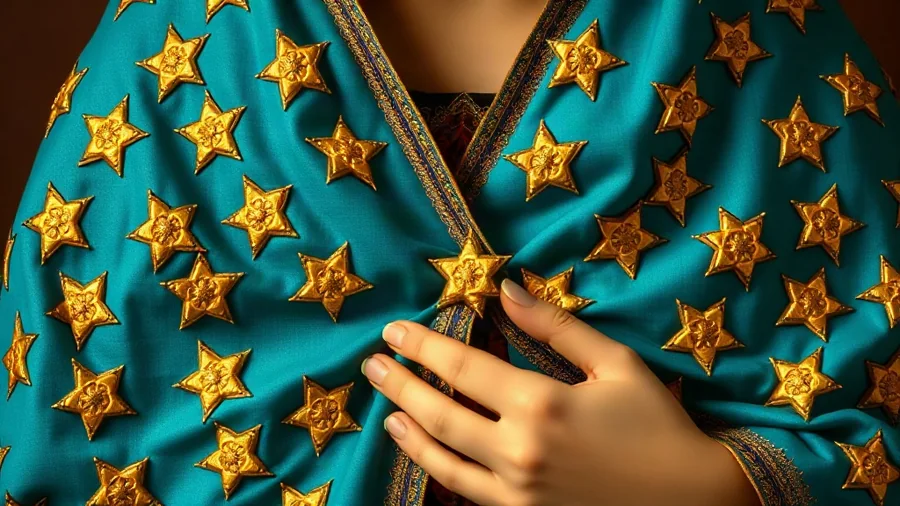
The theological richness of the Guadalupe apparitions is most evident in the semiotics of the image imprinted on the tilma. Every detail is a theological statement. The Virgin is depicted wearing a blue-green mantle adorned with stars, symbolizing her role as the Queen of Heaven and the cosmos. The sun surrounding her figure indicates that she is "clothed with the sun," a direct reference to the Woman of the Apocalypse in the Book of Revelation. However, she does not eclipse the sun; rather, she stands before it, signifying that she leads the faithful to the True Light, which is Christ. The moon beneath her feet symbolizes her victory over the darkness and the cyclical nature of time, asserting the eternal nature of the Gospel.
Furthermore, the black sash tied around her waist is a profound cultural signifier. In the Aztec tradition, a sash tied in this manner was the sign of a pregnant woman. Theologically, this represents Mary as the *Theotokos* (God-bearer), carrying the Savior of the world. Her hands are joined in prayer, and her eyes are cast downward in a gesture of humility and maternal contemplation. She does not demand worship but directs the observer's gaze toward the divine mystery. The presence of the angel at her feet, with wings of eagle-like proportions, symbolizes the union of Heaven and Earth, acting as the celestial support for the Mother of God.
The message delivered to Juan Diego is one of radical empathy. The words "Am I not here, I who am your Mother?" constitute one of the most comforting promises in Marian theology. This is not merely a statement of biological or spiritual kinship, but a promise of perpetual protection and intercession. The apparition emphasizes the dignity of the poor and the marginalized; God chose not a powerful cacique or a Spanish nobleman, but a simple indigenous man to be the herald of this miracle. This inversion of worldly power structures is a recurring theme in the Gospel and is perfectly mirrored in the Guadalupe narrative.
From a dogmatic perspective, the apparitions reinforce the role of Mary as the Mediatrix of all Graces. She acts as the conduit through which the love of God reaches humanity in a tangible, accessible form. The miracle of the roses and the image serves as a "visual catechism," translating complex theological truths into a language of symbols that could be understood by those who could not read or write. Thus, the spiritual meaning of Guadalupe is found in the synthesis of faith and culture, where the divine adapts itself to the human condition to ensure that the message of salvation is heard by all, regardless of their origin or status.
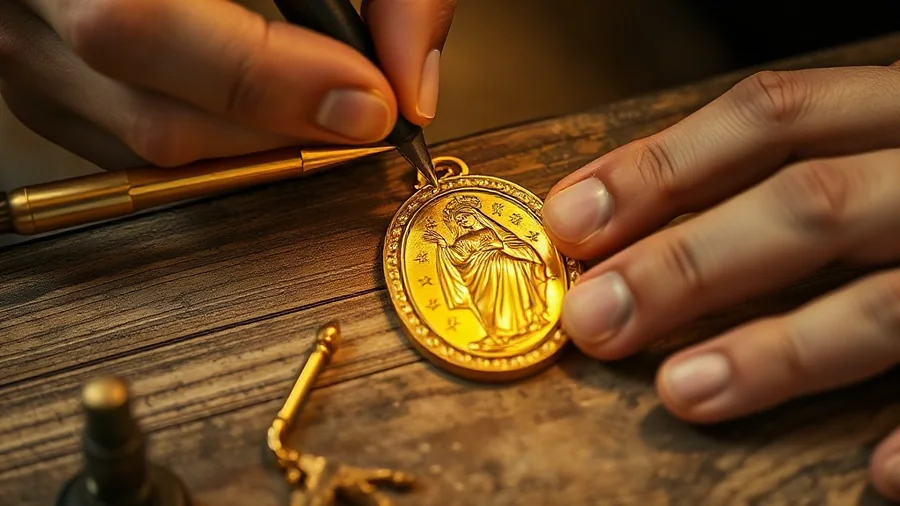
As a curator of sacred jewelry, I view the translation of the Guadalupe devotion into metalwork as an act of "material prayer." When commissioning or selecting a devotional piece, the choice of metal is not merely aesthetic but symbolic. 14K gold is the gold standard for sacred jewelry due to its balance of purity and durability. In the context of Marian devotion, gold represents the divine light, the incorruptibility of the soul, and the royalty of the Queen of Heaven. A 14K gold medal of Our Lady of Guadalupe, crafted with high-relief detailing, allows the intricate symbols of the tilma—the stars, the rays of the sun, and the sash—to be rendered with a precision that honors the original image.
Complementing gold is 925 Sterling Silver, a metal deeply associated with purity and the lunar reflections of the Virgin's mantle. Silver is often used for larger rosaries or devotional pendants intended for daily wear. The contrast between gold and silver in a single piece—such as a gold-plated image set upon a sterling silver base—mirrors the theological duality of the apparition: the divine light of the sun and the reflective purity of the moon. For a piece to be considered a true heirloom, it must possess the correct hallmarks (such as "14K" or "925"), ensuring that the devotee is investing in a material that will not tarnish or degrade over generations, mirroring the eternal nature of the faith it represents.
The craftsmanship of sacred jewelry requires a rigorous adherence to traditional techniques. The process of *repoussé* and *chasing* is particularly effective for Guadalupe medals, as it allows the artisan to push the metal from the reverse side to create a three-dimensional effect, giving the Virgin a lifelike presence. The polishing must be executed with a nuanced approach, using matte finishes in the recessed areas to create depth and high-polish highlights on the Virgin's face and hands to draw the eye toward the center of the devotion. Such attention to detail transforms a piece of jewelry into a liturgical object, a portable shrine that accompanies the believer through the trials of daily life.
Care for these sacred objects is an extension of the devotion itself. To preserve the integrity of 14K gold and 925 silver, I recommend avoiding harsh chemicals and using only a soft microfiber cloth for cleaning. For silver pieces that develop a natural patina, a gentle polishing with a specialized jeweler's cloth is sufficient to restore their luster without eroding the fine details of the image. When these pieces are passed down from mother to daughter or father to son, they cease to be mere ornaments and become "sacred relics" of family prayer, carrying with them the spiritual energy of the generations who held them while reciting the Hail Mary.
18K Gold Plated / Baño de Oro 18K con acabado de orfebrería fina.
Prime Delivery Guaranteed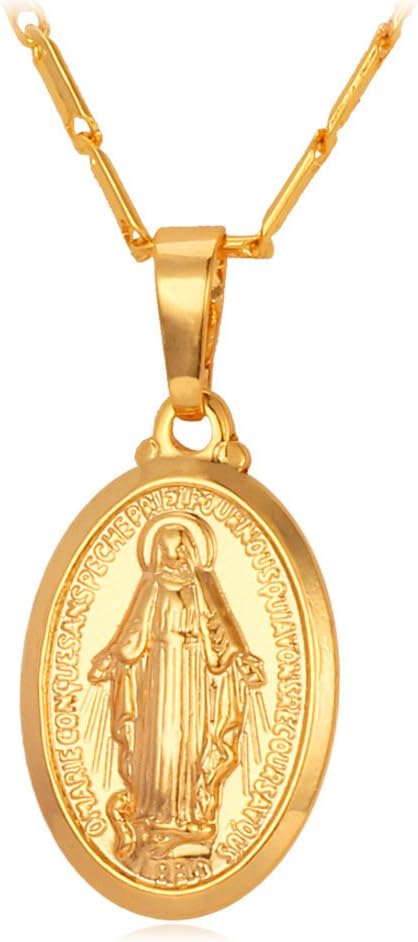
18K Gold Plated / Baño de Oro 18K con acabado de orfebrería fina.
Prime Delivery Guaranteed
Stainless Steel / Acero Inoxidable con acabado de orfebrería fina.
Prime Delivery GuaranteedWhen selecting a Guadalupana piece, always prioritize certified precious metals (solid nickel-free 14K gold or Italian 925 sterling silver). Upon receiving it, take it to your parish priest for a traditional Catholic blessing to consecrate it as an enduring sacramental of protection.

925 Sterling Silver / Plata de Ley 925 con acabado de orfebrería fina.
Prime Delivery Guaranteed
18K Gold Plated / Baño de Oro 18K con acabado de orfebrería fina.
Prime Delivery Guaranteed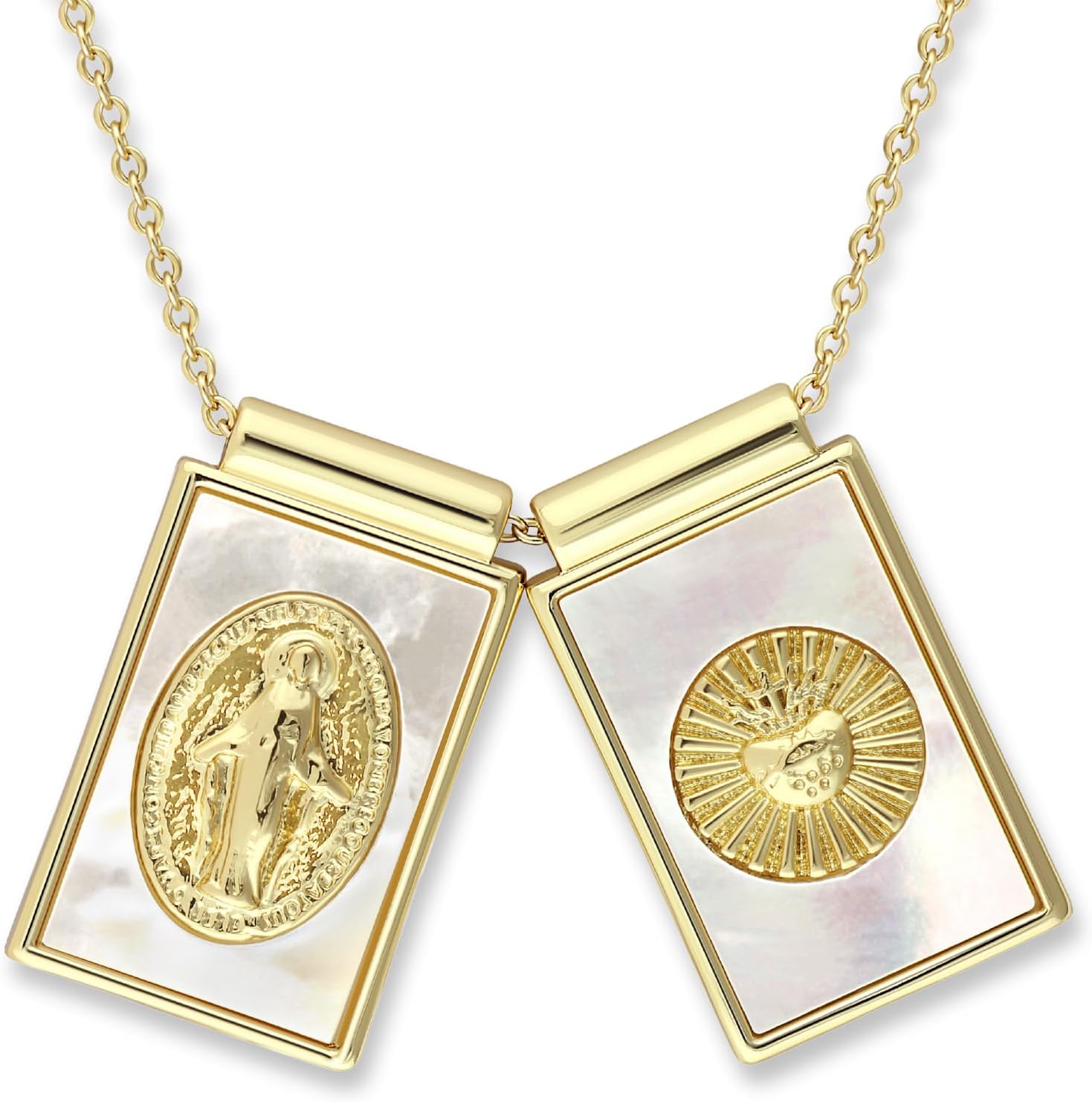
18K Gold Plated / Baño de Oro 18K con acabado de orfebrería fina.
Prime Delivery GuaranteedThe historical validity of the apparitions is supported by a combination of oral tradition, early colonial documents, and the enduring physical evidence of the tilma. While skeptics may argue that the accounts were formalized years after the events, the rapid spread of the devotion among the indigenous population—who had no incentive to support Spanish religious narratives—suggests a profound, authentic experience. The "Nican Mopohua," the Nahuatl account of the apparitions, reflects the linguistic and cultural nuances of the 16th century, providing a primary source that aligns with the spiritual needs of the time. Furthermore, the scientific studies conducted on the tilma have yielded results that defy conventional explanation. The lack of visible brushstrokes, the mysterious composition of the pigments, and the extraordinary preservation of the agave fibers—which should have decayed within decades—point toward a supernatural origin. For the historian and the believer alike, the "validity" of Guadalupe is found not only in the archives but in the sociological impact: the transformation of an entire continent's spiritual landscape through a single, maternal image.
Distinguishing a genuine sacred medal requires an examination of the hallmarks and the weight of the piece. A genuine 14K gold or 925 silver medal will have a distinct density and a specific stamp of authenticity. Costume jewelry, often made of brass or zinc alloys with a thin gold plating, will feel lighter and will eventually peel or turn the skin green. From a curatorial standpoint, the quality of the casting is the giveaway; sacred jewelry is characterized by sharp, intentional lines and a lack of air bubbles or rough edges in the metal. Regarding the blessing, the metal itself does not "create" the blessing, as the grace of a priestly blessing is spiritual and independent of material value. However, using noble metals like gold and silver is a traditional act of veneration. By offering the finest materials to represent the Divine, the believer expresses a heart of generosity and reverence. A blessed gold medal becomes a sacramental—a sacred sign that prepares the soul to receive grace—and its durability ensures that the blessing remains physically present in the family for centuries.
When selecting devotional jewelry, one should prioritize the balance between aesthetic beauty and spiritual intent. For daily wear, a medium-sized pendant in 14K gold or 925 silver is ideal, as these metals are hypoallergenic and resistant to the wear and tear of daily activity. I recommend selecting a piece that resonates personally with the wearer—perhaps a design that emphasizes the Virgin's maternal gaze or one that includes a small diamond or gemstone to represent the stars of her mantle. Wearing such jewelry should be approached as a conscious spiritual practice. Rather than treating it as a fashion accessory, the wearer should view the medal as a "visual anchor" for prayer. Touching the image of Our Lady of Guadalupe during a moment of stress or gratitude serves as a physical reminder of her promise: "Am I not here?" It is advisable to wear the medal close to the heart, symbolizing the intimate relationship between the soul and the Mother of God, and to treat the object with the respect due to a sacred image.
The legacy of Guadalupe is most powerfully manifested in the "domestic church," where the image of the Virgin serves as the center of family unity. Passing down a sacred piece of jewelry, such as a gold Guadalupe medal, creates a tangible link between generations. When a grandmother gives her medal to a granddaughter, she is not merely transferring a piece of gold; she is transferring a legacy of faith, a history of answered prayers, and a tradition of maternal protection. This act transforms the jewelry into a spiritual heirloom. In contemporary family prayer, the Guadalupe devotion encourages a focus on inclusivity and compassion. Families who pray before the image of the Virgin often find their prayers shifting toward the needs of the marginalized, mirroring the Virgin's concern for Juan Diego. By integrating these sacred objects into daily rituals—such as blessing a child's medal before their first communion—the family ensures that the story of 1531 remains a living reality, teaching each new generation that they, too, are held in the protective mantle of the Mother of all.
Affiliate Disclosure: As an Amazon Associate, this devotional portal earns from qualifying purchases at zero additional cost to you.
Find the perfect sacred piece in 3 simple steps
Handpicked based on your preferences and occasion